Print Publications
FEATURED
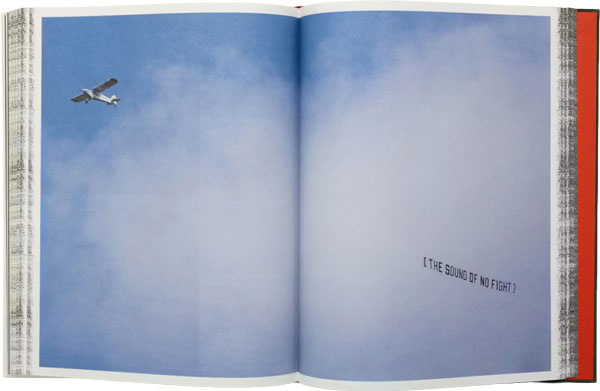
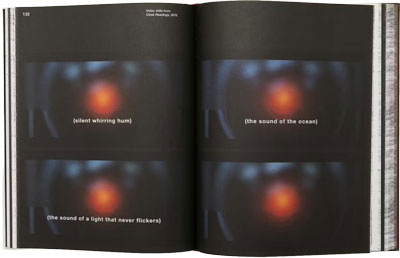
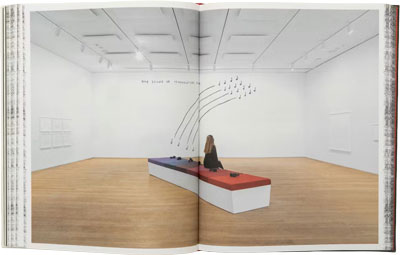
Christine Sun Kim: ALL DAY ALL NIGHT
2020–
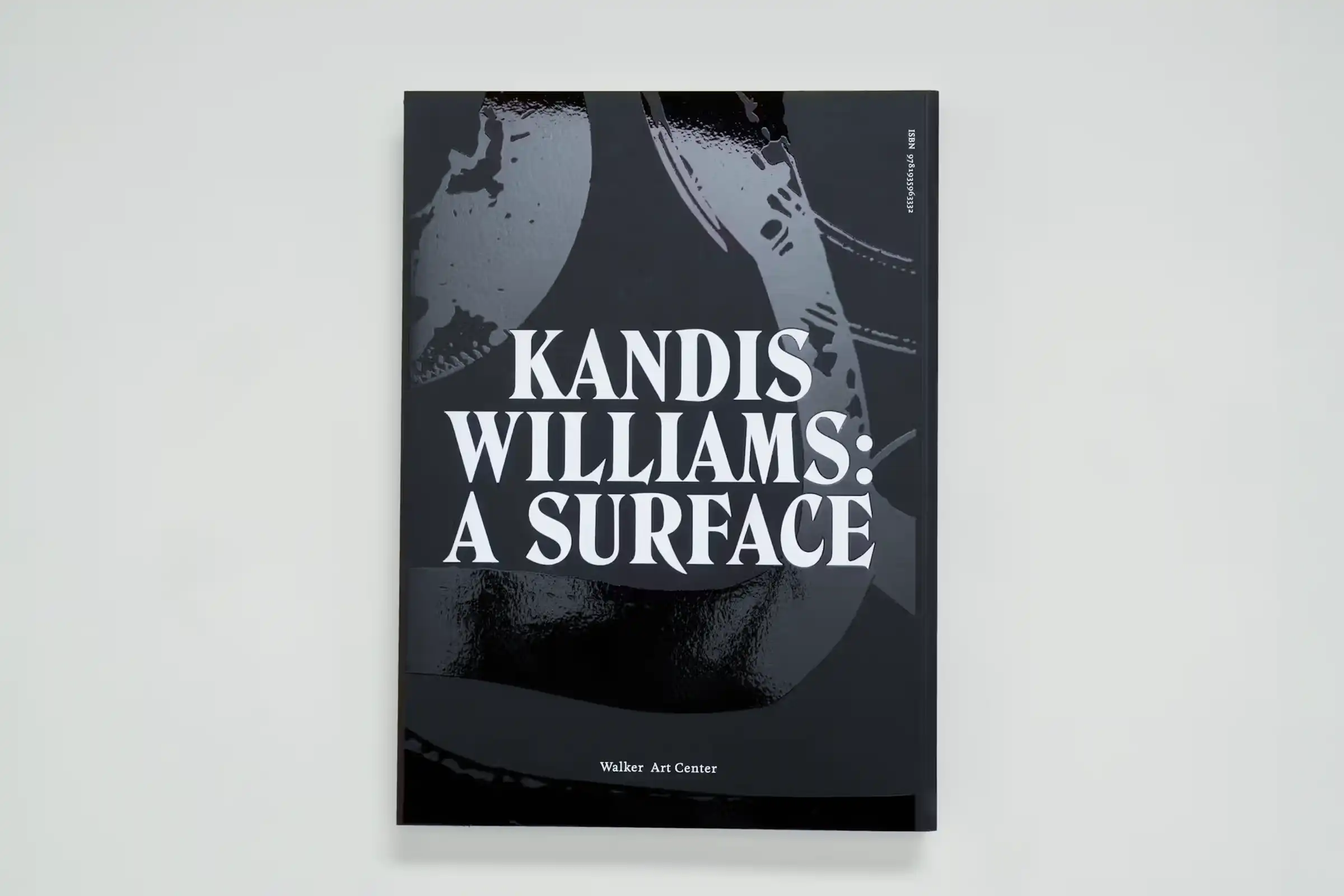
Kandis Williams: A Surface
2025
2025
Design Director: Mark Owens
Publications Manager: Jake Yuzna
Designer: Nazlı Ercan
Editor: Michelle Piranio
Proofreader: Dianne Woo
Image Specialist: Colour & Books
Printed by die Keure, Belgium
Typefaces: Hawthorn, Feijoa, ABC Marfa
Paper: Muken Lynx, Holmen Book, Sirio
American artist Kandis Williams works across collage, sculpture, film, performance, writing, pedagogy and publishing. Her multidisciplinary practice leverages the experience of the body alongside personal and communal histories to explore and challenge notions of race, nationalism, authority and eroticism, among other subjects. Her meticulously compiled collages are densely layered, both in structure—through repetition of forms and figures—and in content, with an emphasis on politically loaded and libidinal images. Often inspired by history painting, these works are composed of images culled from magazines and archival texts, placed into an unsettling interplay. Williams considers these collages as a disintegration of photographic value into layered schematics.
Similarly, Williams’ performance practice explores coded social choreographies, emphasizing structural and systemic violence. In her performances, disembodied segments of text become collages, making up scripts for her performers. Through this process she proposes what she calls experimental pedagogy, a “consumption of academic texts that have a non-discursive output, an affective output that mythifies—weaving what kinds of knowledge are immediately relatable to an individual with the creation of a paradigm of thought.”
A Surface is Williams’ first museum survey, offering visitors an in-depth experience of her vision and practice. The exhibition features both important and lesser-known works from the past decade of her career.
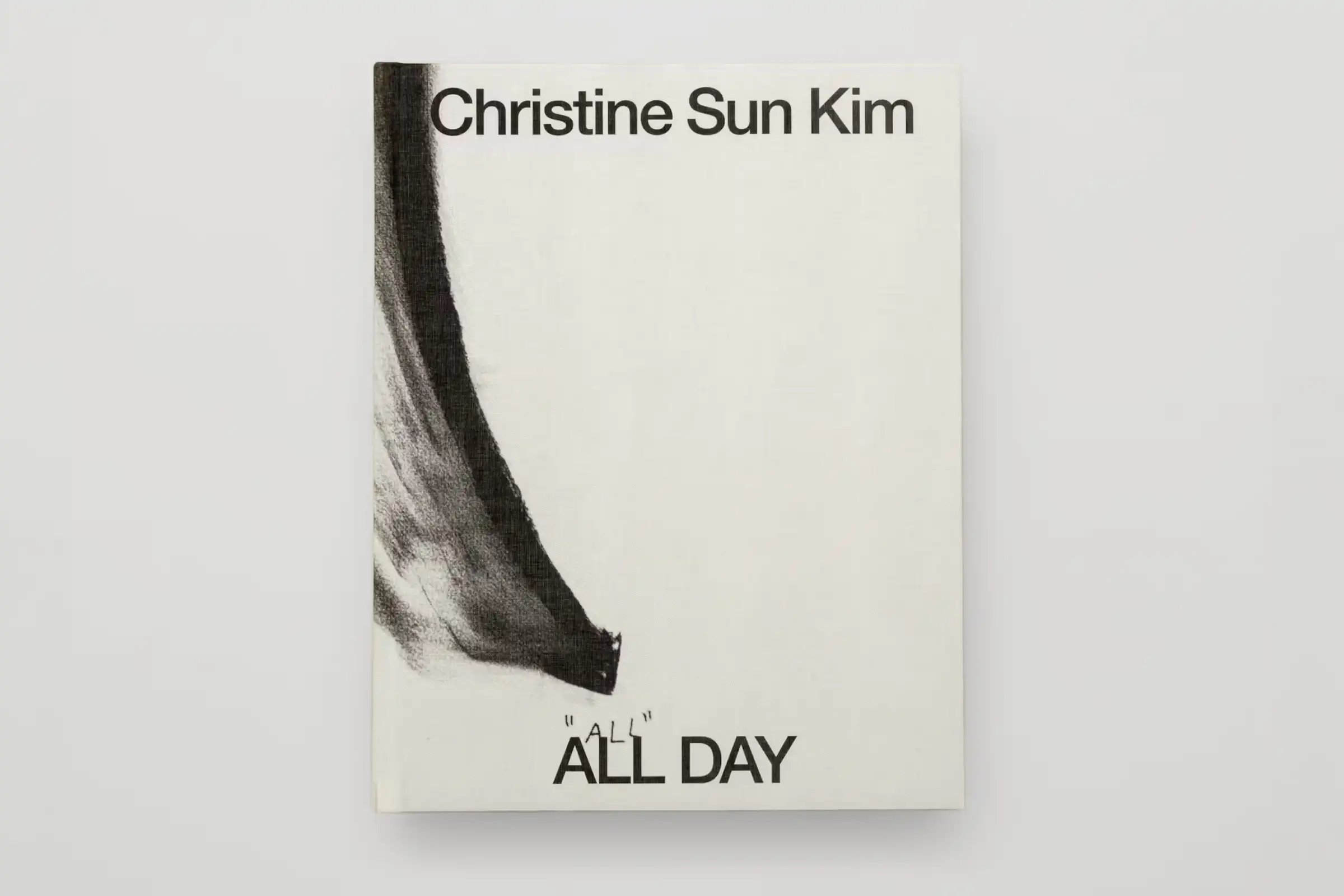
Christine Sun Kim: All Day All Night
2025
2025
Edited with text by Tom Finkelpearl, Jennie Goldstein and Pavel S. Pys. Foreword by Mary Ceruti. Text by Seth Kim-Cohen, Jeffrey Yasuo Mansfield, and Park McArthur.
Design Director: Mark Owens
Publications Manager: Jake Yuzna
Designer: David Yun, Eddie Kim, and Inyeong Cho, New Information
Editor: Pamela Johnson
Proofreader: Dianne Woo
Indexer: Enid Zafran
Image Specialist: Colour & Books
Printed by Musumeci, Italy
Typefaces: Helvetica Neue, BB Modern
Paper: Arena Rough White, Lessebo Vanilla 5012
This volume surveys Christine Sun Kim’s works across painting, sculpture, drawing, moving image, performance, large-scale murals and collaborations with other artists made between 2011 and 2024. Kim’s practice considers how sound operates in society, deconstructing the politics of sound and exploring how oral languages operate as social currency. Identifying as Deaf and Korean American, Kim draws on musical notation, written language, infographics, American Sign Language (ASL) and the use of the body, strategically deploying humor to examine communication with her family and her community and to create new channels of dialogue with wide audiences.
Published alongside the traveling exhibition, All Day All Night is brimming with supplementary texts from curators, artists and scholars, including an interview between Christine Sun Kim and exhibition curators Tom Finkelpearl, Jennie Goldstein and Pavel S. Pys; scholarly contributions by Seth Kim-Cohen, Jeffrey Yasuo Mansfield and Park McArthur; and an intimate artist timeline compiled by Brandon Eng and Rose Pallone. A substantial plate section follows these enriching text contributions.
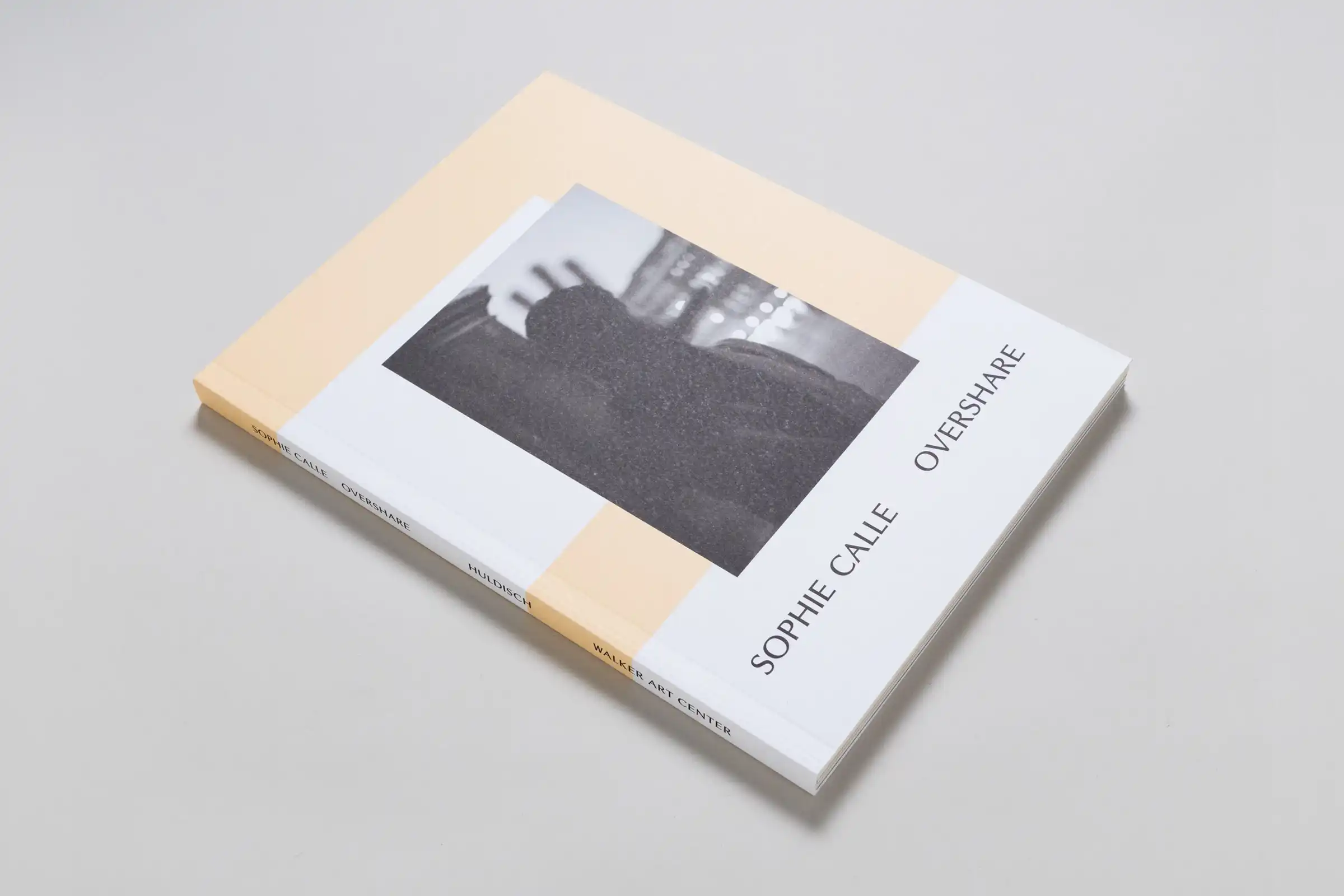
Sophie Calle: Overshare
2024
Edited with text by Henriette Huldisch. Foreword by Mary Ceruti. Text by Eugenie Brinkeman, Aruna D’Souza, Courtenay Finn.
Design Director: Mark Owens
Publications Manager: Jake Yuzna
Designer: Julia Born
Editor: Michelle Piranio
Proofreader: Dianne Woo
Image Specialist: Colour & Books
Printed by MUSUMECI S.p.A a socio unico, Italy
Typefaces: Addenda by Christopher West, Helvetica,
Times New Roman, Pantasia by Wei Huang, LL Electa by Luca Pellegrini
Paper: Munken Print Lynx
This volume accompanies the eponymous show at the Walker Art Center in Minneapolis, which is the first exhibition in North America to explore the range and depth of artist Sophie Calle’s practice across the past five decades.
Through examples of major bodies of work as well as lesser-known pieces, the exhibition captures Calle’s astute probing into the human condition and reveals ways that her early work anticipated the rise of social media as a space to create and share oneself.
The presentation features photography, video, installations and text-based works, highlighting the artist’s virtuosic use of different mediums to explore broadly recognizable and emotionally resonant themes. Organized into four thematic sections—“The Spy,” “The Protagonist,” “The End” and “The Beginning”—the book takes a new approach to some of Calle’s most acclaimed works including The Sleepers (1979) and Suite Vénitienne (1980), while also weaving in understudied works including Cash Machine (1991–2003) and Unfinished (2005).
The catalog further explores this new examination of Calle’s work with original writing by Henriette Huldisch, Eugenie Brinkeman, Aruna D’Souza and Courtenay Finn.
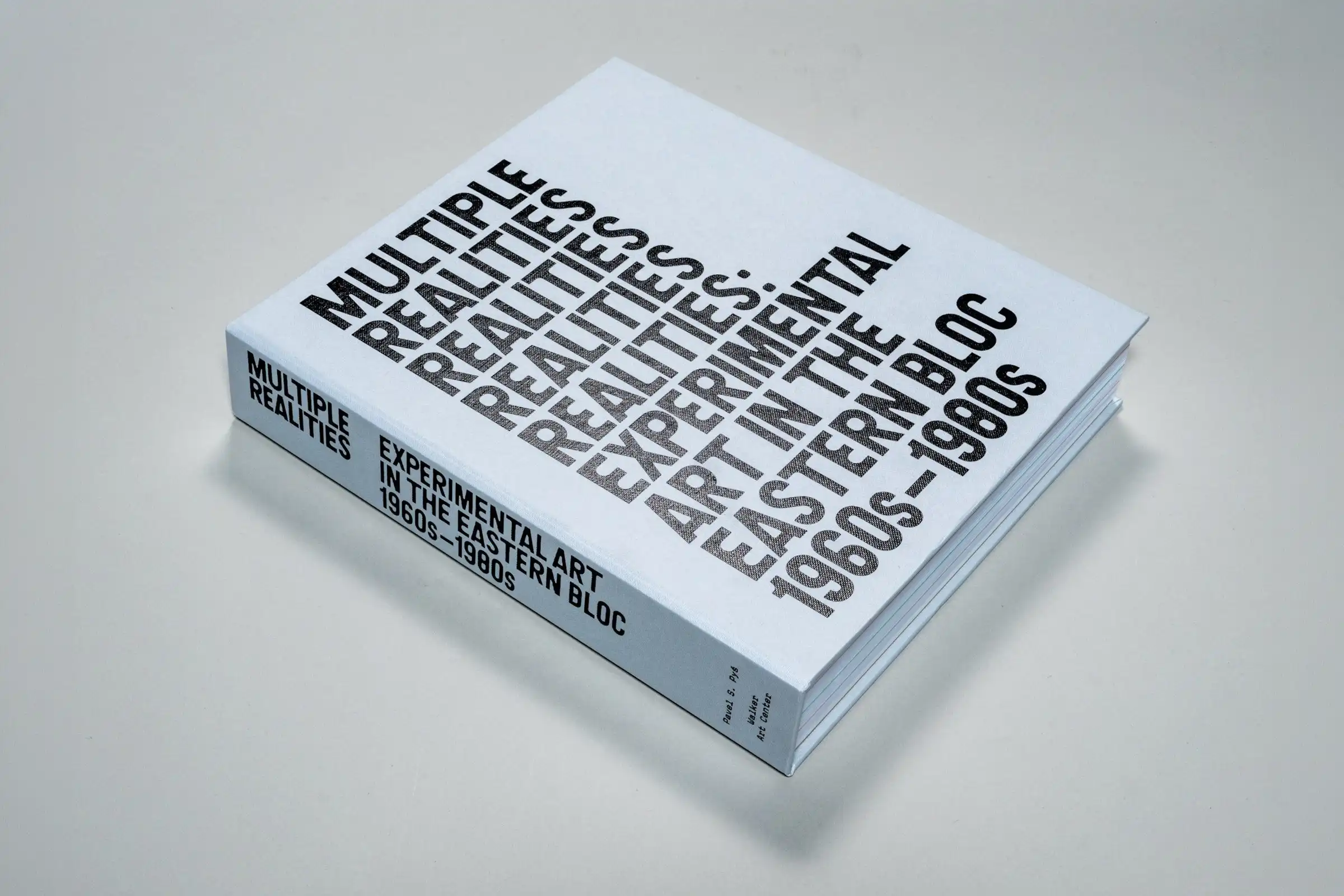
Multiple Realities: Experimental Art in the Eastern Bloc 1960s–1980s
2023
Edited by Pavel Pys. Foreword by Mary Ceruti. Contributions by Ivana Bago, Dušan Barok, Anna Daucíková, Michal Grzegorzek, Libuše Jarcovjáková, Daniel Muzyczuk, Alexandra Pirici, Pavel Pys, Karol Radziszewski, Kathleen Reinhardt, Natalia Sielewicz.
Design Director: Mark Owens
Designers: Mark Owens, Ziga Testen, and Kim Mumm Hansen
Editor: Pamela Johnson
Publications Manager: Jake Yuzna
Indexer: Enid L Zafran
Image Specialist: Sebastiaan Hanekroot,Colour & Books
Proofreader: Diane Woo
Printed by die Keure, Belgium
Typefaces: Balance, Magda Clean Mono, and Animo
Paper: Munken Print White 115gsm, Mono Gloss 115gsm, and Profibulk 135 gsm
Multiple Realities offers a sweeping survey of experimental art made in six Central Eastern European nations—GDR, Poland, Czechoslovakia, Hungary, Romania and Yugoslavia—during the 1960s to 1980s. Despite their geographical proximity, artists working during this time encountered different conditions for daily life and art-making, confronting varying degrees of control and pressure exerted by state authorities.
Embracing conceptual or formal innovation and a spirit of adventurousness, Multiple Realities sheds light on ways that artists refused, circumvented, eluded and subverted official systems, in the process creating works often riddled with wit, humor or irony. While it presents select canonical figures from the region, the exhibition foregrounds lesser-known practitioners, particularly women artists, artist collectives and those exploring embodiment through an LGBTQ+ lens.
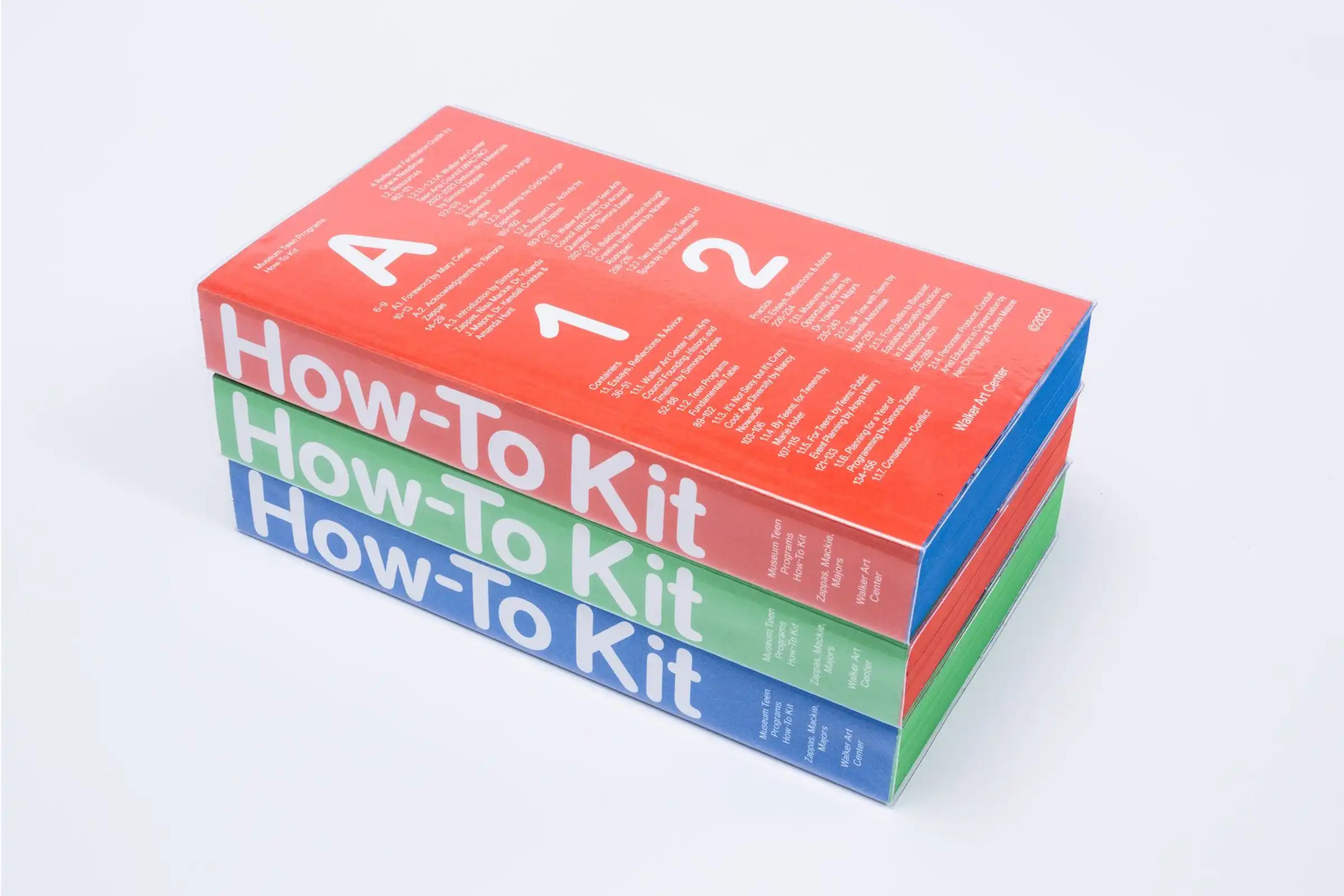
Museum Teen Programs How-To Kit
2023
Edited by Simona Zappas, Nisa Mackie, and Dr. Yolanda J. Majors
With contributions by Michelle Antonisse, Lauren Bína, Dr. Kendall Crabbe, Jorge Espinosa, Araya Henry, Jo Higgins, Lyra Hill, Marie Hofer, Amanda Hunt, Melissa Katzin, Andreas Laszlo Konrath, Savannah Knoop,Jeremy Kreusch, Stephen Kwok, Nisa Mackie, Devin Malone, Mollie McKinley, Grace Needlman, Nancy Nowacek, Sean J. Patrick Carney, Nohemi Rodriguez, and Alex Chung Vargo
Design Director: Mark Owens
Designer: Ian Babineau
Editors: Vanessa Christensen and Dr. Kendall Crabbe
Publications Manager: Jake Yuzna
Design Studio Manager: Kate Arford
Proofreader: Annemaire Eayrs
Printed by MUSUMECI S.p.A a socio unico, Italy
Typefaces: Saguaro Sans, DeVinne, Bodoni. Saguaro Sans was designed by Brian Huddleston. It is a loose revival of Sonoran Sans, an early version of Arial as it existed in 1984.
Paper: Munken Lynx Rough, Refu- tura, Magno Gloss
This free publication offers a collection of reflections, conversations, and essays on cohort based teen programs at museums paired with resources and instructions for applied activities. Consisting of contributions from museum teen education professionals from across the United States, Museum Teen Programs How-To Kit publication is intended to be by educators and for educators navigating the unique challenges of facilitating impactful creative youth development in museums.
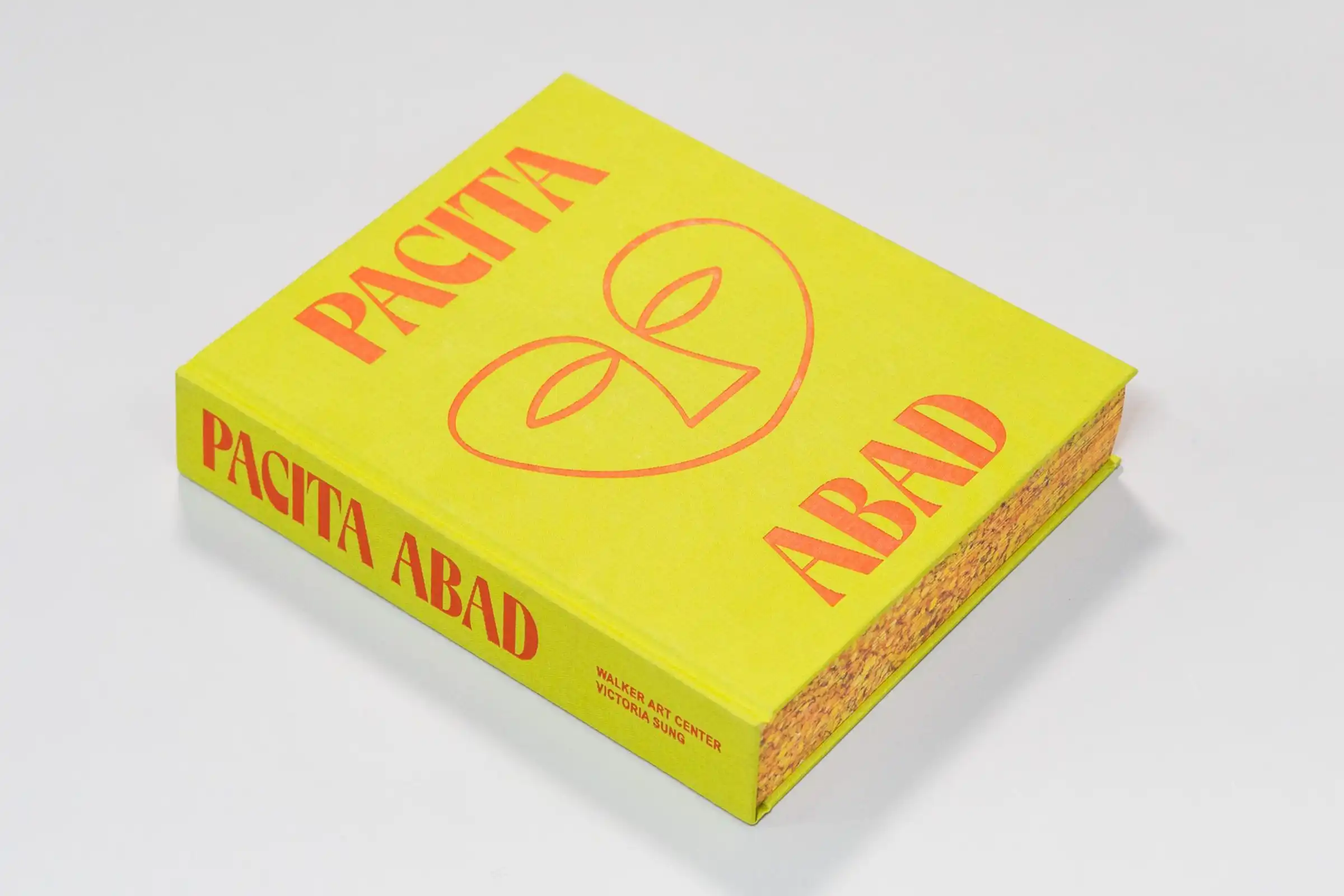
Pacita Abad
2022
Edited with text by Victoria Sung. Text by Pio Abad, Julia Bryan-Wilson, Ruba Katrib, Nancy Lim, Matthew Villar Miranda, Xiaoyu Weng.
Head of Content & Communications: Asli Altay
Design Director: Mark Owens
Designer: STUDIO LHOOQ, My Linh Trieu Nguyen,Daniel Cohen, Nik Ivanov
Editor: Laura Silver
Publications Manager: Jake Yuzna
Design Studio Manager: Kate Arford
Indexer: Enid L. Zafran
Proofreader: Dianne Woo
Image Specialist: Colour & Books
Printed by MUSUMECI S.p.A a socio unico, Italy
Typefaces: Eklektyk, Jost, Janson Max Neue, Arial Narrow, Arial Black
Paper: Munken Polar Rough
This volume surveys three decades of Pacita Abad’s multifaceted practice. Published on the occasion of her first-ever retrospective, it includes new research and writing by Julia Bryan-Wilson, Ruba Katrib, Nancy Lim, Matthew Villar Miranda, Victoria Sung and Xiaoyu Weng, an edited oral history about the artist’s life and work by Pio Abad and Victoria Sung, and never-before-seen artworks and archival materials
Over the course of her career, Abad made an exuberant, wide-ranging body of work that was ahead of its time in promoting a transcultural worldview. Moving between the Philippines, Indonesia, Singapore and the US—while also spending extended periods in dozens of countries on six continents—she interacted with the many artist communities she encountered on her travels. Drawing on her knowledge of global fiber traditions, Abad innovated a hybrid art form that she called “trapunto” painting (from the Italian word trapungere, “to embroider”). Made by stitching and stuffing her painted canvases as opposed to stretching them over a wood frame, the resulting works’ portability speaks to her peripatetic existence, while their association with textiles evokes female, non-Western forms of labor that have historically been marginalized as craft.
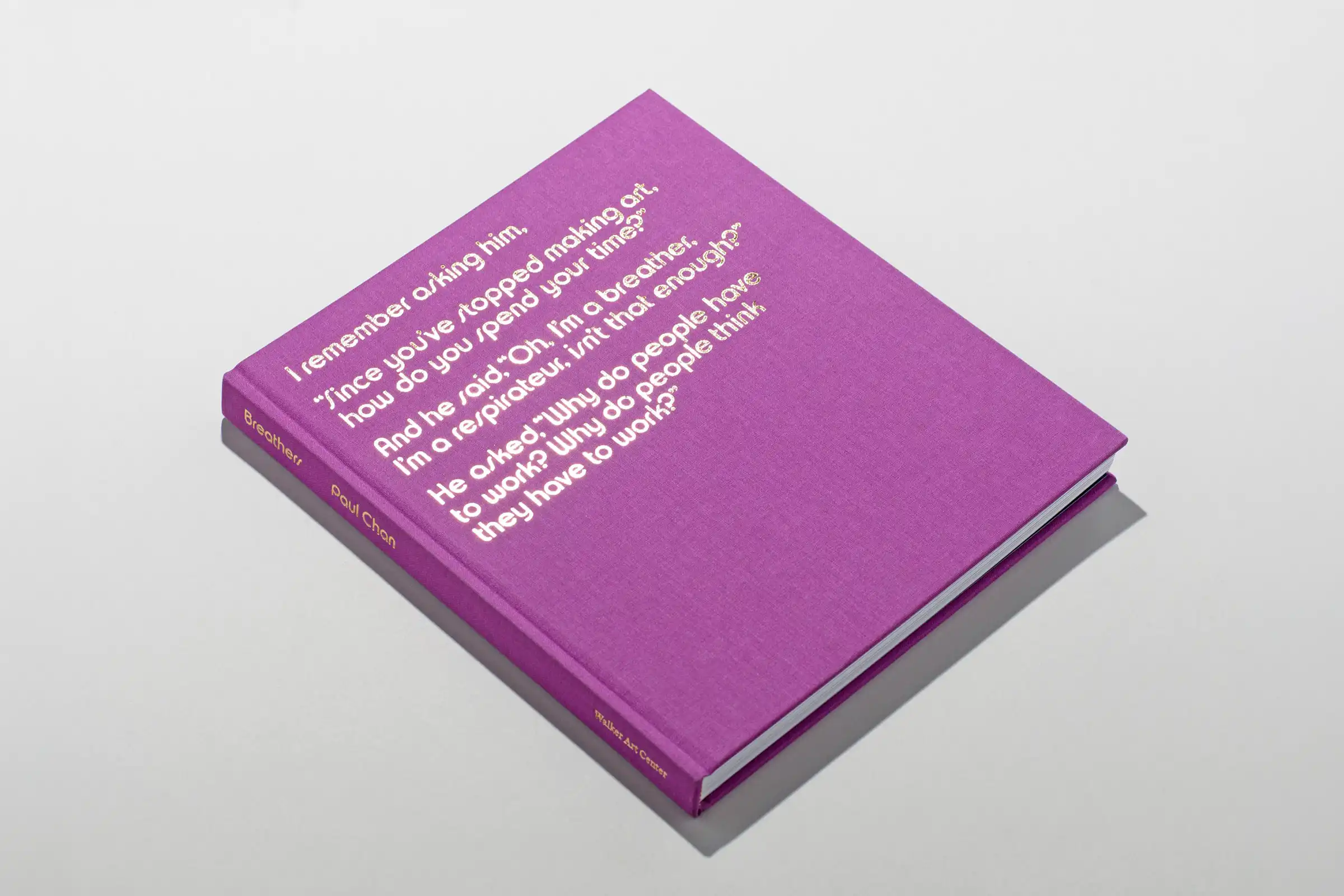
Paul Chan: Breathers
2022
Edited with text by Pavel S. Pyś. Foreword by Mary Ceruti. Text by Vic Brooks, Paul Chan.
Design Director: Emmet Byrne
Designer: Brian Huddleston
Editor: Annie Jacobson
Publications Manager: Jake Yuzna
Printed by die Keure, Belgium
Typefaces: Breathers, Churchward, Design Medium
Papers: Arctic Munken Lynx, Fedrigoni Constellation Snow E/E49
This volume surveys Paul Chan’s publications and works made between 2010 and 2022 following his return to artmaking. The exhibition takes as its organizing principle the notion of the “breather,” a word that can signify a moment of rest or pause but can also reference a purposeful redirection toward other activities.
Chan’s turn to publishing through the founding of his independent press Badlands Unlimited represented a type of “breather.” Badlands for Chan embodied a radical break that seeded new ideas and ways of working. The term is also what Chan titles a recent major body of work. Breathers is an ongoing series of pneumatic sculptures and installations that he considers a new genre of moving-image works. Tacitly and overtly, the metaphor of the “breather” underscores each of the works in the Walker Art Center exhibition, which, with the artist’s input, is conceived in four sections.
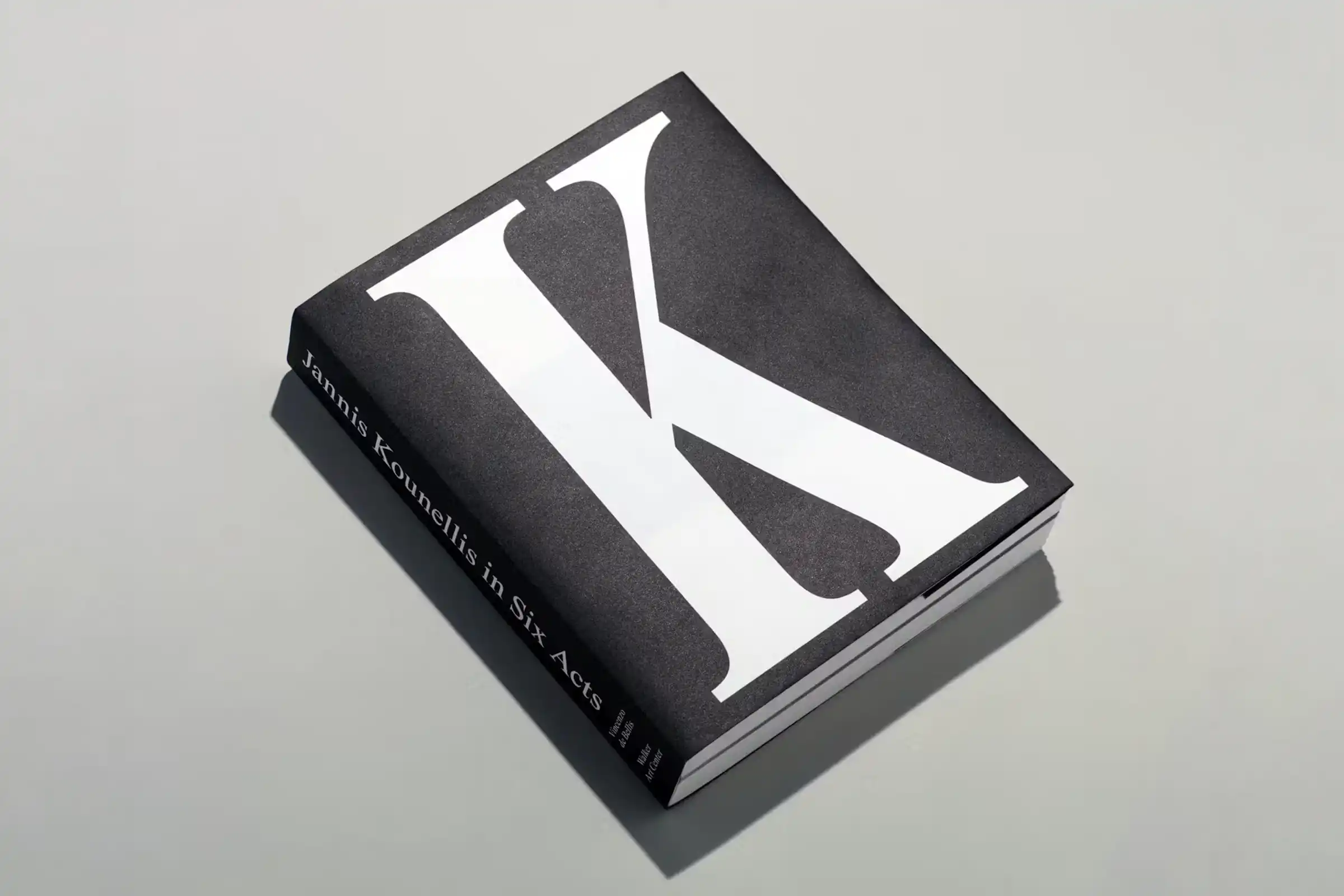
Jannis Kounellis in Six Acts
2022
2022
Edited with text by Vincenzo de Bellis. Foreword by Mary Ceruti. Text by Michelle Coudray, Claire Gilman, Kit Hammonds, William Hernández Luege, Jannis Kounellis, and Ara H. Merjian.
Design Director: Emmet Byrne
Designer: Ben Schwartz
Editor: Pamela Johnson
Publications Manager: Jake Yuzna
Indexer: Enid Zafran
Image Specialist: Colour & Books
Printed by MUSUMECI S.p.A a socio unico, Italy
Typefaces: Linotype Vega; Bistream Geometric 212
Paper: 100 gsm Munken Pure rough 1.4
Over the course of more than five decades, Jannis Kounellis developed a singular practice across painting, works on paper, sculpture, installation and hybrid works combining objects with live performance. Playing a central role in the Italian Arte Povera movement of the 1960s and early 1970s, Kounellis created wide-ranging and innovative works exploring theater, migration, history, politics and other themes, which continue to influence subsequent generations of artists.
Published by the Walker Art Center for the first US Kounellis survey in over 35 years, Jannis Kounellis in Six Acts offers the most comprehensive assessment of his career to date. The richly illustrated catalog, assembled with the full cooperation of the artist’s estate and archive, presents a first-of-its-kind collection of visual materials and Kounellis’ writings, including image-based exhibition and performance chronologies.
Photographs of Kounellis’s works in this catalogue are the work of Claudio Abate, whose estate, along with the Kounellis estate, has granted reproduction rights.
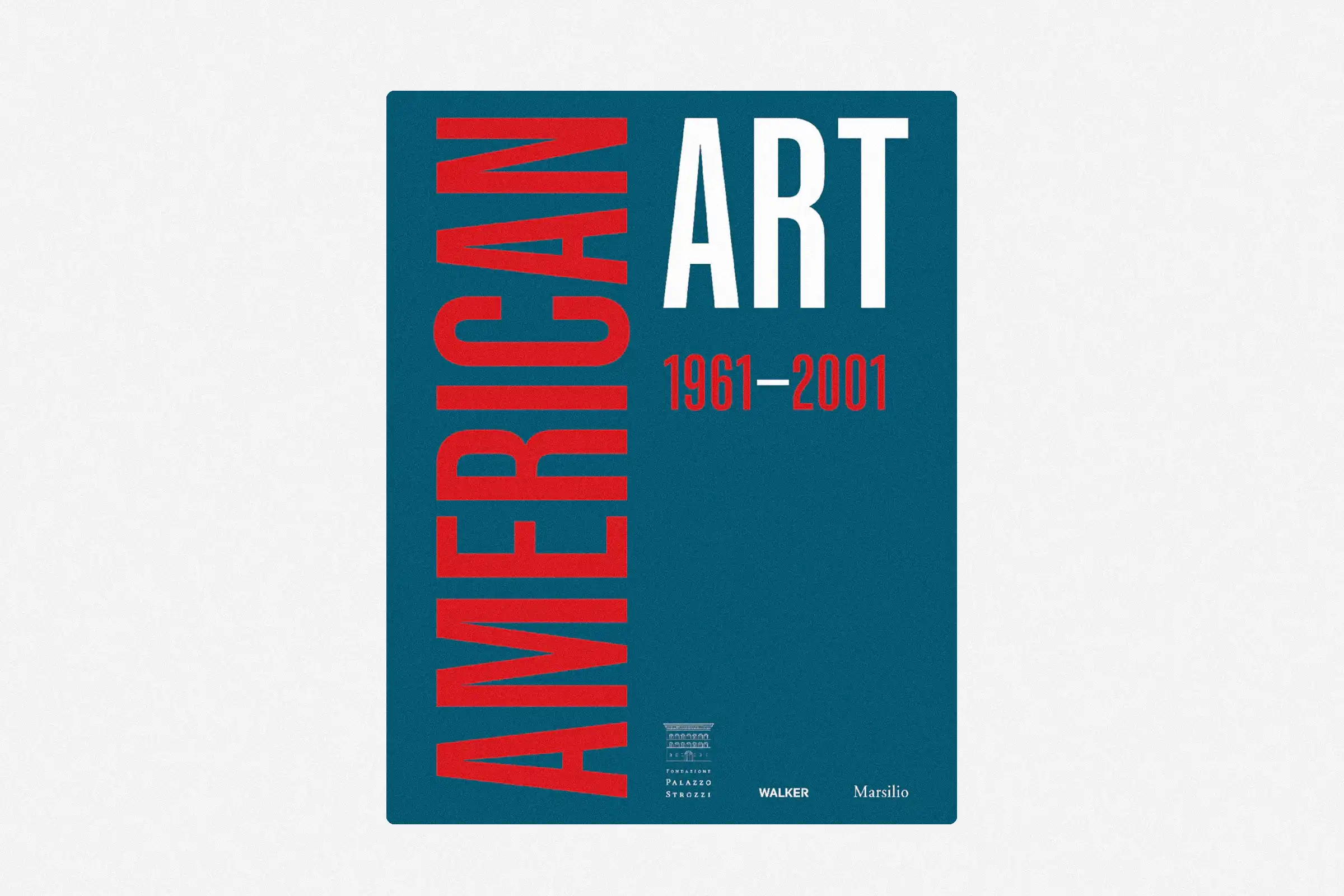
American Art 1961–2001
2021
Edited by Vincenzo De Bellis and Arturo Galansino
Design Director: Emmet Byrne
Designer: Carmen Malafronte
Copy Editor: Lemuel Caution
Translation: Sylvia Notini
This diverse survey of American art from the collection of the Walker Art Center uses two of the nation’s most significant events as its chronological boundaries: the failed Bay of Pigs Invasion in 1961 that escalated the Vietnam War and the 2001 terrorist attacks on New York and Washington, DC. Within the timeframe of these two landmark calamities, the United States saw the emergence of some of its most noteworthy artists.
The publication examines the many themes and techniques developed during those 40 years within the greater context of American history and culture, from modernist abstraction to mass production. These generations of artists probed the very notion of what art is and what it can do using paint, performance, installation, video and photography. This paperback volume features work by artists such as Jasper Johns, Donald Judd, Barbara Kruger, Robert Mapplethorpe, Bruce Nauman, Cindy Sherman, Robert Rauschenberg, Kara Walker and Andy Warhol from the Walker Art Center’s acclaimed collection.
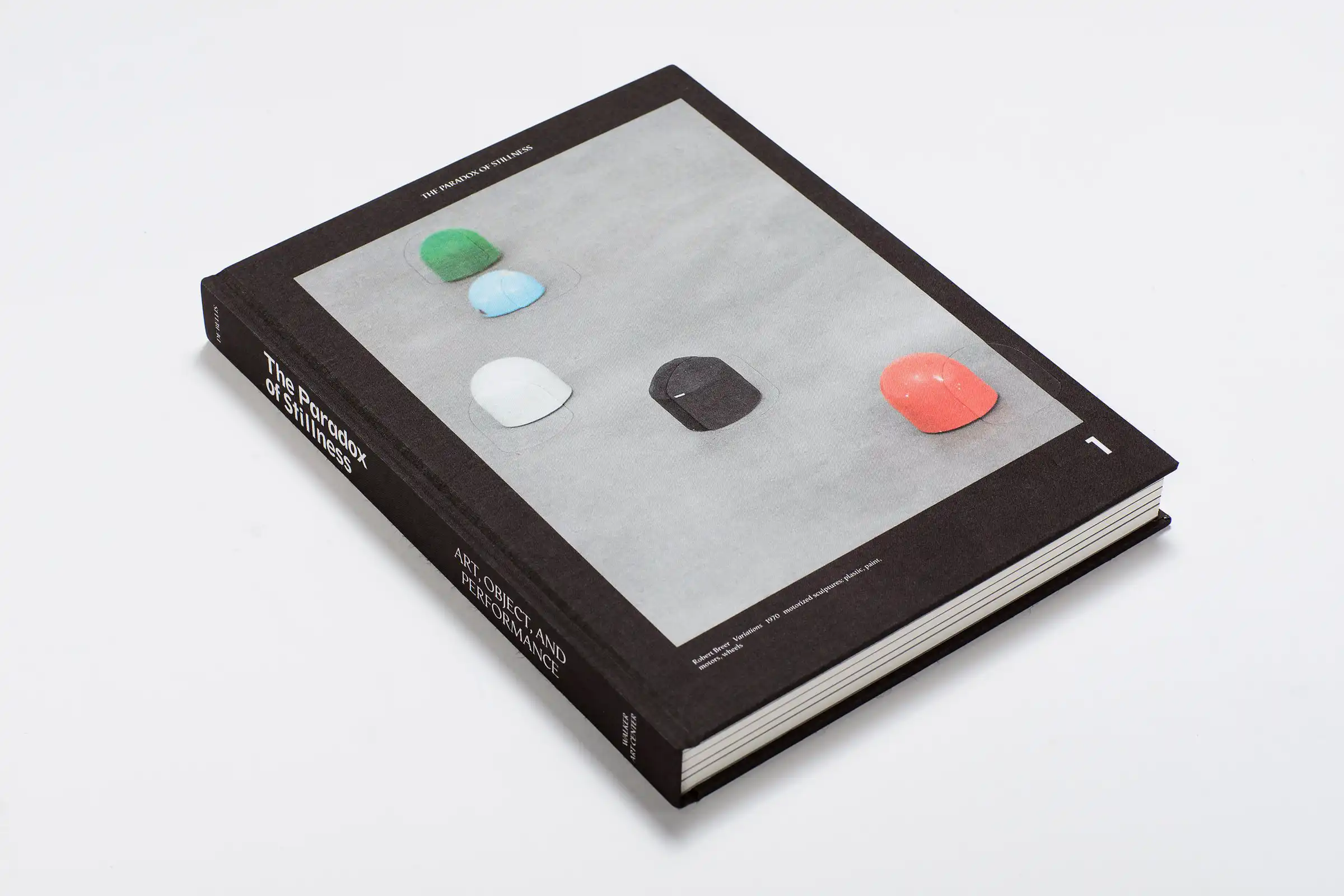
The Paradox of Stillness: Art, Object, and Performance
2020
Edited with text by Vincenzo de Bellis.
Foreword by Mary Ceruti. Text by Manuel Cirauqui, Jadine Collingwood, Hendrik Folkerts, Emma Lavigne, Catherine Wood.
Design Director: Emmet Byrne
Designer: Alex DeArmond
Editor: Karen Jacobson
Senior Imaging Specialist: Greg Beckel
Design Studio Manager: Alanna Nissen
Photographer: Bobby Rogers
Printed by die Keure, Belgium
Typefaces: Linotype Vega; Bistream Geometric 212
Paper: 100 gsm Munken Pure rough 1.4
How performance has transformed the status of the art object, in works by Félix González-Torres, Oskar Schlemmer, Robert Morris and more
Presenting works from the early 20th century to today, The Paradox of Stillness: Art, Object, and Performance examines the notion of stillness as both a performative and visual gesture, featuring practitioners who have constructed static or near-static experiments that hover somewhere between action and representation as they are experienced in the gallery space. The exhibition investigates performance from the perspective of the object rather than the body, examining how performance has reinterpreted traditional artistic mediums.
Stillness and permanence are qualities typically seen as inherent to painting and sculpture—consider the frozen gestures of a historical tableau or the unyielding solidity of a bronze figure. The Paradox of Stillness, however, expands the artwork’s quality of stillness to accommodate uncertain temporalities and physical states, investigating works that merge objects with human bodies suspended in motion. Featuring artists whose works include performative elements but also embrace acts, objects and gestures that refer more to the inert qualities of painting or sculpture than to true staged action, The Paradox of Stillness rethinks the history of performance through its aesthetic investigations into the interplay of the fixed image and the live body.
Artists include: Marina Abramovic, Merce Cunningham, Giorgio de Chirico, VALIE EXPORT, Gilbert and George, Félix González-Torres, Maria Hassabi, Jannis Kounellis, Kasimir Malevich, Piero Manzoni, Robert Morris, Senga Nengudi, Michelangelo Pistoletto, Oskar Schlemmer, Sophie Taeuber-Arp, Cindy Sherman, Mario Garcia Torres and Franz West.
2010–2019
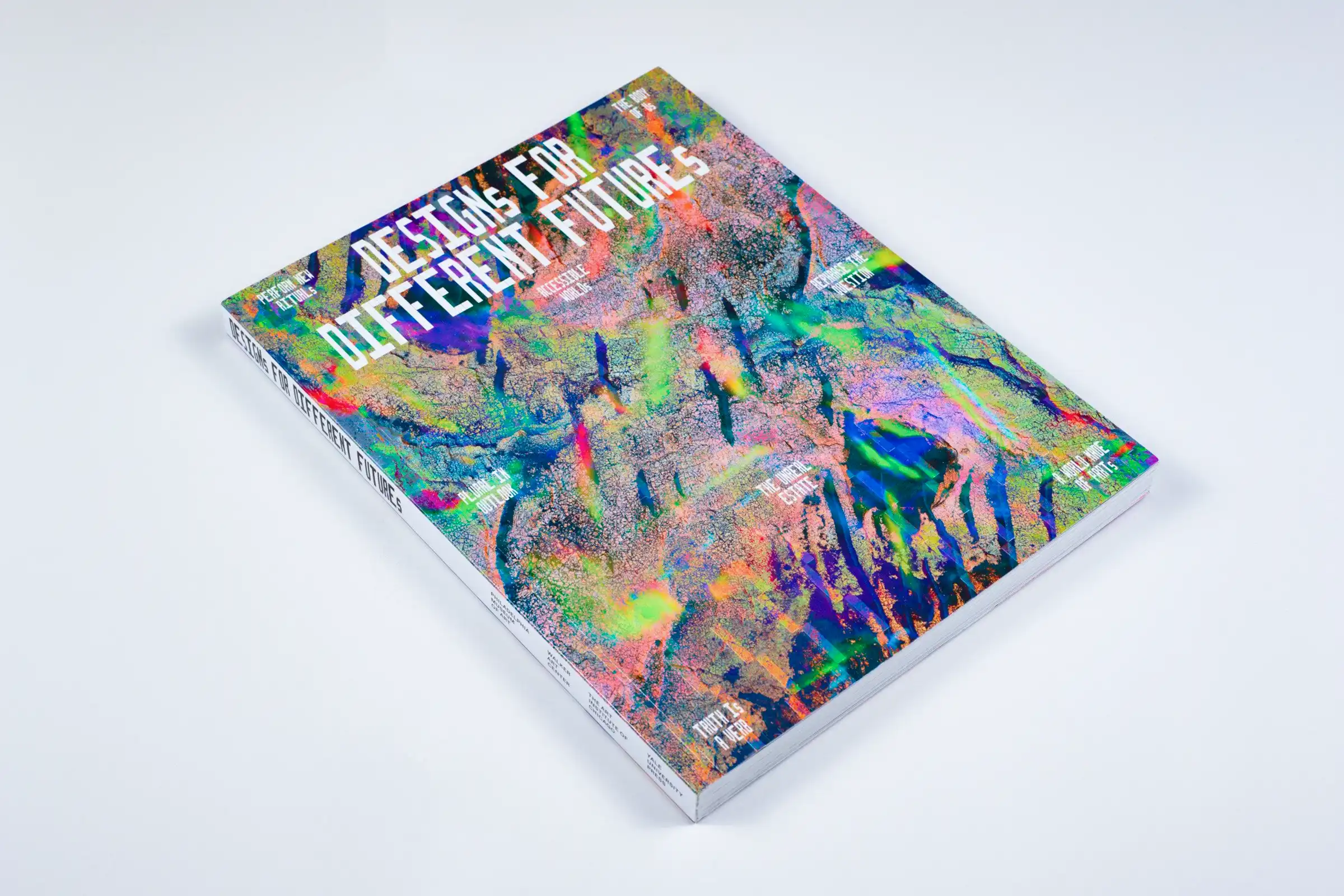
Design for Different Futures
2019
Edited by Kathryn B. Hiesinger, Michelle Millar Fisher, Emmet Byrne, Maite Borjabad López-Pastor, and Zoë Ryan (editors), with Andrew Blauvelt, Colin Fanning, and Orkan Telhan.
Contributions by Juliana Rowen Barton, V. Michael Bove Jr., Christina Cogdell, Gabriella Coleman, Simone Farresin, Marina Gorbis, Aimi Hamraie, Srećko Horvat, Nora Jackson, Francis Kéré, David Kirby, Helen Kirkum, Bruno Latour, Marisol LeBrón, Ezio Manzini, Jillian Mercado, Alexandra Midal, Neri Oxman, Chris Rapley, Maude de Schauensee, Andrea Trimarchi, Eyal Weizman, Danielle Wood, LinYee Yuan, and Emma Yann Zhang
Edited by Katie Brennan and Kathleen Krattenmaker
Production by Richard Bonk
Design by Ryan Gerald Nelson and Emmet Byrne
Index by Enid Zafran
Printed and bound in Italy by Musumeci S.p.A., Valle d’Aosta
Designs for Different Futures records the concrete ideas and abstract dreams of designers, artists, academics, and scientists exploring how design might reframe our futures, socially, ethically, and aesthetically. Encompassing nearly 100 contemporary examples—from wearable objects to urban infrastructure—this handbook interrogates attitudes toward technology, consumption, beauty, and social and environmental challenges. The projects examined include a typeface unreadable by text-scanning software, the Svalbard Global Seed Vault, a dress incorporating the sound-wave patterns of birds in flight, a shelter for cricket farming, and a speculative prosthetics catalogue for the “post-human.” Commissioned essays and interviews from figures such as Francis Kéré, Bruno Latour, Neri Oxman, and Danielle Wood give voice to issues faced in futures near and far. With perspectives ranging from historical visions of the future to the use of biological materials in production processes, this is essential reading for anyone interested in how design might shape the world to come.
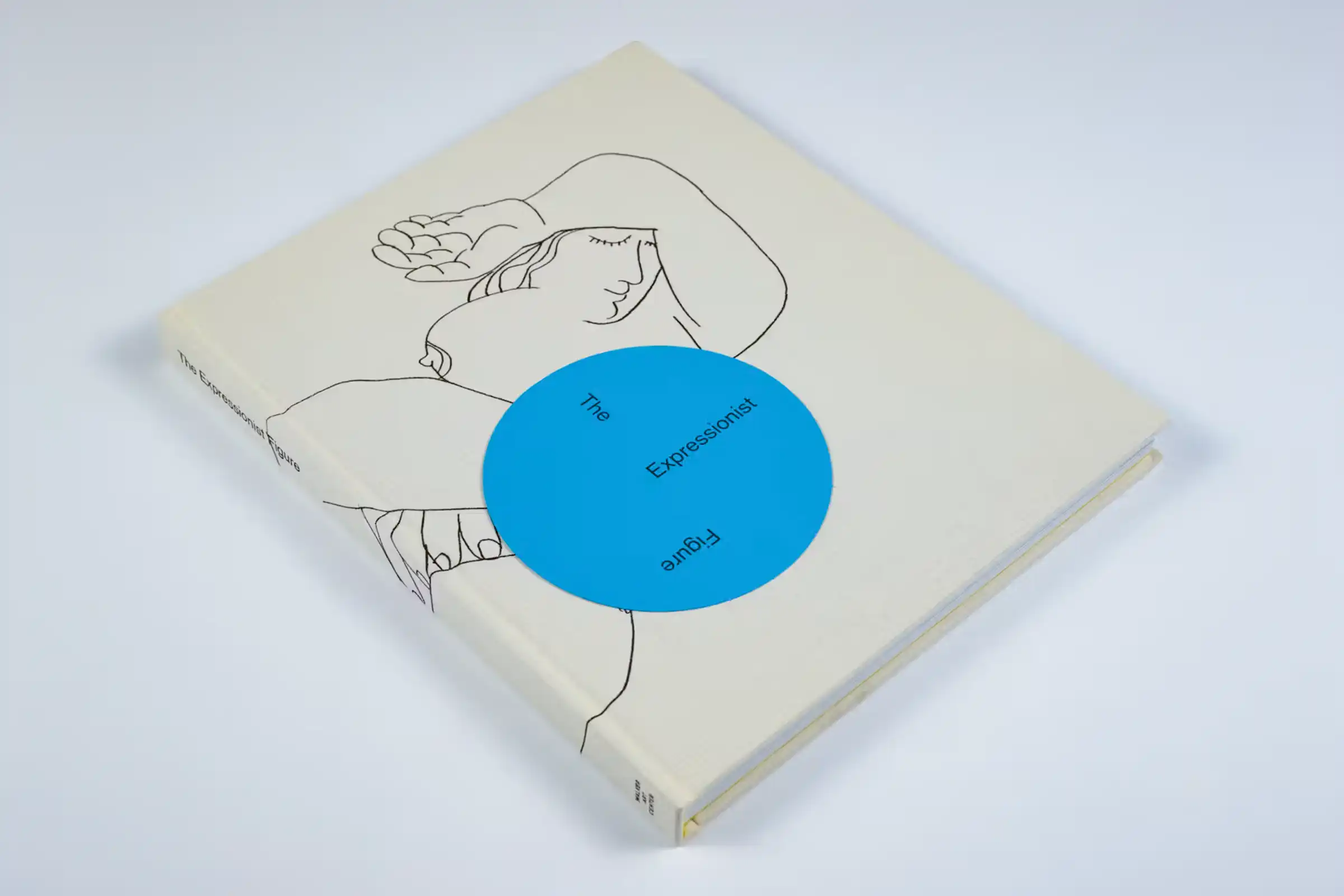
The Expressionist Figure : The Miriam and Erwin Kelen Collection of Drawings
2019
Edited with introduction and text by Joan Rothfuss. Foreword by Mary Ceruti.
Design Director: Emmet Byrne
Designer: Alex DeArmond
Editor: Kathleen McLean
Senior Imaging Specialist: Greg Beckel
Design Studio Manager: Alanna Nissen
Printed by Die Keure, Belgium
Typefaces: Applied Sans
Paper: Magno Volume
The Expressionist Figure documents a collection amassed over more than 60 years and recently gifted to the Walker, which includes some 80 superlative works on paper that focus on the figure. Dating from 1900 to 2018, the drawings span more than a century of artistic experimentation in the US and Europe and were executed in mediums ranging from graphite, ink and crayon to pastel, gouache and collage.
Among the artists represented are Milton Avery, Max Beckmann, Christo, Chuck Close, Edgar Degas, Willem de Kooning, Otto Dix, Marlene Dumas, Arshile Gorky, David Hockney, Jasper Johns, William Kentridge, Ernst Ludwig Kirchner, Paul Klee, Gustav Klimt, René Magritte, Henri Matisse, Joan Miró, Claes Oldenburg, Pablo Picasso, Sigmar Polke, Egon Schiele, Ben Shahn, Zak Smith and Andy Warhol.
Published on the occasion of the first exhibition of this collection, this luxurious volume includes full-page color reproductions of each drawing along with a catalog entry detailing the history of each object.
Also included are an essay by the collector on his passion for drawing, and curator Joan Rothfuss’ deeply researched short essays on 14 individual works. Both beautiful and substantive, The Expressionist Figure is a testament to the pleasure of building a collection and the rewards of sharing it.
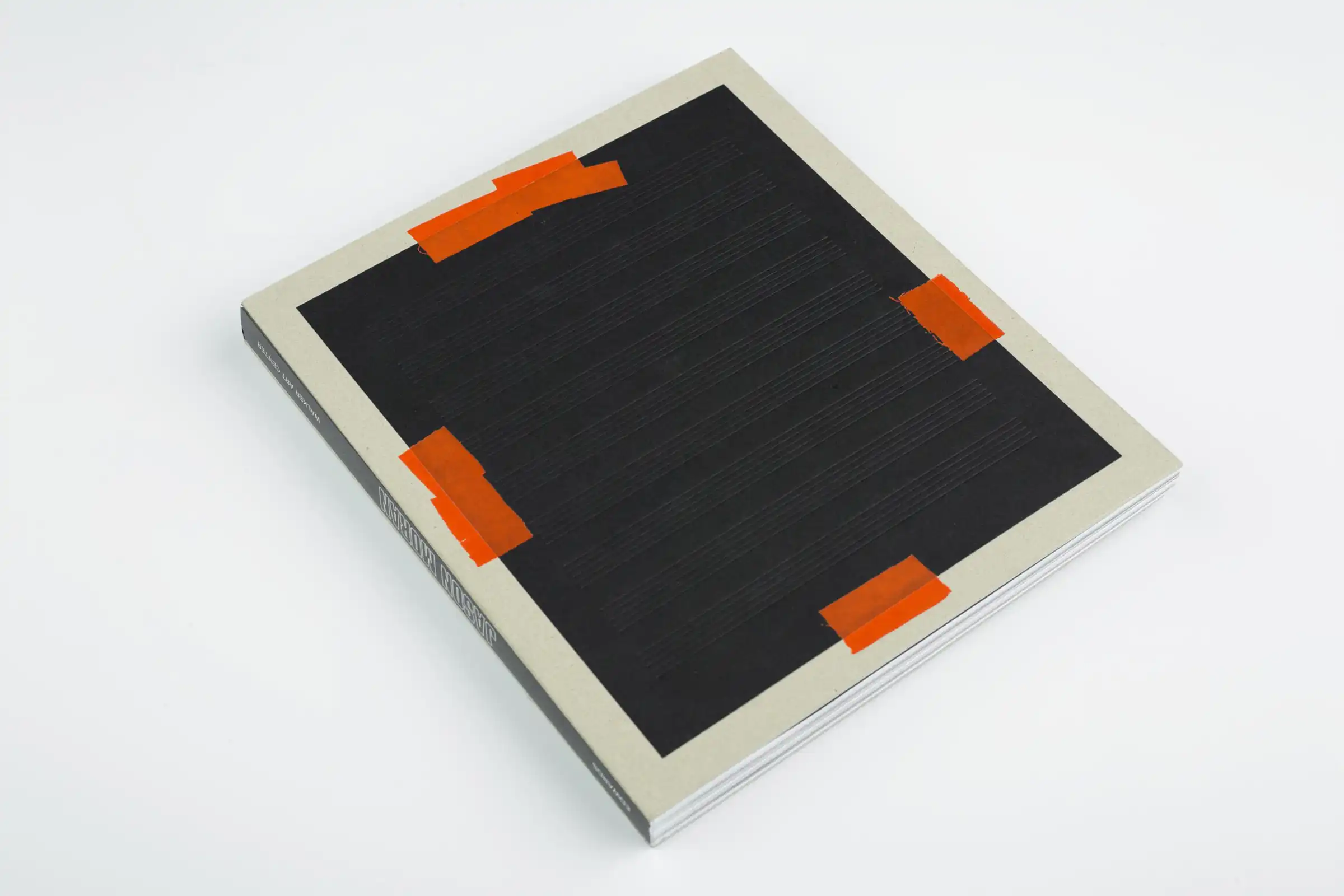
Jason Moran
2018
Edited with text by Adrienne Edwards.
Foreword by Olga Viso. Text by Philip Bither, Okwui Enwezor, Danielle Jackson, Alicia Hall Moran, George E. Lewis, Glenn Ligon.
Design Director: Emmet Byrne
Designer: 12:01 – Office of Hassan Rahim
Editor: Cathy Lebowitz
Proofreader: Pamela Johnson
Senior Imaging Specialist: Greg Beckel
Design Studio Manager: Alanna Nissen
Printed by Oddi Sales/Gorenjski Tisk, Kranj, Slovenia.
Typefaces: Century Schoolbook Mono, Compacta, and Untitled Sans.
Papers: Cyclus Print, Munken Lynx, and Omni Gloss.
This is the first in-depth publication to investigate the practice of pianist, composer and visual artist Jason Moran, whose work bridges the fields of visual arts and performing arts. As a “torchbearer for jazz,” Moran challenges traditional forms of musical composition; his experimental works merge object and sound, underscoring the theatricality of both mediums. Moran—who often collaborates with prominent visual artists such Joan Jonas, Stan Douglas, Lorna Simpson and Glenn Ligon—pushes beyond the conventions of sculpture and the concert stage while continuing to embrace the essential tenets of jazz and improvisation.
This volume, published in conjunction with the Walker Art Center’s 2018 exhibition, considers the artist’s practice and his collaborative works as interdisciplinary investigations that further the fields of experimental jazz and visual art. It features essays by curators, artists, musicians and art historians, plus an interview and photo essay by Moran. These are supplemented by sections documenting the creation of Moran’s mixed-media “set sculptures” including STAGED: Savoy Ballroom 1, STAGED: Three Deuces (both 2015) and STAGED: Slugs (2018). This is an essential volume for anyone interested in the intersection of contemporary art and music.
Jason Moran was born in Houston, Texas, in 1975, and received a BM from the Manhattan School of Music in 1997. He joined the faculty of the New England Conservatory in 2010. In 2014, was named artistic director for jazz at the Kennedy Center in Washington, DC. He was a 2015 Grammy nominee for Best Jazz Instrumental Album for ALL RISE: A Joyful Elegy for Fats Waller, and he composed his first feature film score for Selma (2014), directed by Ava DuVernay.
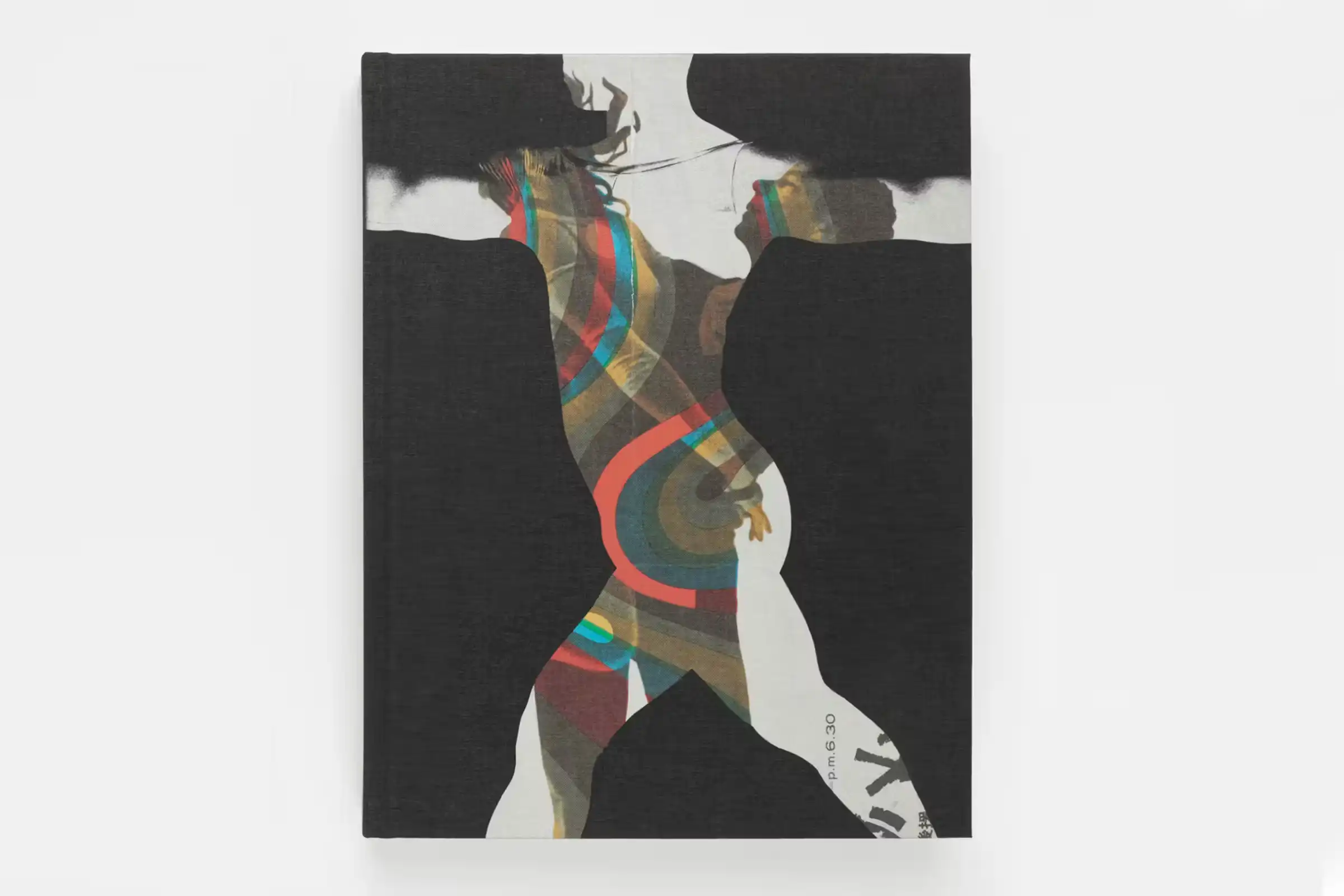
Merce Cunningham : Common Time
2017
Edited with text by Fionn Meade, Joan Rothfuss. Foreword by Olga Viso. Text by Carlos Basualdo, Juliet Bellow, Philip Bither, Roger Copeland, Mary L. Coyne, Douglas Crimp, Hiroko Ikegami, Kelly Kivland, Claudia La Rocco, Benjamin Piekut, David Vaughan. Interviews by Victoria Brooks, Danielle Goldman, Aram Moshayedi.
Design Director and Curator: Emmet Byrne
Senior Designer: Ryan Gerald Nelson
Editors: Pamela Johnson, Kathleen McLean
Senior Imaging Specialist: Greg Beckel
Photographer: Gene Pittman
Design Studio Manager: Ashley Duffalo
Indexer: Enid L. Zafran
Printed by Die Keure, Belgium
Typeface: AG Buch
Papers: Cyclus Print, Fedrigoni Symbol Freelife E/E, Igepa Caribic Grau, RecyStar Hellrosa
Renowned as both choreographer and dancer, Merce Cunningham (1919–2009) also revolutionized dance through his partnerships with the many artists who created costumes, lighting, films and videos, and décor and sound for his choreographic works. Cunningham, together with partner John Cage, invited those artists to help him rethink what dance could mean, both on the stage and in site-responsive contexts. His notion that movement, sound, and visual art could share a “common time” remains one of the most radical aesthetic models of the 20th century and yielded extraordinary works by dozens of artists and composers, including Charles Atlas, John Cage, Morris Graves, Jasper Johns, Rei Kawakubo, Robert Morris, Gordon Mumma, Bruce Nauman, Ernesto Neto, Pauline Oliveros, Nam June Paik, Robert Rauschenberg, Frank Stella, David Tudor, Stan Vanderbeek, Andy Warhol, and La Monte Young, among many others. These collaborations bring to the fore Cunningham’s direct impact upon postwar artistic practice.
This 456-page volume, published in conjunction with the Walker Art Center and MCA Chicago’s exhibition Merce Cunningham: Common Time (February 8–September 10, 2017), reconsiders the choreographer and his collaborators as an extraordinarily generative interdisciplinary network that preceded and predicted dramatic shifts in performance, including the development of site-specific dance, the use of technology as a choreographic tool, and the radical separation of sound and movement in dance. It features ten new essays by curators and historians, as well as interviews with contemporary choreographers—Beth Gill, Maria Hassabi, Rashaun Mitchell, and Silas Riener—who address Cunningham’s continued influence. These are supplemented by rarely published archival photographs, reprints of texts by Cunningham, Cage, and other key dancers, artists and scholars, several appendices, and an extensive illustrated chronology placing Cunningham’s activities and those of his collaborators in the context of the 20th century, particularly the expanded arts scene of the 1960s and 1970s. This book is an essential volume for anyone interested in contemporary art, music, and dance.
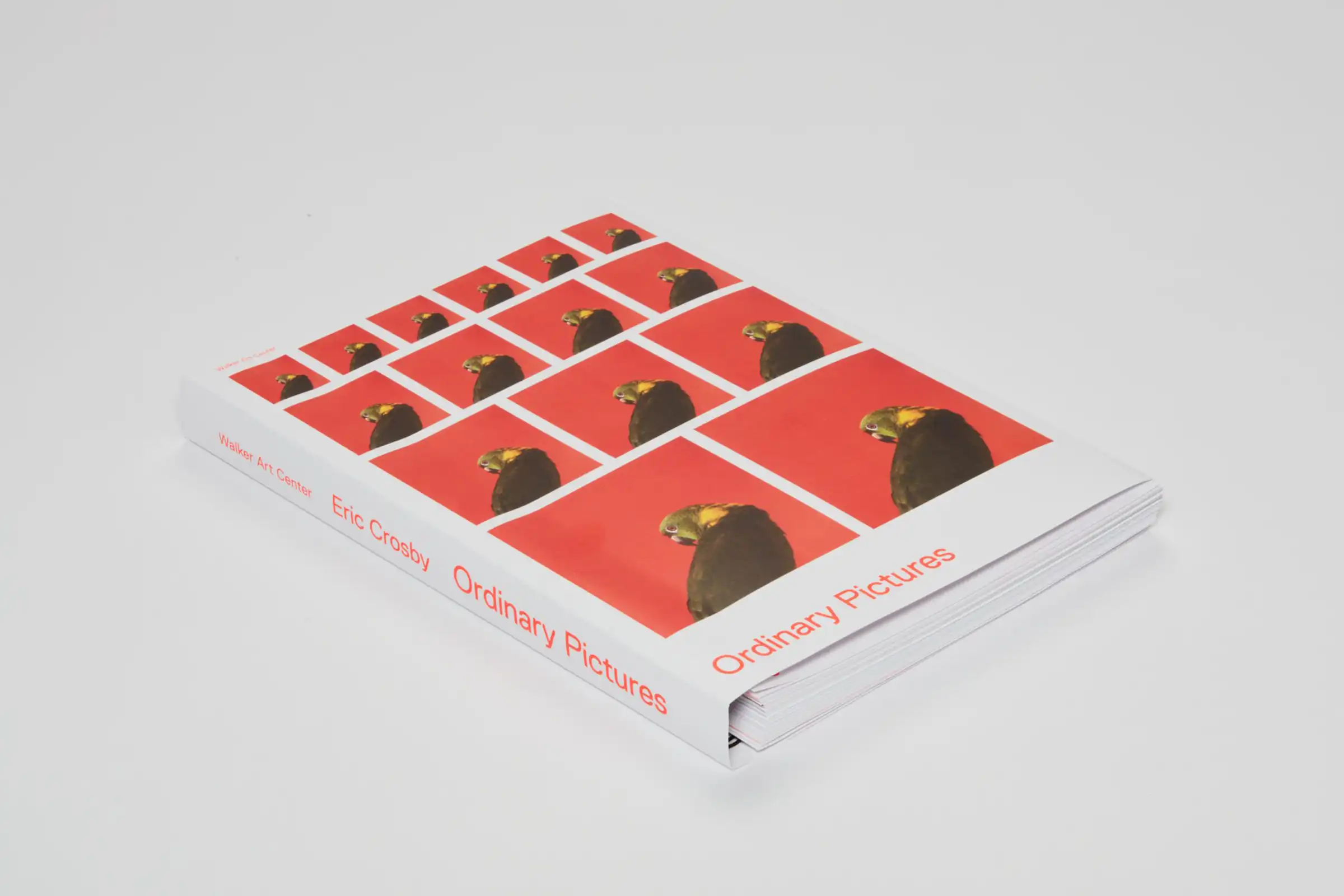
Ordinary Pictures
2016
Edited with text by Eric Crosby. Text by Thomas Beard, Lane Relyea, Eva Respini.
Curatorial Assistant: Misa Jeffereis
Design Director: Emmet Byrne
Designer: Dante Carlos
Editor: Michelle Piranio
Design Studio Manager: Ashley Duffalo
Image Production: Greg Beckel
Printed and bound in Belgium by die Keure
Typeface:
Replica
Despite its apparent throwaway status, the stock image comprises the primary commodity of a billion-dollar global industry with far-reaching effects in the marketplace and the public sphere. Taking this overlooked facet of contemporary life as a point of departure, Ordinary Pictures explores the photographic apparatuses and commercial interests that have given rise to our generic image culture through the conceptual image-based work of some 40 artists, including John Baldessari, Steven Baldi, Sarah Charlesworth, Anne Collier, Liz Deschenes, John Divola, Aleksandra Domanovi´c, Hans-Peter Feldmann, Morgan Fisher, Hollis Frampton, Jack Goldstein, Rachel Harrison, Robert Heinecken, Leslie Hewitt, Elad Lassry, Louise Lawler, Sherrie Levine, Steve McQueen, Jack Pierson, Peter Piller, Seth Price, Amanda Rossotto, Ed Ruscha, Steven Shore, Sturtevant, Mungo Thomson, Wolfgang Tillmans, Tseng Kwong Chi, Julia Wachtel and Christopher Williams.
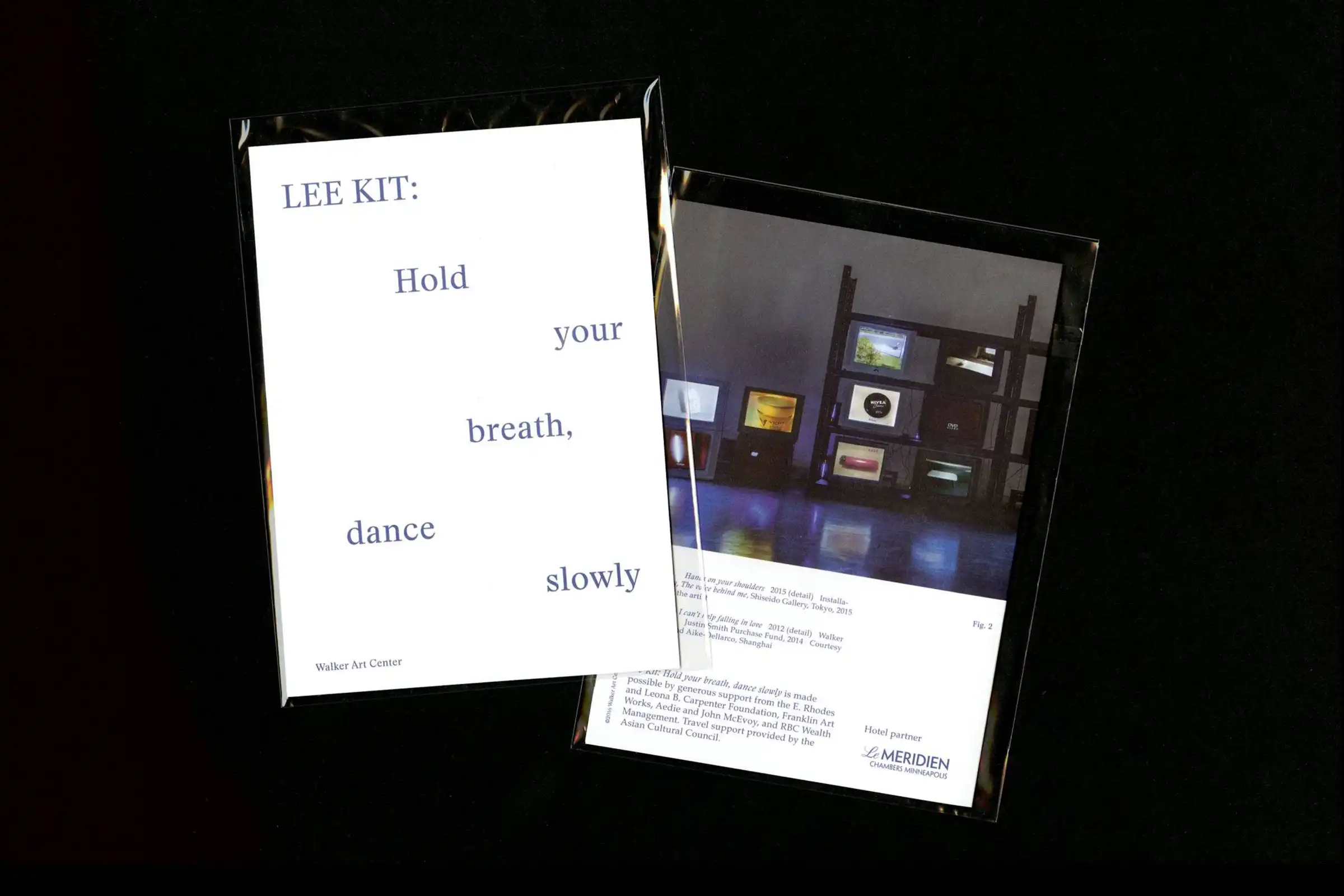
Lee Kit: Hold Your Breath, Dance Slowly
2016
Known for his sparse yet intimate installation works, Lee Kit quietly explores his surroundings by investigating ideas of time, memory, emotion, and place. Lee’s practice is rooted in painting, influencing his approach to composing his environments. The artist considers an empty gallery a blank canvas, carefully combining found objects, video projections, and his paintings. The artist makes associative connections between these elements with consideration of each object’s shape, texture, color, size, and material, transforming the gallery into a poetic composition. In drawing these relationships, the artist is often left to produce new works on-site, as he has done for this exhibition.
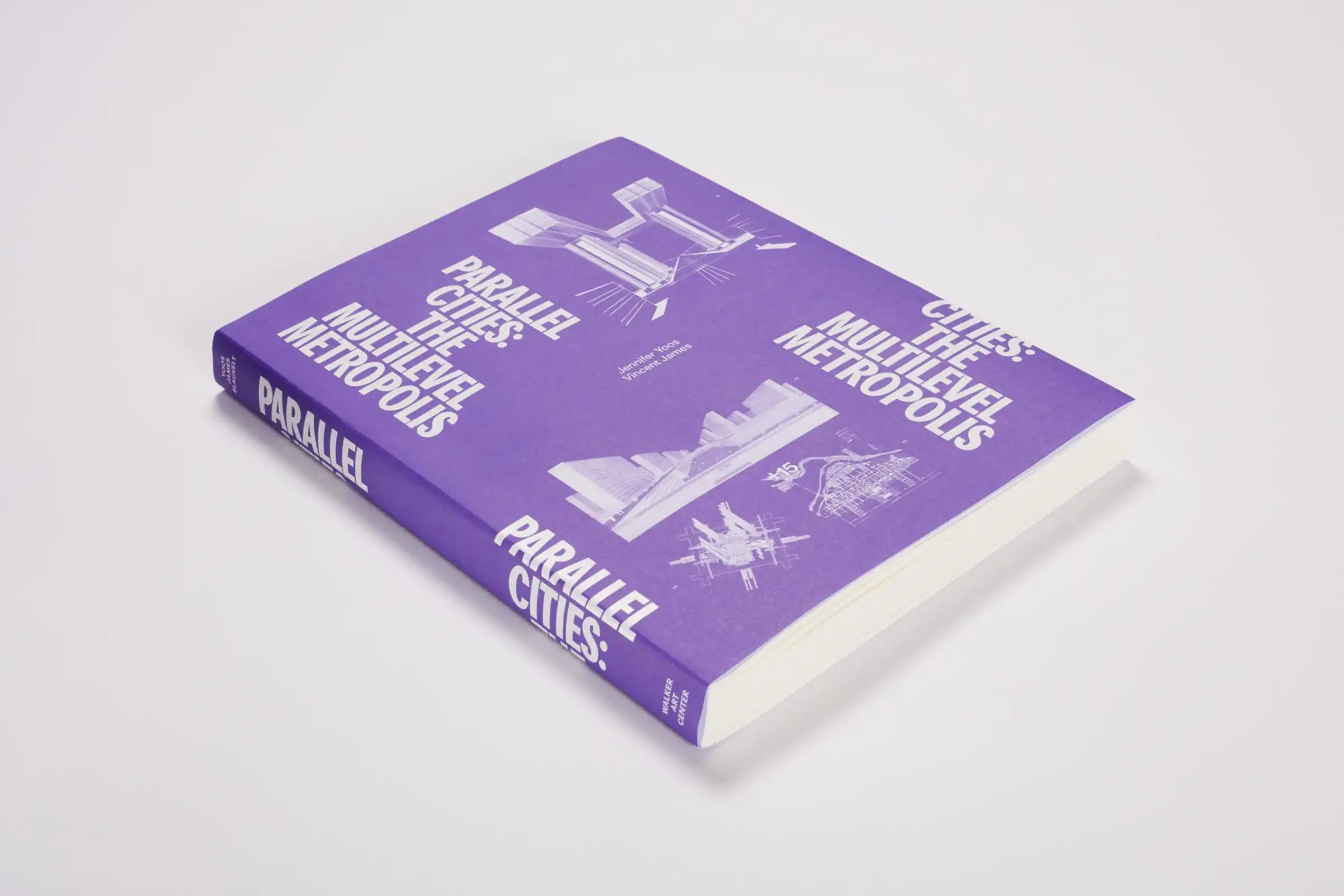
Parallel Cities: The Multilevel Metropolis
2016
Edited with text by Andrew Blauvelt. Text by Jennifer Yoos and Vincent James
Senior Curator, Design, Research, and Publishing: Andrew Blauvelt
Design Director: Emmet Byrne
Designer: Alex DeArmond
Editor: Kathleen McLean
Curatorial Research Assistant: Anna Renken
Senior Imaging Specialist: Greg Beckel
Design Studio Manager: Ashley Duffalo
Indexer: Candace Hyatt
Printed by Die Keure, Belgium
Typeface: Agipo
Papers: MultiOffset (cover and jacket), Munken Pure (text)
Parallel Cities examines the history of the multilevel city with a focus on elevated pedestrian systems as a recurrent concept in urban planning and design. The book chronicles the evolution and migration of this concept from 19th-century French social utopian thinkers and 20th-century Soviet Constructivist architectural circles to its incubation in postwar London, its theorization by members of CIAM and Team 10, and its eventual dissemination to North America and Asia, where extensive systems were built in cities such as Minneapolis, Calgary and Hong Kong. This fascinating and untold history explores an architectural idea as it evolves under varying social, geographic and political contexts―charting its use as an ever-shifting multipurpose tool to segregate or commingle the classes, foster social cohesion and the public good, facilitate security and surveillance, improve pedestrian safety and traffic flows, or to enhance retail consumption by ameliorating climatic extremes.
The implementation of streets above streets creates parallel cities, not mirrored but alternate realities where questions about access, use and control emerge. The book considers both radical visionary schemes of the future urban metropolis by progressive architects and the grand, if visually more mundane, implementation plans of extensive networks built in cities around the world that engender what the authors call a surreptitious urbanism. The first and only comprehensive book on the subject, Parallel Cities represents important new scholarly research on a topic that remains a persistent theme in architecture and urban planning. Accompanying the extensively illustrated text is a lexicon of related terms and an appendix of specific systems drawn from key cities.
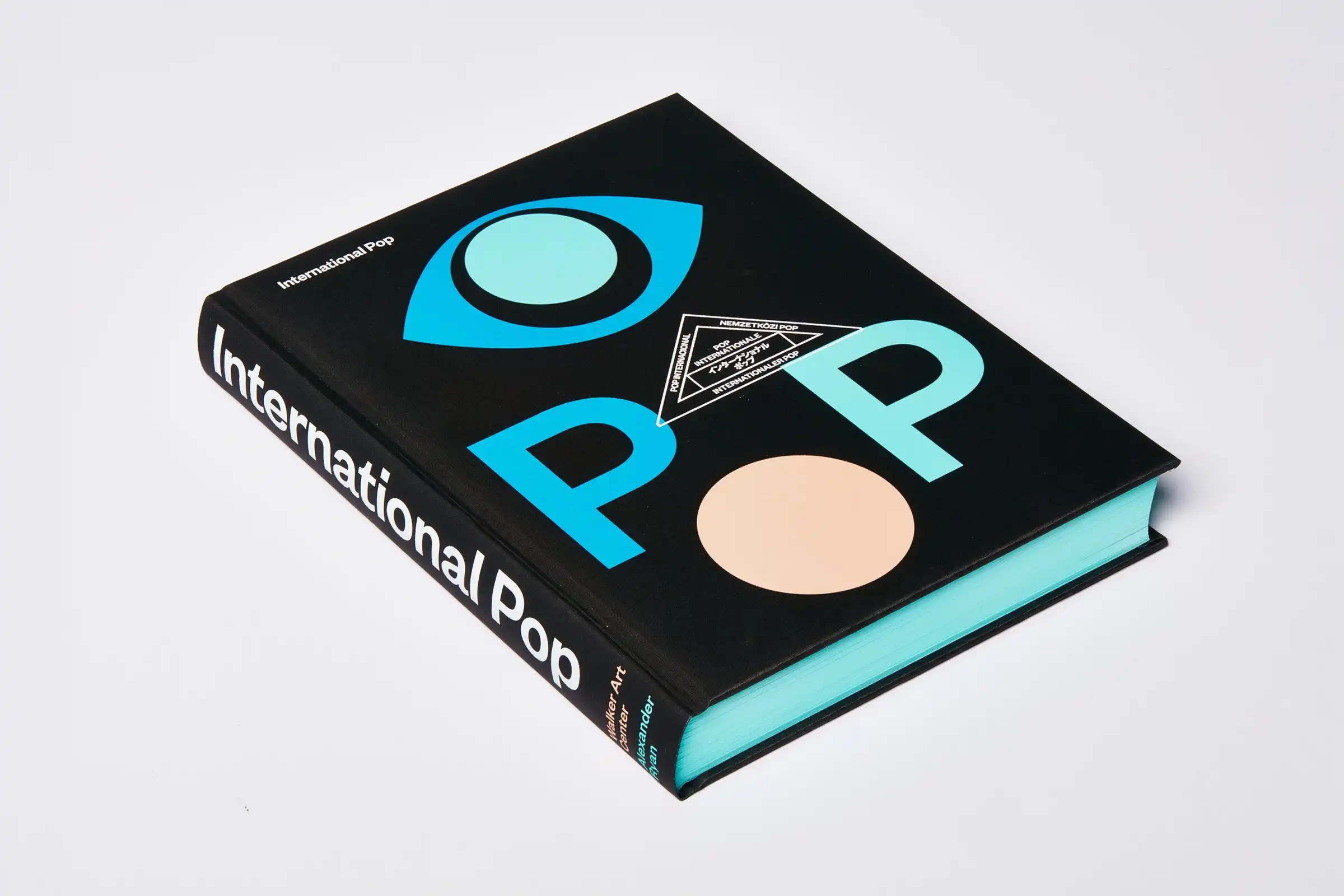
International Pop
2015
Edited by Darsie Alexander, Bartholomew Ryan.
Text by Godfre Leung, Darsie Alexander, Maria Jose Herrera, Claudia Calirman, Erica Battle, Dávid Fehér, Luigia Lonardelli, Hiroko Ikegami, Ed Halter, Charlotte Cotton, Martin Harrison, Tomáš Pospiszyl.
This dynamic new volume is the first major survey to chronicle the emergence and migration of Pop art from an international perspective, focusing on the period from the 1950s through the early 1970s. Including original texts from a diverse roster of contributors, this catalogue provides important new scholarship on the period, examining production by artists across the globe who were simultaneously confronting radical cultural and political developments that would lay the foundation for the emergence of an art form embracing figuration, media strategies and mechanical processes with a new spirit of urgency and/or exuberance. International Pop amplifies the scope and tenor of what we understand to be “Pop,” exposing the tremendous variety and complexity of this pivotal period and subject matter, and revealing how artists alternatively celebrated, cannibalized, rejected or assimilated some of the presumed qualities of Pop advanced in the US and Britain.
Anchored by an expansive 48-page visual chronology, the book features in-depth essays by a range of scholars examining developments in Britain, Japan, Brazil, Argentina, Italy and Hungary as well as Western Europe and the US. The volume includes some 320 illustrations, including full-color plates of each work in the exhibition, which integrates many classics of Pop art with numerous rarely seen works. Among the artists included are Evelyne Axel, Peter Blake, Raymond Colares, Antônio Dias, Rosalyn Drexler, Erró, León Ferrari, Richard Hamilton, David Hockney, Jasper Johns, Tanaami Keiichi, Yves Klein, Jirí Kolár, Yayoi Kusama, Nelson Leirner, Ana Maria Maiolino, Antonio Manuel, Marisol, Marta Minujín, Claes Oldenburg, Wanda Pimentel, Michaelangelo Pistoletto, Sigmar Polke, Gerhard Richter, Mimmo Rotella, Ed Ruscha, Niki de Saint Phalle, Okamoto Shinjiro, Yokoo Tadanori, Wayne Thiebaud, Jean Tinguely, Shinohara Ushio and Andy Warhol.
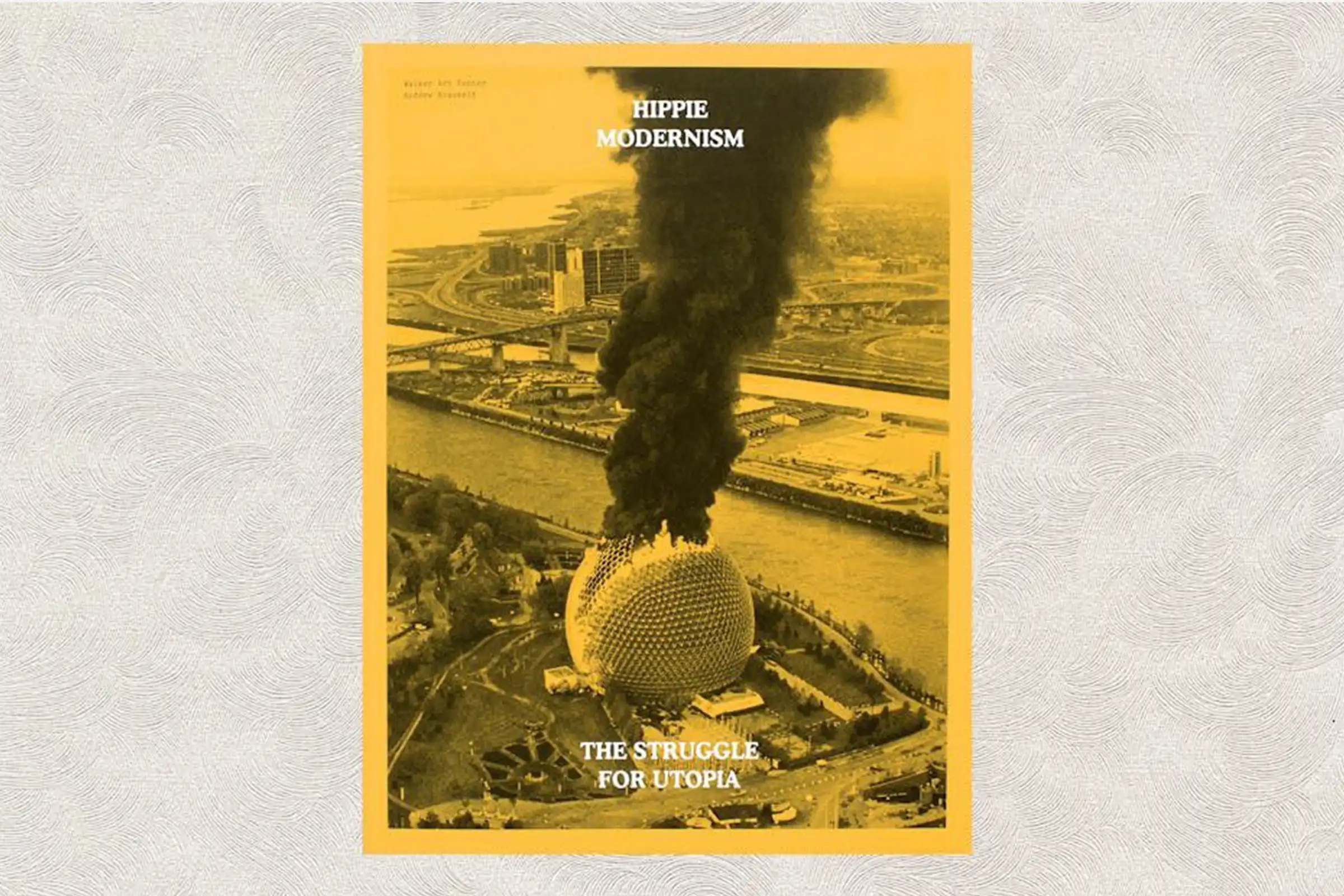
Hippie Modernism: The Struggle For Utopia
2015
Edited with text by Andrew Blauvelt. Text by Greg Castillo, Esther Choi, Alison J. Clarke, Hugh Dubberly, Ross K. Elfline, Adam Gildar, Liz Glass, David Karwan, Paul Pangaro, Craig J. Peariso, Catharine Rossi, Tina Rivers Ryan, Simon Sadler, Jeffrey T. Schnapp, Felicity D. Scott, Susan Snodgrass, Lorraine Wild.
Senior Curator, Design, Research, and Publishing: Andrew Blauvelt
Design Director: Emmet Byrne
Editor: Pamela Johnson
Senior Imaging Specialist: Greg Beckel
Design Studio Manager: Ashley Duffalo
Curatorial Research Assistant: Anna Renken
Photographer: Gene Pittman
Design Assistance: Nani Albornoz, Logan Myers
Visual Arts Fellow: Jordan Carter
Indexer: Candace Hyatt
Printed by Die Keure, Belgium
typeface:
Cooper BT
Pica 10 Pitch
Helvetica Neue
Papers:
MultiOffset
Fedrigoni Constellation Jade (Riccio)
Magno Star (Gloss)
Hippie Modernism examines the art, architecture and design of the counterculture of the 1960s and early 1970s. The catalog surveys the radical experiments that challenged societal norms while proposing new kinds of technological, ecological and political utopia. It includes the counter-design proposals of Victor Papanek and the anti-design polemics of Global Tools; the radical architectural visions of Archigram, Superstudio, Haus-Rucker-Co and ONYX; the installations of Ken Isaacs, Joan Hills, Mark Boyle, Hélio Oiticica and Neville D’Almeida; the experimental films of Jordan Belson, Bruce Conner and John Whitney; posters and prints by Emory Douglas, Corita Kent and Victor Moscoso; documentation of performances by the Diggers and the Cockettes; publications such as Oz and The Whole Earth Catalog; books by Marshall McLuhan and Buckminster Fuller; and much more.
While the turbulent social history of the 1960s is well known, its cultural production remains comparatively under-examined. In this substantial volume, scholars explore a range of practices such as radical architectural and anti-design movements emerging in Europe and North America; the print revolution in the graphic design of books, posters and magazines; and new forms of cultural practice that merged street theater and radical politics. Through a profusion of illustrations, interviews with figures, including Gerd Stern of USCO, Ken Isaacs, Gunther Zamp Kelp of Haus-Rucker-Co, Ron Williams and Woody Rainey of ONYX, Franco Raggi of Global Tools, Tony Martin, Clark Richert and Richard Kallweit of Drop City, as well as new scholarly writings, this book explores the conjunction of the countercultural ethos and the modernist desire to fuse art and life.
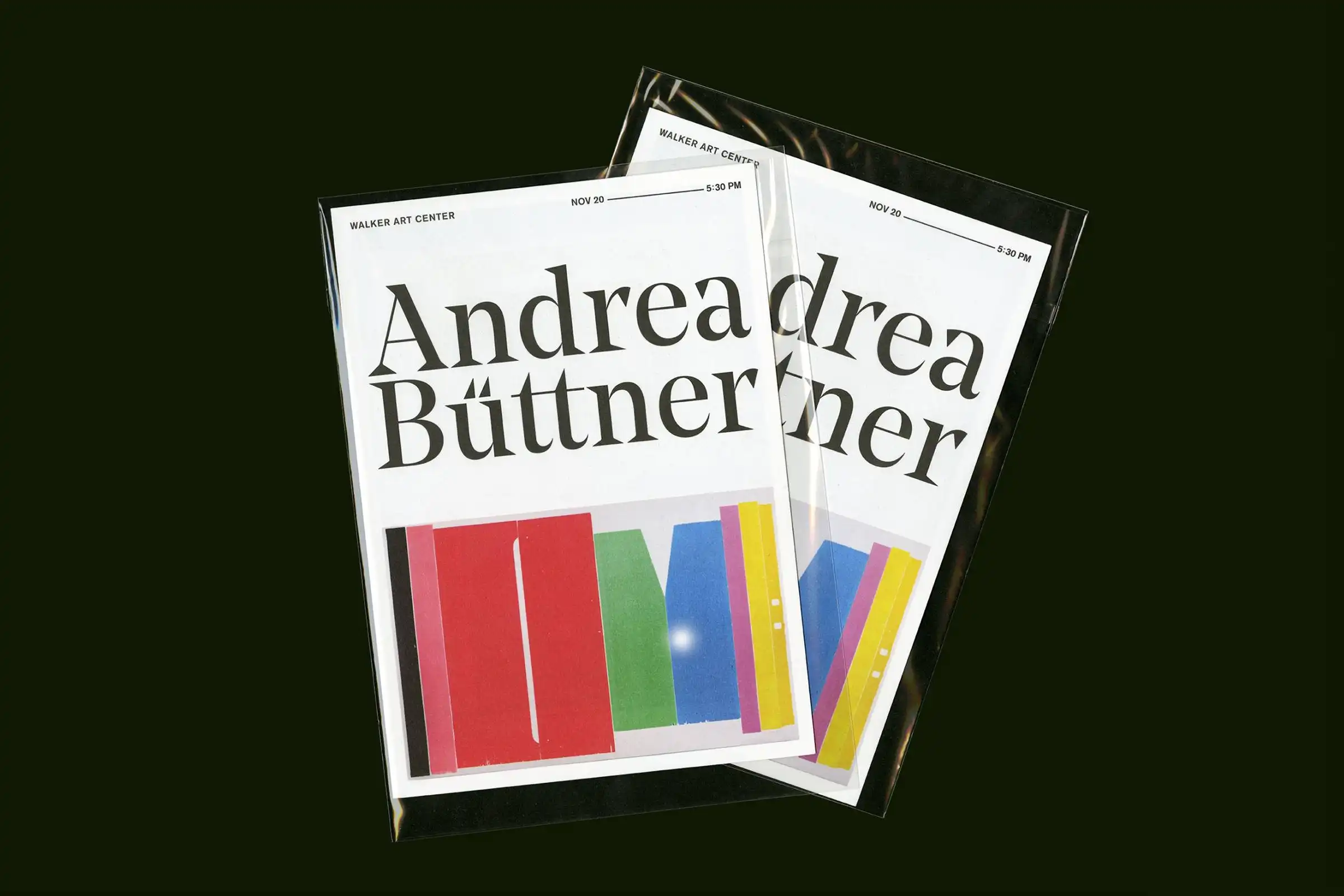
Andrea Büttner
2015
Edited with text by Fionn Meade.
The Walker Art Center is pleased to present the first solo exhibition in the United States of German artist Andrea Büttner. Throughout her installations and exhibitions, Andrea Büttner consistently embraces a range of printmaking and print techniques, from woodcut and screenprints to offset printing and a recent foray into etching, including a new series made expressly for the exhibition. By employing reverse glass painting, sculpture, collage, moving image, photography, and textile, and including other artists’ work in her exhibitions, Andrea Büttner traverses mediums, materials, and social subjects. Her practice intertwines art-historical concepts with social and political issues, often exploring such unfashionable connections as the relationship between art and religion, deviance and ethics, or shame and visual expression.
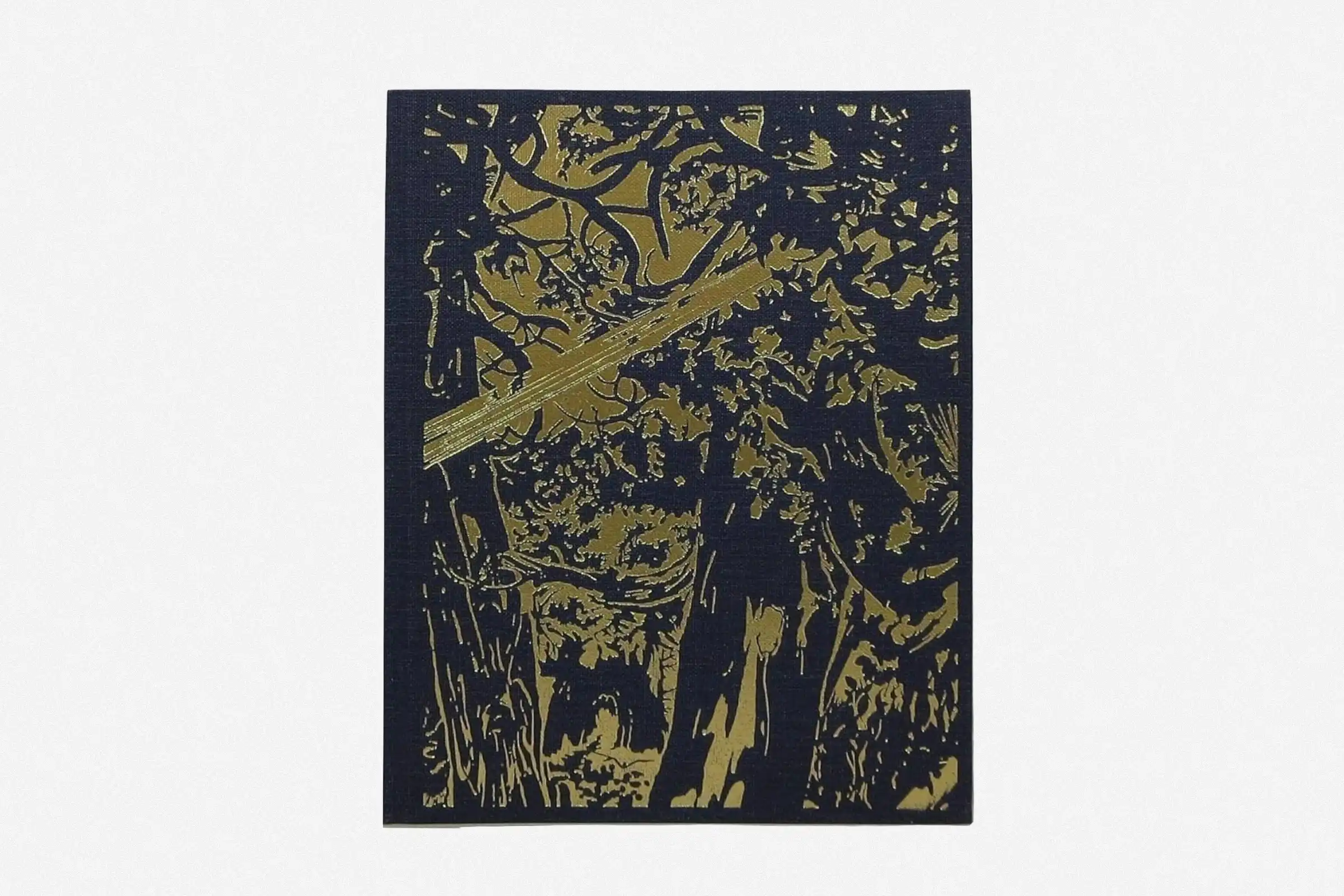
Jim Hodges: Give More Than You Take
2014
Edited with text by Jeffrey Grove and Olga Viso. Text by ill Arning, Susan Griffin, and Helen Molesworth.
Design director: Emmet Byrne
Assistant Curator: Eric Crosby
Editor: Michelle Piranio
Editorial assistance: Eric Crosby, Eric Zeidler
Production manager: Dylan Cole
Imaging specialist: Greg Beckel
Imaging assistance: Kayla Kern
Indexer: Candance Hyatt
Printed and bound in Italy by Gruppo Editoriale Canardi
Since the late 1980s, Jim Hodges’ poetic reconsiderations of the material world have inspired a body of multimedia work in which the manmade and artificial are invested with emotion and authenticity. Co-published by the Dallas Museum of Art and the Walker Art Center, this volume accompanies the first comprehensive, scholarly exhibition to be organized in the United States of this critically acclaimed American artist. Examining over 25 years of his artistic career, this uniquely designed catalogue weaves together the voices of many to situate the artist’s work within issues of identity, social activism, illness, beauty, generosity and death. Contributions include an in-depth overview of Hodges’ career by Jeffrey Grove, Hoffman Family Senior Curator of Contemporary Art at the Dallas Museum of Art; an essay and interview with the artist by Olga Viso, Executive Director of the Walker Art Center; a reflection on Hodges’ early artistic development by Bill Arning, Director of the Contemporary Arts Museum, Houston; an essay on sentimentality and the artist’s recent video work by Helen Molesworth, Barbara Lee Chief Curator at the Institute of Contemporary Art, Boston; as well as ruminations on recurring motifs in the artist’s work by author Susan Griffin.
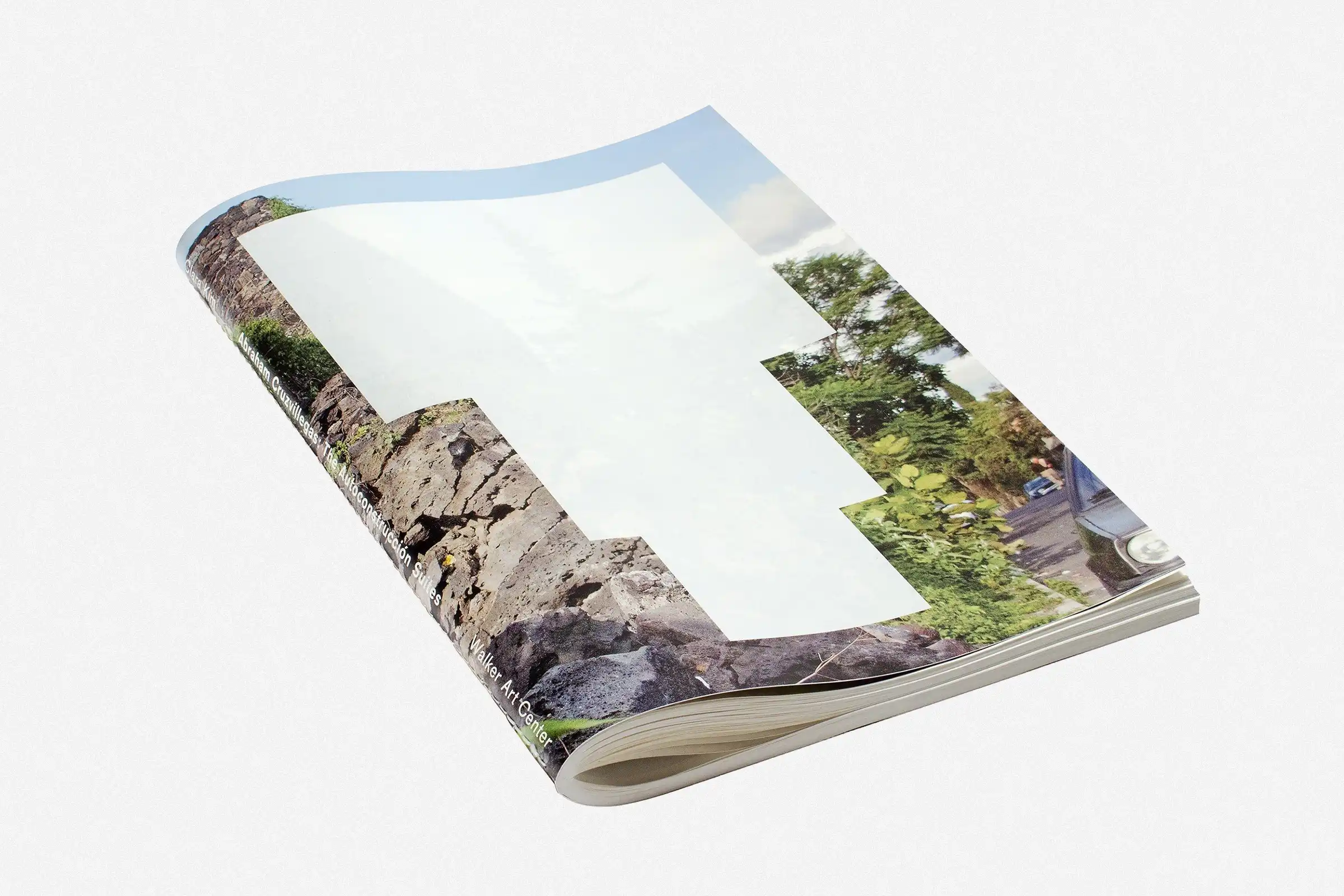
Abraham Cruzvillegas: the Autoconstrucción Suites
2013
Edited by Clara Kim. Texts by Abraham Cruzvillegas, Patricia Falguières, Verónica Gerber Bicecci, Sergio González Rodríguez, Catalina Lozano and David Miranda
Design Director: Emmet Byrne
Designer: Dante Carlos
Editors: Kathleen McLean, Pamela Johnson
Design Studio Manager: Dylan Cole
Senior Imaging Specialist: Greg Beckel
Curatorial Fellow: Yasomi Umolu
Translators/Proofreaders: Claudia Giannini, Michael Gilson, Elisa Gustafson, Jen Hofer, Gabriela Jauregui, Marisa Parzenczewski
Published on the occasion of the artist’s first major survey, this volume explores the rich terrain of Abraham Cruzvillegas’ (born 1968) work over the past ten years, rooting his sculptural language within the volcanic landscape of his childhood home in Ajusco, Mexico. The publication elaborates on Cruzvillegas’ interest in autoconstrucción, a construction method arising from the constraints of poverty, in which parts are recycled and adapted for new purposes. Developed in collaboration with the artist, the volume features five essays examining autoconstrucción through the lens of art history, politics, architecture and urban migration in Mexico in the 1960s. Along with these texts, the publication includes sculptures by Cruzvillegas; snapshots of Ajusco, Mexico, taken by the artist; archival images of Ajusco from the Cruzvillegas Fuentes family album; titles that inform and inspire the artist’s thinking about autoconstrucción; silkscreened posters of liberation movements in Latin America; and the artist’s index of concepts and song lyrics written as allegories of his childhood. Bilingual (English/Spanish).
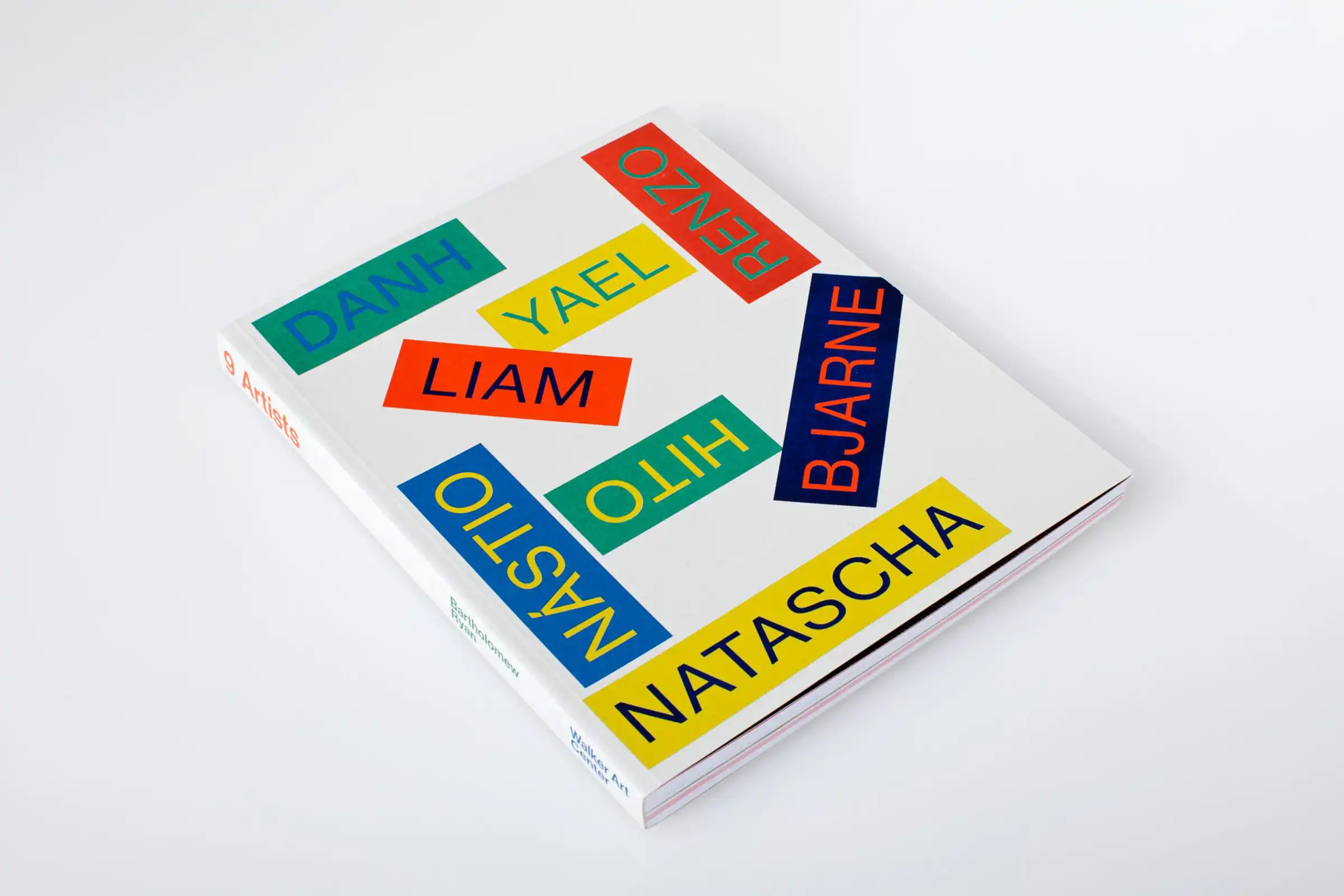
9 Artists
2013
Edited by Bartholomew Ryan. Texts by Yael Bartana, Liam Gillick, Renzo Martens, Bjarne Melgaard, Nástio Mosquito, Natascha Sadr Haghighian, Hito Steyerl, Danh Vo.
Design Director: Emmet Byrne
Designer: Andrea Hyde
Editors: Kathleen McLean, Pamela Johnson
Senior Imaging Specialist: Greg Beckel
Design Studio Manager: Dylan Cole
Printed and bound in Italy by Gruppo Editoriale Zanardi
9 Artists is an international, multigenerational group exhibition that considers the mutable and mutating role of the artist in contemporary culture. Bringing together the expansive practices of some of the most provocative and engaged artists working today–Yael Bartana, Liam Gillick, Natascha Sadr Haghighian, Renzo Martens, Bjarne Melgaard, Nástio Mosquito, Hito Steyerl and Danh Vo–the show examines ways that they negotiate the complicities and contradictions of living in an ever more complex and networked world. Rarely considered together, they each use their own backgrounds or identities as material, frequently in antagonistic or subversive ways. For this catalogue, each artist has contributed a 16-page artist’s book exploring some aspect of their practice, often in collaboration with other artists, writers, or designers including Karl Holmqvist, Phùng Vo, Galit Eilat, Vic Pereiró, An Art Service, Federica Bueti and T.J. Demos. Some contributions are purely visual; others entirely textual, ranging from new essays to ghostwritten letters, cease and desist orders, and cinematic diaries. An accompanying compendium of works provides a visual journey through past projects and ephemera, setting up an associative conversation between the artists’ works. Additionally, exhibition curator Bartholomew Ryan’s essay weaves together their various approaches, placing them in the context of broader contemporary art practice and the complex world we inhabit. As each artist has developed strong networks of collaborators, the volume is anticipated as a means to promote and create dialogue between the participants and their respective communities.
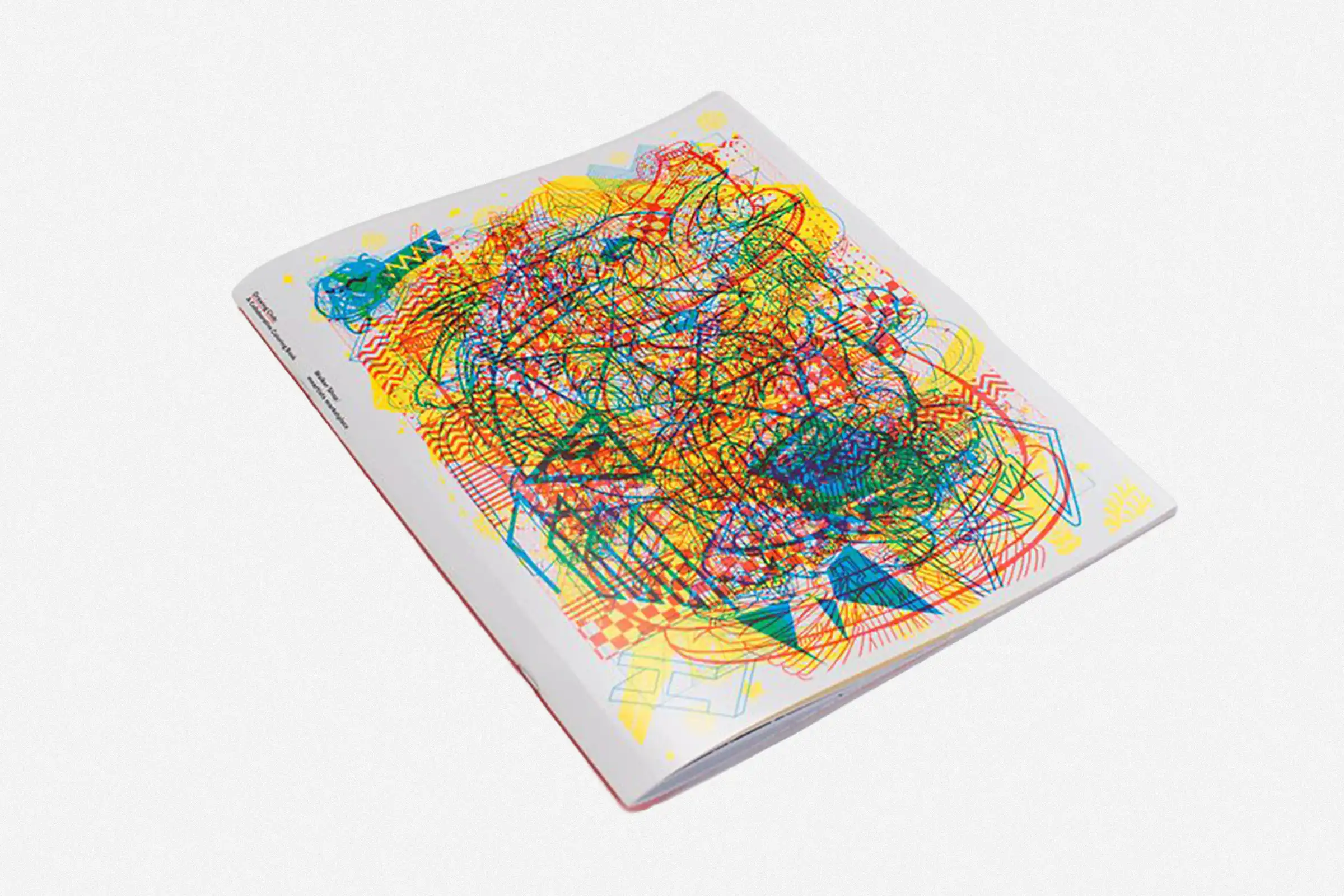
Drawing Club: A Collaborative Coloring Book
2012
Texts by Beck, Emily Bennett Bemel-Benrud, Saman Coons, Cornelius Cramm, Brandon Estell, Kristina Kvitek, Karen Mose, Max Payne, Terrence Seijas, Casey Sprunger, Angela Stang, Melissa Steineck, Peter Thompson, Lex Hot Sundae Hot Tea Walker Art Center
Typeface: Maple by Process
Type Foundry, Golden Valley, MN
This book invites you to collaborate with 15 Minnesota artists—a project conceived in the spirit of the Drawing Club at Walker Open Field, where artists and the public add to a pool of collectively created artworks. Rip a page out and color it for yourself, hang it up on your wall and photograph it, or tear it up and use it to make a new piece.
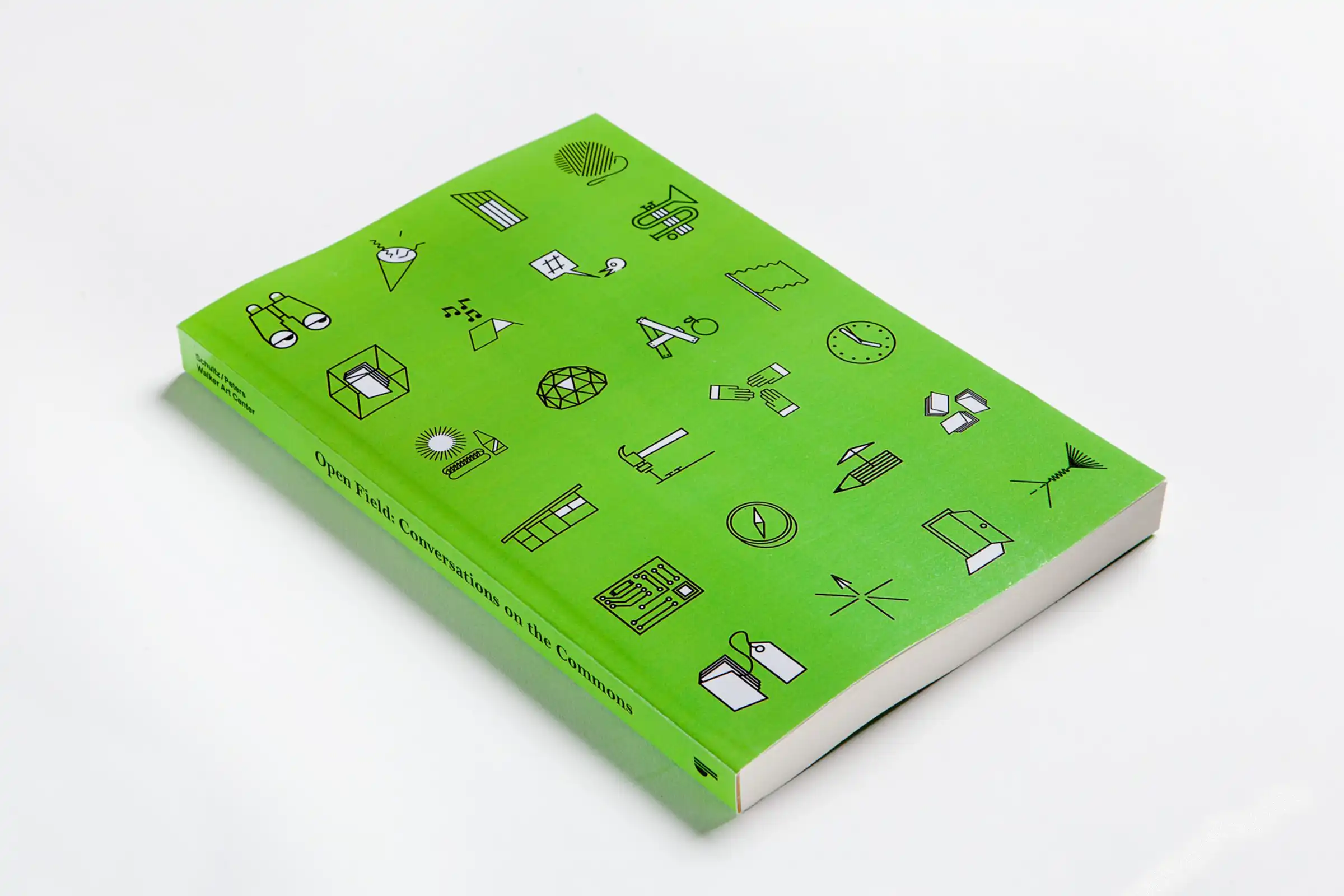
Open Field: Conversations on the Commons
2012
Edited by Sarah Schultz and Sarah Peters.
Design Director: Emmet Byrne
Designer: Alex DeArmond
Editors: Pamela Johnson, Kathleen McLean
Senior Imaging Specialist: Greg Beckel
Design Studio Coordinator: Dylan Cole
Printed and bound in the United States by lulu.com
George Bernard Shaw once wrote: “If you have an apple and I have an apple and we exchange these apples then you and I will still each have one apple. But if you have an idea and I have an idea and we exchange these ideas, then each of us will have two ideas.” Open Field is the Walker Art Center’s ongoing experiment in participation and public space. Taking place outdoors in the summer months, the project invites artists and visitors to imagine and inhabit the museum’s campus as a cultural commons–a shared space for idea exchange, creative gatherings and unexpected interactions. In 2010, the Walker’s backyard was home to numerous activities from conversations to performances and temporary sculptures. This volume discusses Open Field’s genesis, exploring the meaning and impact of public practice for institutions.

Lifelike
2012
Edited by Siri Engberg. Texts by Michael Lobel, Josiah McElheny, and Rochelle Steiner.
Design Director: Emmet Byrne
Designer: Andrea Hyde
Editors: Kathleen McLean and Pamela Johnson
Design Studio Coordinator: Dylan Cole
Senior Imaging Specialist: Greg Beckel
Printed in the United States by The Avery Group at Shapco Printing, Inc., Minneapolis, Minnesota
Is it real? Lifelike invites a close examination of art since the late 1960s based on commonplace objects and situations that are startlingly realistic, often playful and sometimes surreal–works that investigate the quieter side of the quotidian. While artists such as Vija Celmins, Rudolf Stingel and Paul Sietsema employ illusionistic painting and drawing, others’ use of materials is surprising–Thomas Demand’s video of what appears to be a rainstorm is made from animated candy wrappers; Susan Collis’ sculpture of construction debris is fashioned from exotic hardwoods, mother of pearl and silver. What binds these artists together is their rejection of the easy route technology might offer in favor of labor-intensive fabrication. Featuring painting, sculpture, photography, drawing, video and installations by more than 40 artists, Lifelike is the first publication to address the recent history of artists using these strategies across media.
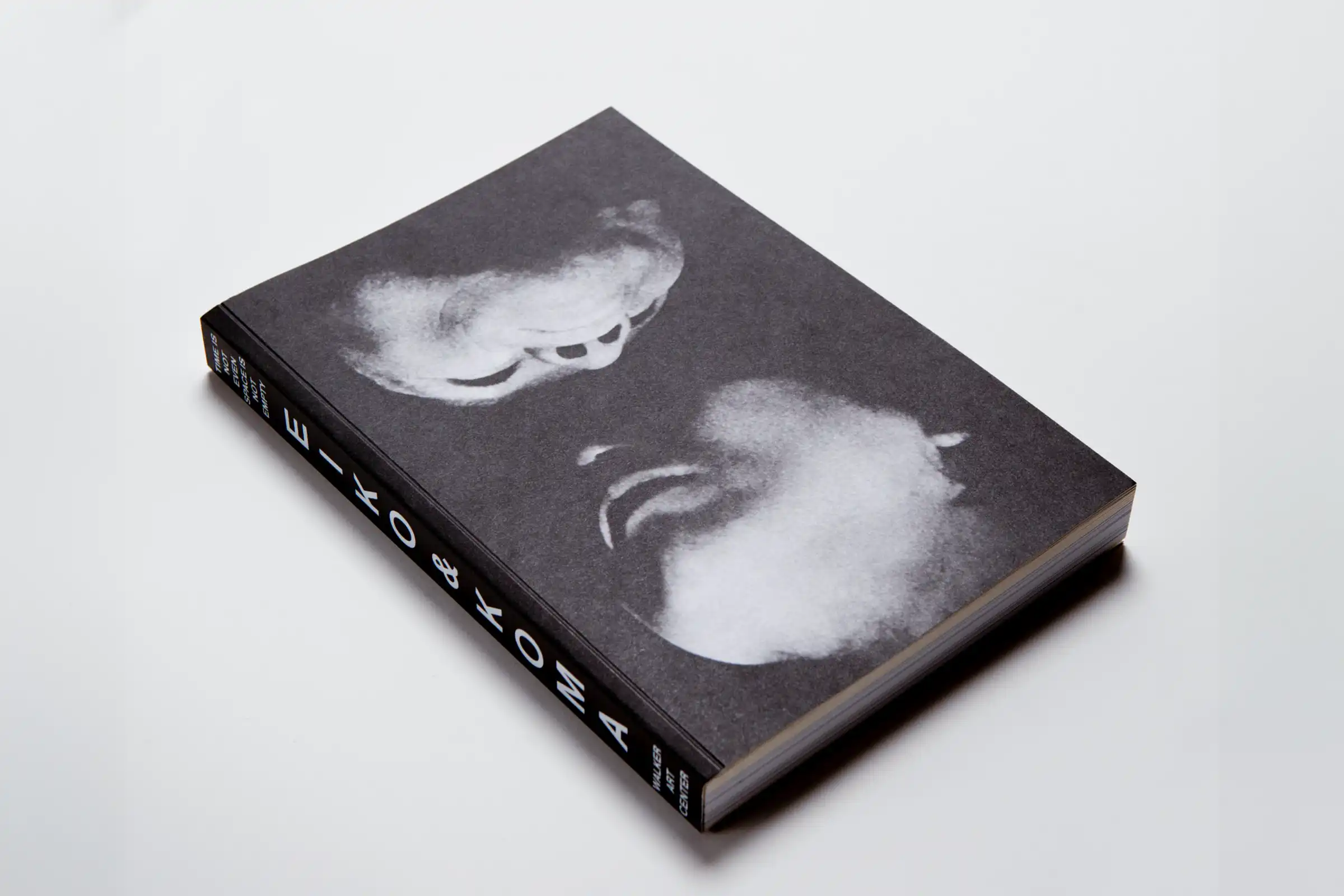
Eiko & Koma: time is not even, space is not empty
2011
Edited by Joan Rothfuss. Texts by Suzanne Carbonneau, Andre Lepecki, Doreen Chong, Philip Either, Sam Miller, and Peter Taub.
Design Director: Emmet Byrne
Designer: Andrew Hyde
Publication Director: Lisa Middag
Editors: Pamela Johnson and Kathleen McLean
Imaging Specialist: Greg Beckel
Printed in the USA at Shapco Printing, Inc.
Minneapolis, Minnesota
Typefaces: Arnhem Fine,
F Grotesk, Romana BT
Operating at the intersections of dance, art and performance for nearly 40 years, acclaimed Japanese movement/performance artists Eiko & Koma have built up an enormously influential body of movement-theater productions, including theatrically staged performances, site works, dance videos, gallery-based performance installations and collaborations with leading music, dance and visual artists. Time Is Not Even, Space Is Not Empty presents a complete, illustrated catalogue of their dance works, alongside editor’s and choreographer’s notes, reprints of primary source and other archival material, and a series of newly commissioned written responses by Anna Halprin, Dean Otto, Sam Miller, Peter Taub and others. A distinguished group of scholars from the dance and visual arts fields offer interpretations of the artists’ work, including a history of the artists’ relationship with the institution by Walker curator Philip Bither; an in-depth overview by Suzanne Carbonneau, Professor of Performance at George Mason University and Director of the Institute for Dance Criticism at the American Dance Festival; an essay on the sculptural qualities of Eiko & Koma’s movement by André Lepecki, Associate Professor at New York University’s Tisch School of Performance Studies; and a reflection/interview with the artists on their formative years in Japan and the U.S. by Doryun Chong, Associate Curator at the Museum of Modern Art in New York. Two visual essays”” by noted photographers Philip Trager and Jan Henle and a selection of poems by Forrest Gander round out the volume.””
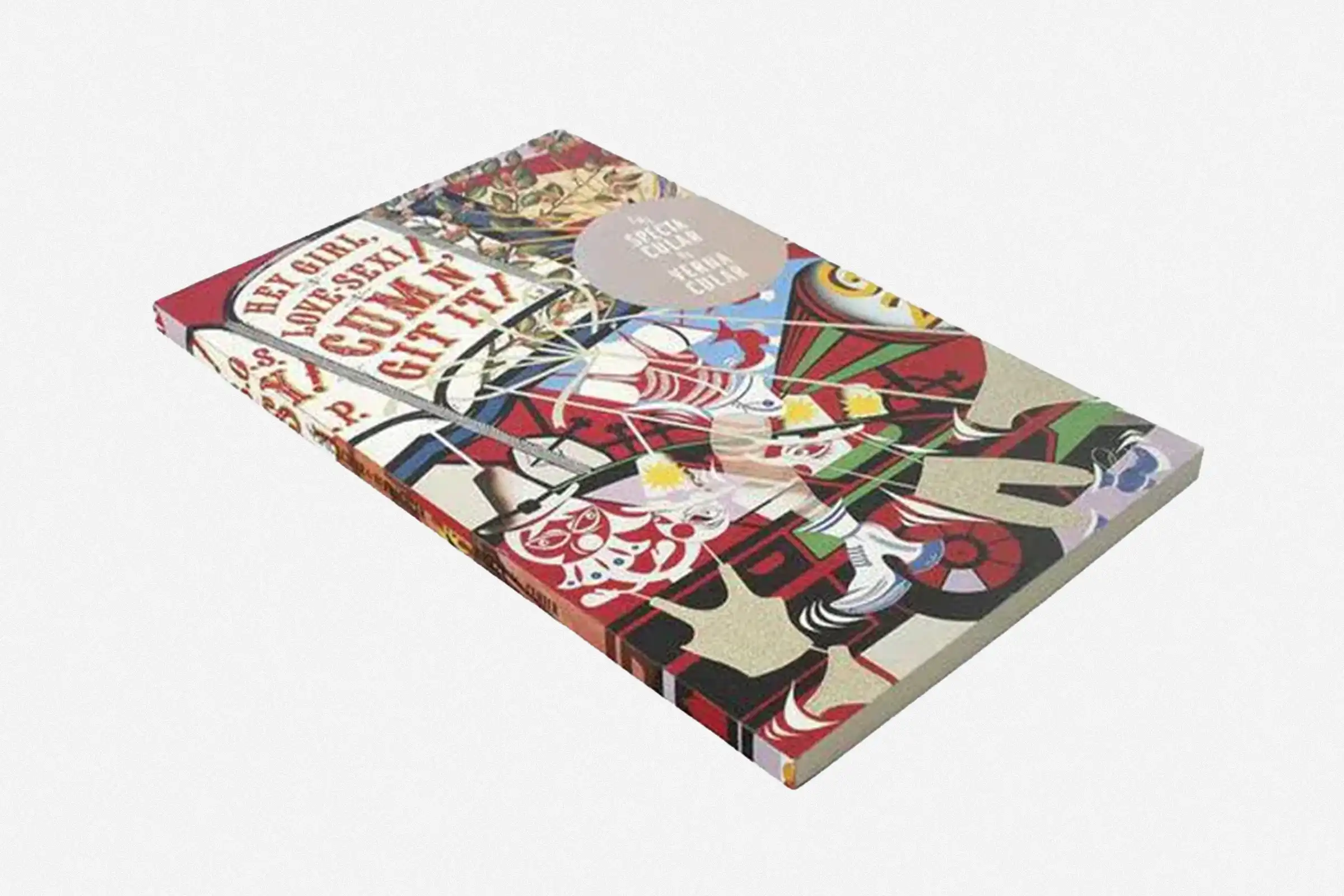
The Spectacular of Vernacular
2011
Edited by Darsie Alexander. Texts by John Brinckerhoff Jackson, Andy Sturdevant, and Camille Washington.
Design Director: Emmet Byrne
Designer: Dante Carlos
Editors: Kathleen McLean and Pamela Johnson
Publications DIrector: Lisa Middag
Imaging Specialist: Greg Beckel
Printed in the USA by Shapco Printing, Inc., Minneapolis
Typeface: Berthold Akzidenz Grotesk
Paper: Finch Opaque
The Spectacular of Vernacular addresses the role of vernacular forms in the work of 26 artists who utilize craft, folklore and roadside kitsch to explore the role of culturally specific iconography in the increasingly global world of art. Drawing inspiration from such sources as local architecture, amateur photographs and state fair banners, their work runs the spectrum from the sleek to the handcrafted. Inspired by Mike Kelley’s observation that “the mass culture of today is the folk art of tomorrow,” these artists embrace the totems and neon signs of roadside America. Thus, alongside the visibly handcrafted works of Matthew Day Jackson and Dario Robleto we find the dense and day-glo paintings of Lari Pittman, the glittering trophy heads of Marc Swanson and the urban relics of Rachel Harrison. These works and others suggest a long road trip through the emblems and eyesores of tourist destinations and outmoded hotels. The photography component includes work by William Eggleston, whose color-saturated images gravitate toward the tawdry palette of faded billboards and road signs. This fully-illustrated catalogue includes an essay by exhibition curator Darsie Alexander exploring artists’ interest in the vernacular as a means to address aspects of folk ritual, amateur craft and sense of place in their work; a reprint of John Brinckerhoff Jackson’s “Vernacular” from his seminal 1984 reader Discovering the Vernacular Landscape; and a reflection by artist and curator Andy Sturdevant on the evolution of roadside vernacular, and attendant histories of heartland America where it is so abundant. Also included is a reading list gathered from a cross section of art criticism and cultural studies.
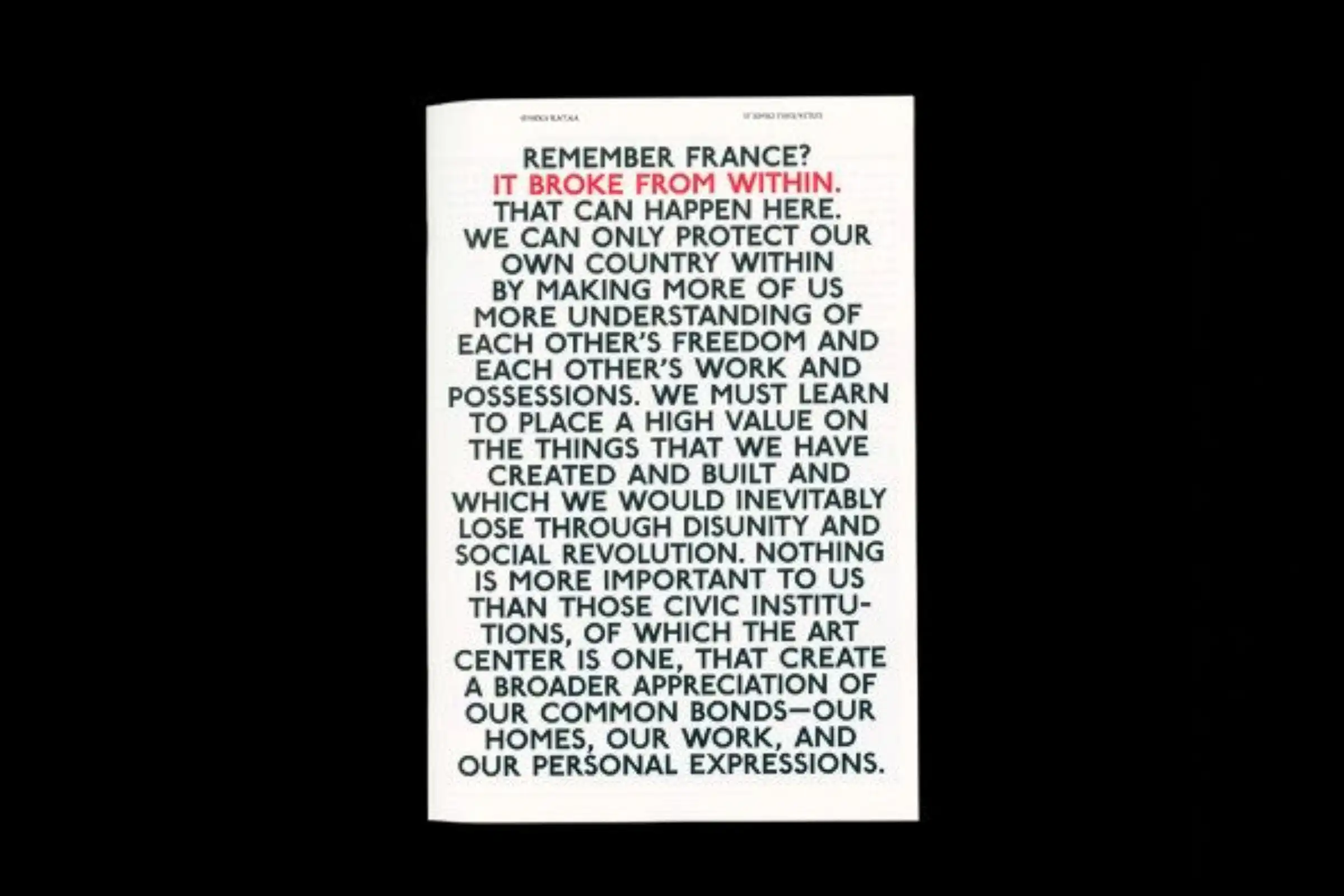
Goshka Macuga: It Broke From Within
2011
Texts by Goshka Macuga, Peter Eleey, and Bartholomew Ryan
Designer: Dante Carlos
Design Director: Emmet Byrne
Editors: Pamela Johnson, Kathleen McLean
Senior Imaging Specialist: Greg Beckel
Printed by Shapco, Inc.
Minneapolis, Minnesota
Goshka Macuga uses institutional histories as the staging ground for complex proposals. For her first solo museum exhibit in the United States, the London-based Polish artist delves into Walker’s past, foregrounding the institution’s early link to the lumber business in which its founder flourished while considering the forest as a metaphor for American democracy and freedom. With characteristic digression through various subjects, she explores ways in which modern and contemporary art forms and museums have modeled evolving ideas of politics and community.
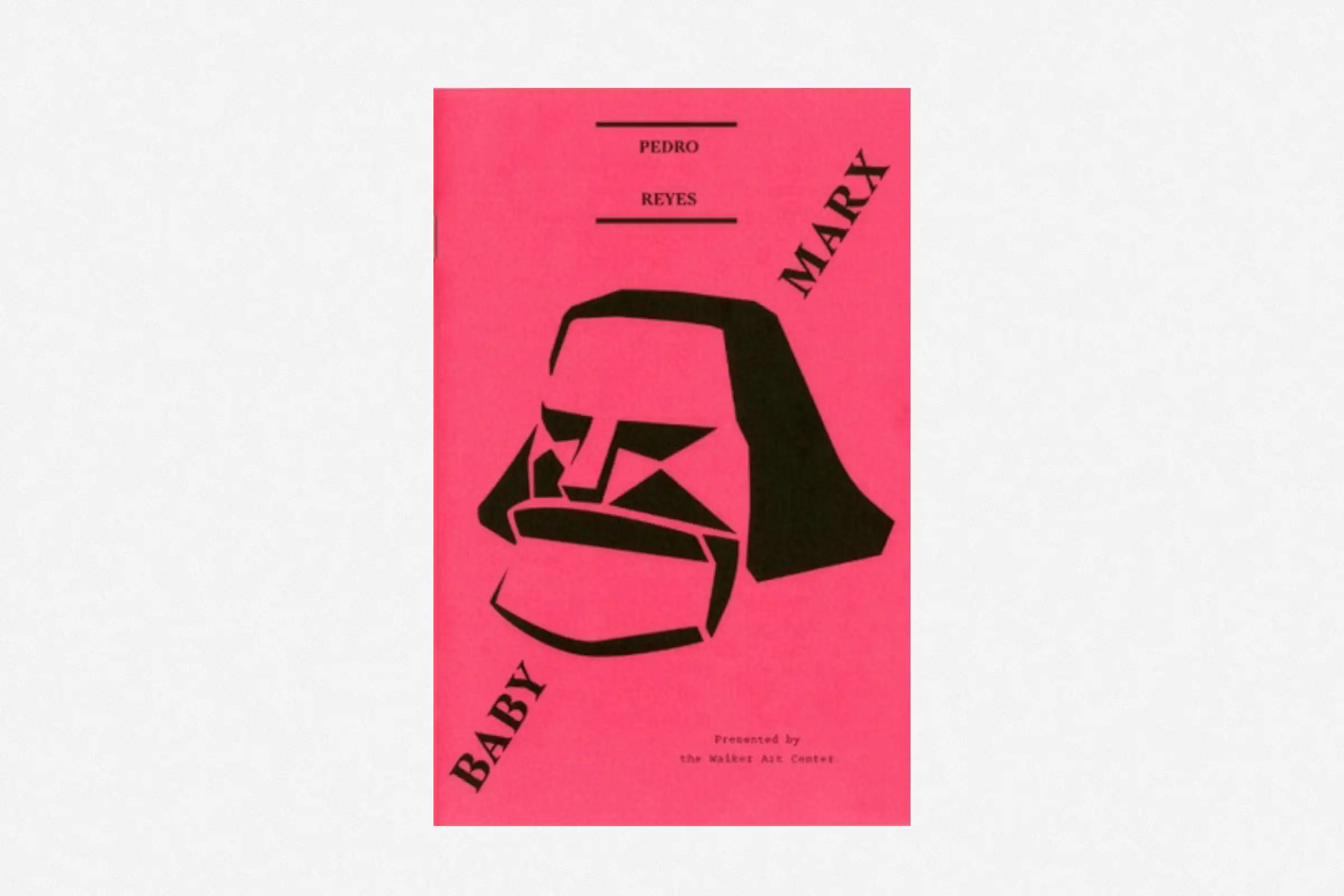
Pedro Reyes: Baby Marx
2011
Texts by Bartholomew Ryan and Camille Washington
“Thirty or forty years ago, particularly where I come from in Mexico, most people defined themselves as advocates of either socialism or capitalism. Today it seems that we have come to accept capitalism as the final model for how the world functions, even as a fact of natural law or history. Baby Marx is an inquiry into this general assumption…”
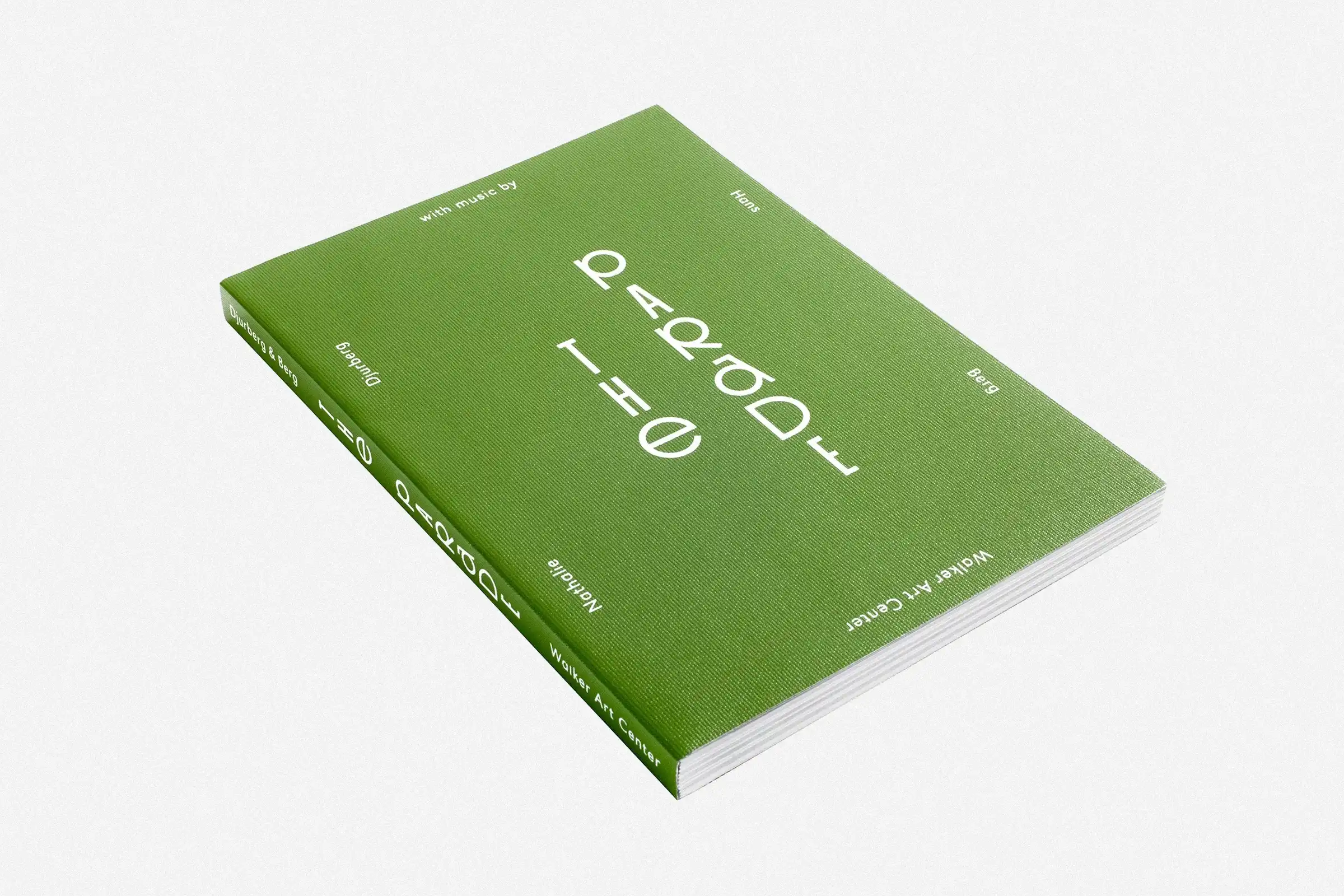
The Parade: Nathalie Djurberg with music by Hans Berg
2011
Edited by Eric Crosby and Dean Otto
Design Director: Emmet Byrne
Designer: Dante Hong Carlos
Editors: Kathleen McLean and Pamela Johnson
Senior Imaging Specialist: Greg Beckel
Printed in the United States by Bolger, Inc., Minneapolis, Minnesota
Typeface: Organda and URW Grotesk
Paper: Sappi Flo
Since 2001, Swedish-born artist Nathalie Djurberg (born 1978) has honed a distinctive style of video animation. Set to music and sound effects by her collaborator Hans Berg, Djurberg’s handcrafted cinematic tales explore revenge, lust, submission, gluttony and other primal emotions through the conventionally innocent technique of “Claymation,” which in her hands becomes a medium for nightmarish yet wry allegories of human behavior and social taboo. Increasingly, Djurberg’s practice has blurred the cinematic and the sculptural in environments that integrate moving images and related set pieces. This publication accompanies the artist’s largest presentation in an American museum to date. The catalogue weaves documentation of her sculptures and stills from her recent films with texts (both original and found) that trace the historical, scientific and literary threads running through her practice.
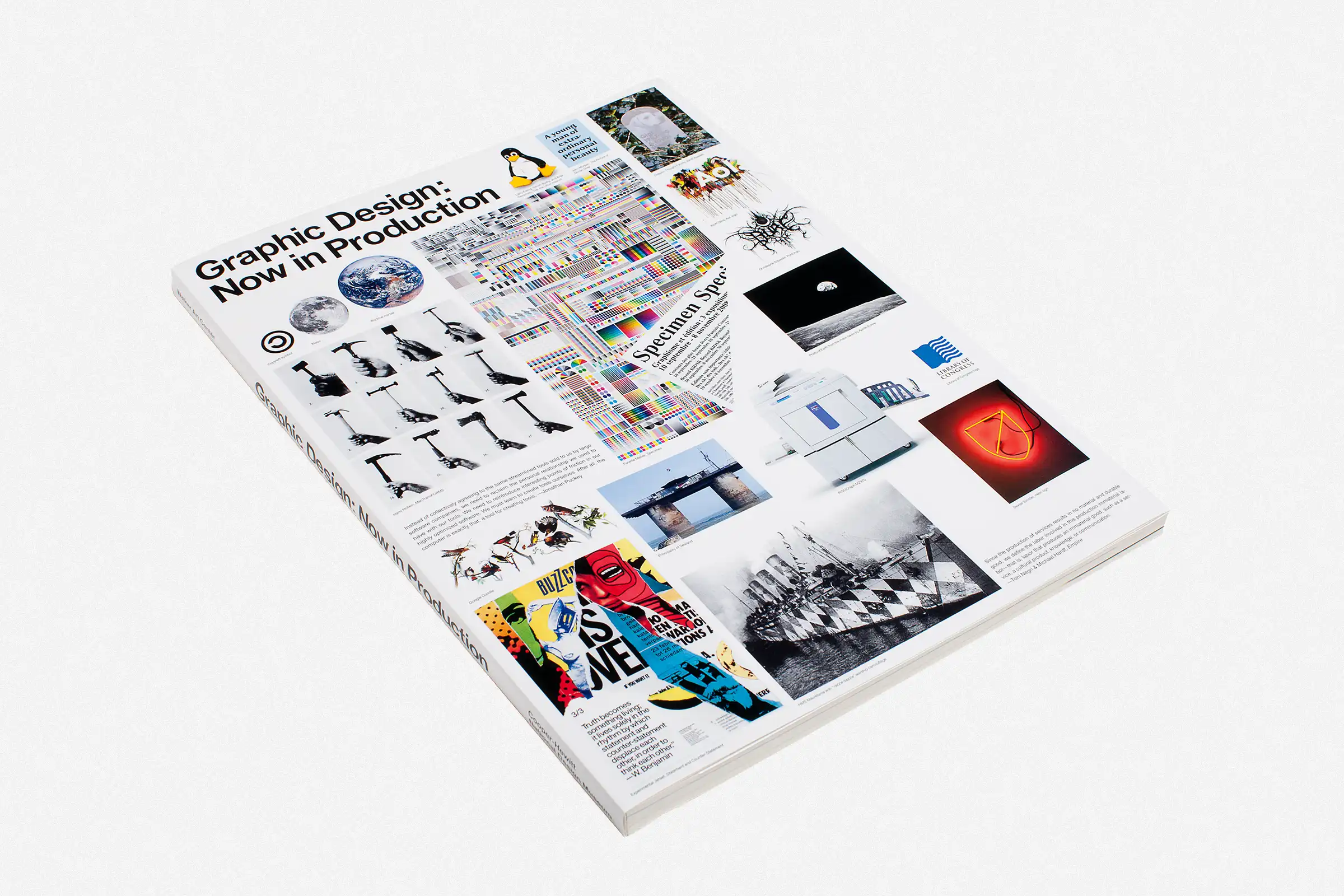
Graphic Design: Now in Production
2011
Edited by Andrew Blauvelt and Ellen Lupton
Catalogue Concept: Andrew Blauvelt and Emmet Byrne
Catalogue Design Direction: Emmet Byrne
Catalogue Designer: Michael Aberman
Catalogue Editors: Andrew Blauvelt, Pamela Johnson, Ellen Lupton and Kathleen McLean
Image Preparation and Correction: Greg Beckel
Publication Project Manager: Andrew Blauvelt, Emmet Byrne, and Dylan Cole
Printer: Shapco Printing, Inc. (Avery Group)
Graphic design has broadened its reach dramatically over the past decade, expanding from a specialized profession to a widely deployed skill. The rise of user-generated content, new methods of publishing and systems of distribution, and the wide dissemination of creative software have opened up new opportunities for design. More designers are becoming producers–authors, publishers, instigators and entrepreneurs–actively employing their creative skills as makers of content and shapers of experiences. Featuring work produced since 2000, Graphic Design: Now in Production explores the worlds of design-driven magazines, newspapers, books and posters; the entrepreneurial spirit of designer-produced goods; the renaissance in digital typeface design; the storytelling potential of film and television titling sequences; and the transformation of raw data into compelling information narratives. The catalogue features important original essays by leading designers that tackle themes such as the changing roles of reading and writing within the context of new technologies and self-publishing; the nature of design labor and production, from blue-collar handcraft and making to white-collar design thinking and strategy; and the impact and influence design programs and schools have had on shaping the direction of contemporary graphic design. Co-organized by Walker Art Center and Cooper-Hewitt National Design Museum, Graphic Design: Now in Production is conceived as a visual compendium in the spirit of the Whole Earth Catalogue. It features posters, info graphics, fonts, books, magazines, film titles, logos and more, interspersed with a variety of small texts delving into specific project details, excerpted artists’ statements, interviews and published manifestos, technical details, and new and old technologies and tools.
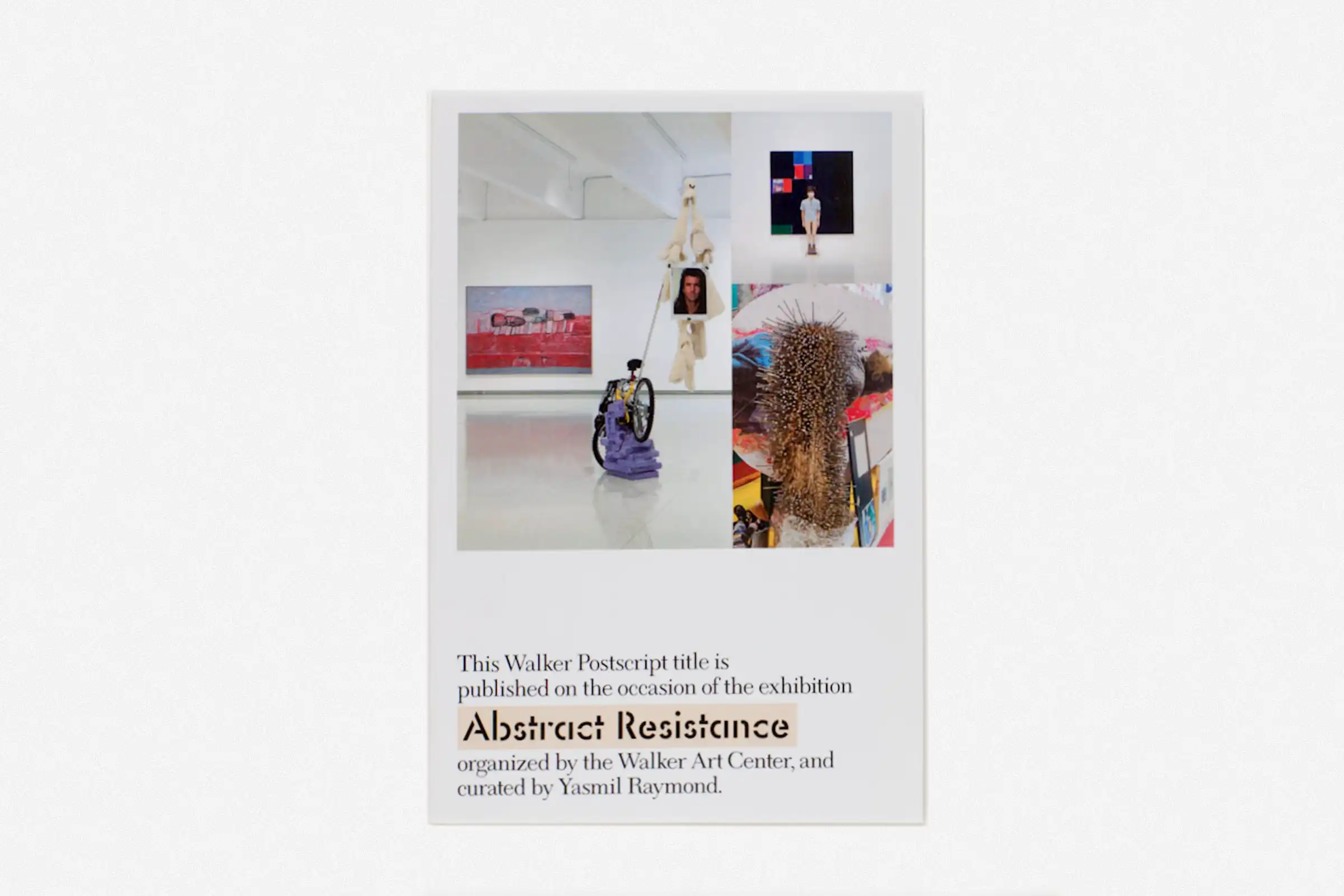
Abstract Resistance
2010
Edited by Yasmil Raymond
Design Director: Andrew Blauvelt
Publications Director: Lisa Middag
Designer: Dante Hong Carlos
Curatorial Assistant: Camille Washington
Editor: Karen Jacobson
Image Production: Greg Beckel
Translations: Michael Eldred
Proofreaders: Pamela Johnson, Kathleen McLean
Printed and bound in the United States by lulu.com.
With a new commission and works dating back to the 1950s, the exhibition Abstract Resistance brings together now-legendary figures as well as younger artists who have revolted against the aesthetic orthodoxies of their times. While these pieces do not conform to a single theme, they are united in challenging what is expected of art, from the way it looks to the role it plays in society at large. The show considers the metaphor of “resistance” as a complex formal and political force, as is suggested by the title. The exhibition, drawn mostly from the Walker collection, highlights works in assemblage, collage, and photomontage.
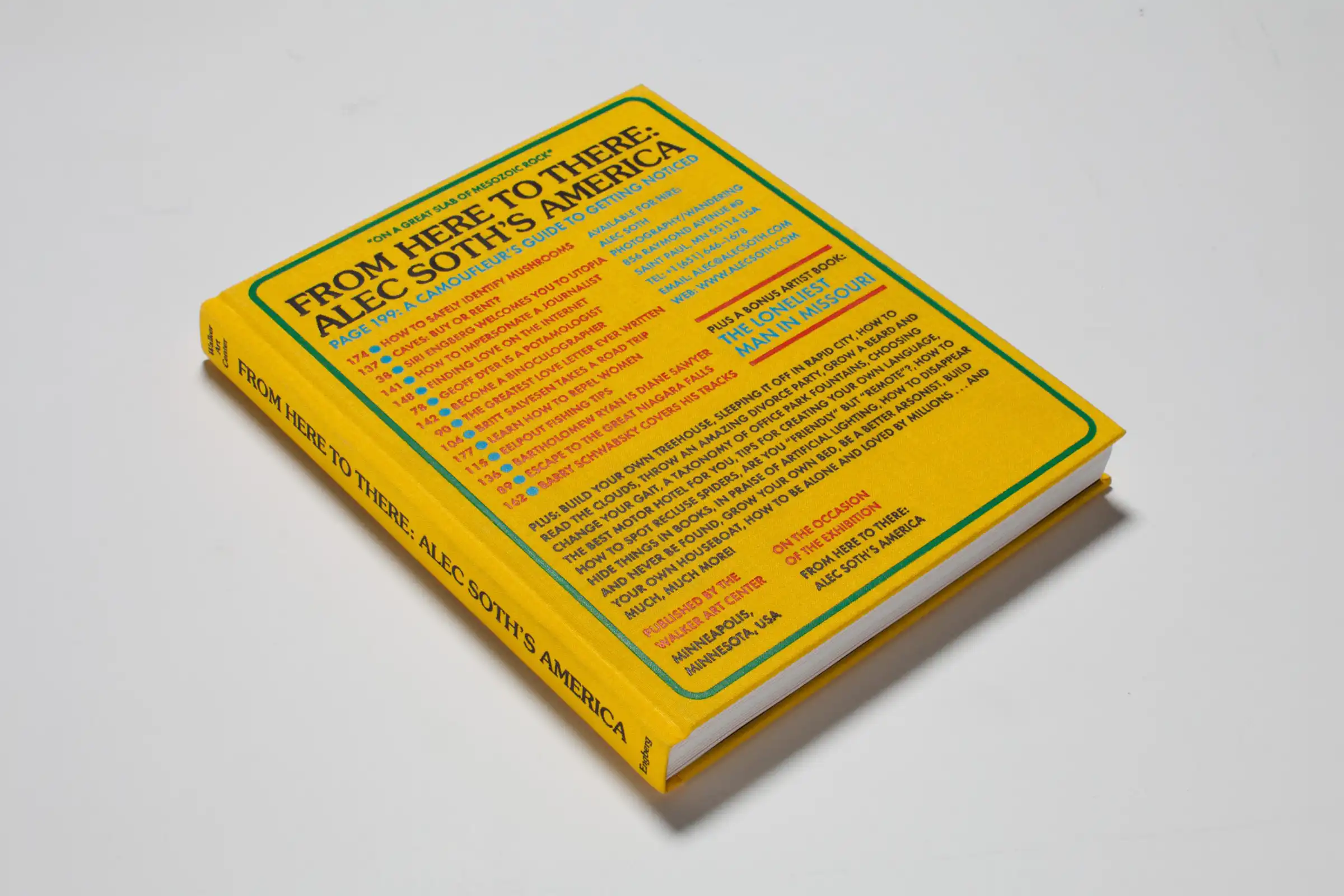
From Here to There: Alec Soth’s America
2010
Edited by Siri Engberg
Publications Director: Lisa Middag
Designer: Emmet Byrne
Editors: Katheleen McLean and Pamela Johnson
Image Production: Greg Beckel
Indexer: Candance Hyatt
Printed in Germany by GZD, Ditzingen
Typeface: ITC Souvenir
Paper: Phoenix Motion and Caribic
From Here to There: Alec Soth’s America is the first exhibition catalogue to feature the full spectrum of the work of Alec Soth, one of the most interesting voices in contemporary photography, whose compelling images of everyday America form powerful narrative vignettes. Featuring more than 100 of the artist’s photographs made over the past 15 years, the book includes new critical essays by exhibition curator Siri Engberg, curator and art historian Britt Salvesen and critic Barry Schwabsky, which offer context on the artist’s working process, the photo-historical tradition behind his practice and reflections on his latest series of works. Novelist Geoff Dyer’s “Riverrun”–a meditation on Soth’s series Sleeping by the Mississippi–and August Kleinzahler’s poem “Sleeping It Off in Rapid City” contribute to the thoughtful exploration of this body of work. Also included in the publication is a 48-page artist’s book by Soth titled The Loneliest Man in Missouri, a photographic essay with short, diaristic texts capturing the banality and ennui of middle America’s suburban fringes, with their corporate office parks, strip clubs and chain restaurants. This full-color publication includes a complete exhibition history, bibliography and interview with the artist by Bartholomew Ryan.

Yves Klein: With the Void, Full Powers
2010
Edited by Kerry Brougher and Philippe Vergne
Publication Director: Lisa Middag
Editor: Deborah Horowitz
Assistant Editor: Caitlin Woolsey
Design Director: Andrew Blauvelt
Designer: Dante Hong Carlos
Image Production: Greg Beckel
Translations: Kaus Ottman
Proofreader: Sharon Rose Vonasch
Printed and bound in Italy by Editoriale Bortolazzi-Stei
One of the last century’s most influential artists, Yves Klein (1928–1962) took the European art scene by storm in a prolific career that lasted only from 1954 to 1962, when he suffered a heart attack at the age of 34. Klein was an innovator who embraced painting, sculpture, performance, photography, music, theater, film, architecture and theoretical writing. Self-identified as “the painter of space,” Klein sought to achieve immaterial spirituality through pure color (primarily an ultramarine blue of his own invention―International Klein Blue) and even went so far as to present white galleries emptied of all artworks for his renowned 1958 exhibition of “the Void.” His diverse oeuvre represents a pivotal transition from modern art’s concern with the material object to contemporary notions of the conceptual nature of art. Yves Klein: With the Void, Full Powers is published to accompany the first major retrospective of the artist’s work in the United States in nearly 30 years. It includes examples from all of Klein’s major series, including his Anthropometries, Cosmogonies, fire paintings, planetary reliefs and blue monochromes, as well as selections of his lesser-known gold and pink monochromes, body and sponge reliefs, “air architecture” and immaterial works. Essays by curators Kerry Brougher and Philippe Vergne, Klein scholar Klaus Ottmann, art historian Kaira M. Cabañas and curatorial fellow Andria Hickey, as well as archival materials and translations of Klein’s published and unpublished writings, offer insights into the artist’s endeavors and process.
2000–2009
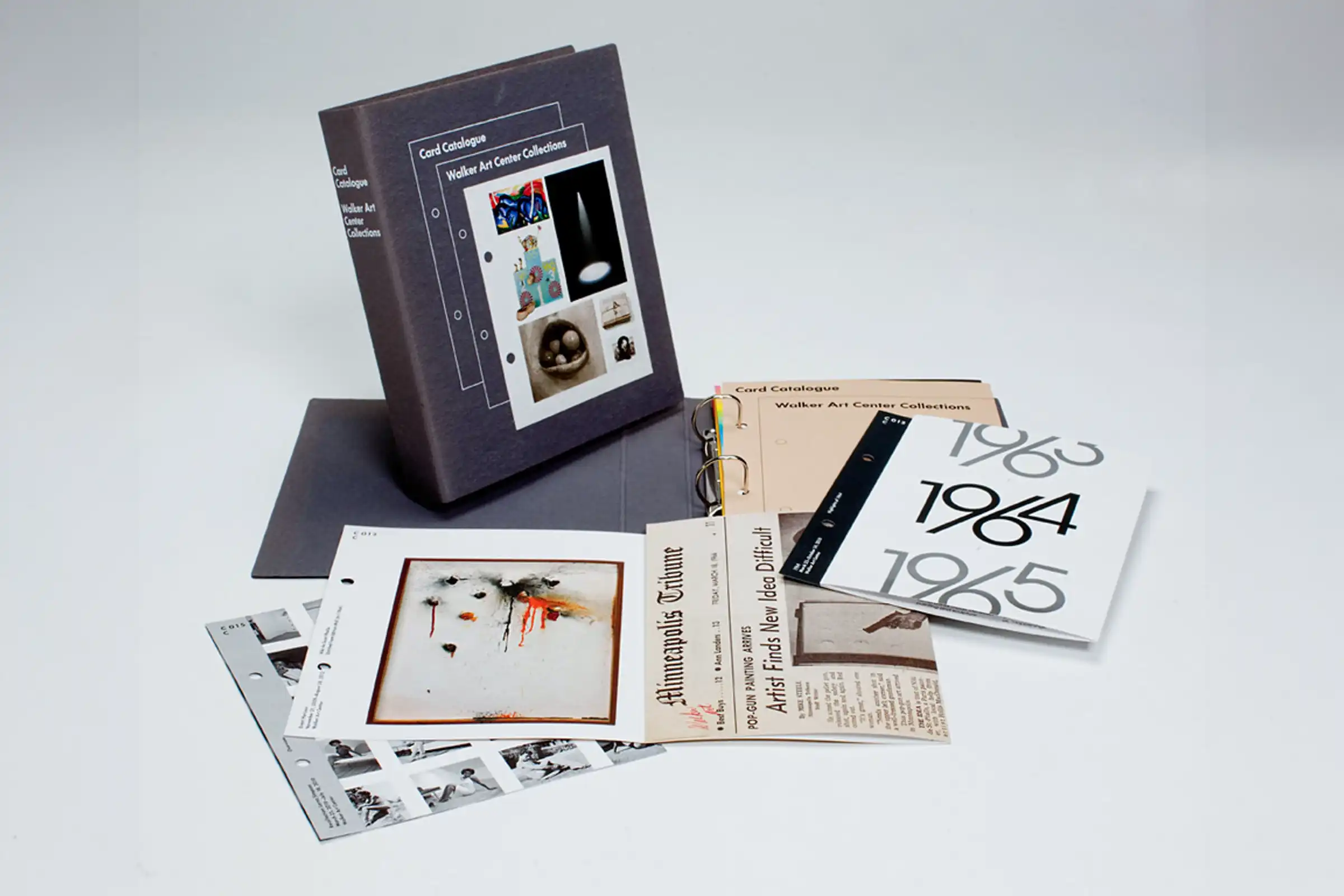
Card Catalogue: Walker Art Center Collections
2009
Card Catalogue is a new approach to the traditional gallery guide. This evolving publication is produced in association with the exhibition Event Horizon and a series of temporary shows that draw heavily from the Walker Art Center’s multidisciplinary holdings. Animated with installations that change over time, Event Horizon explores ways that personal, cultural, and political events shape the making of art and influence our subsequent experience and understanding of its many forms.
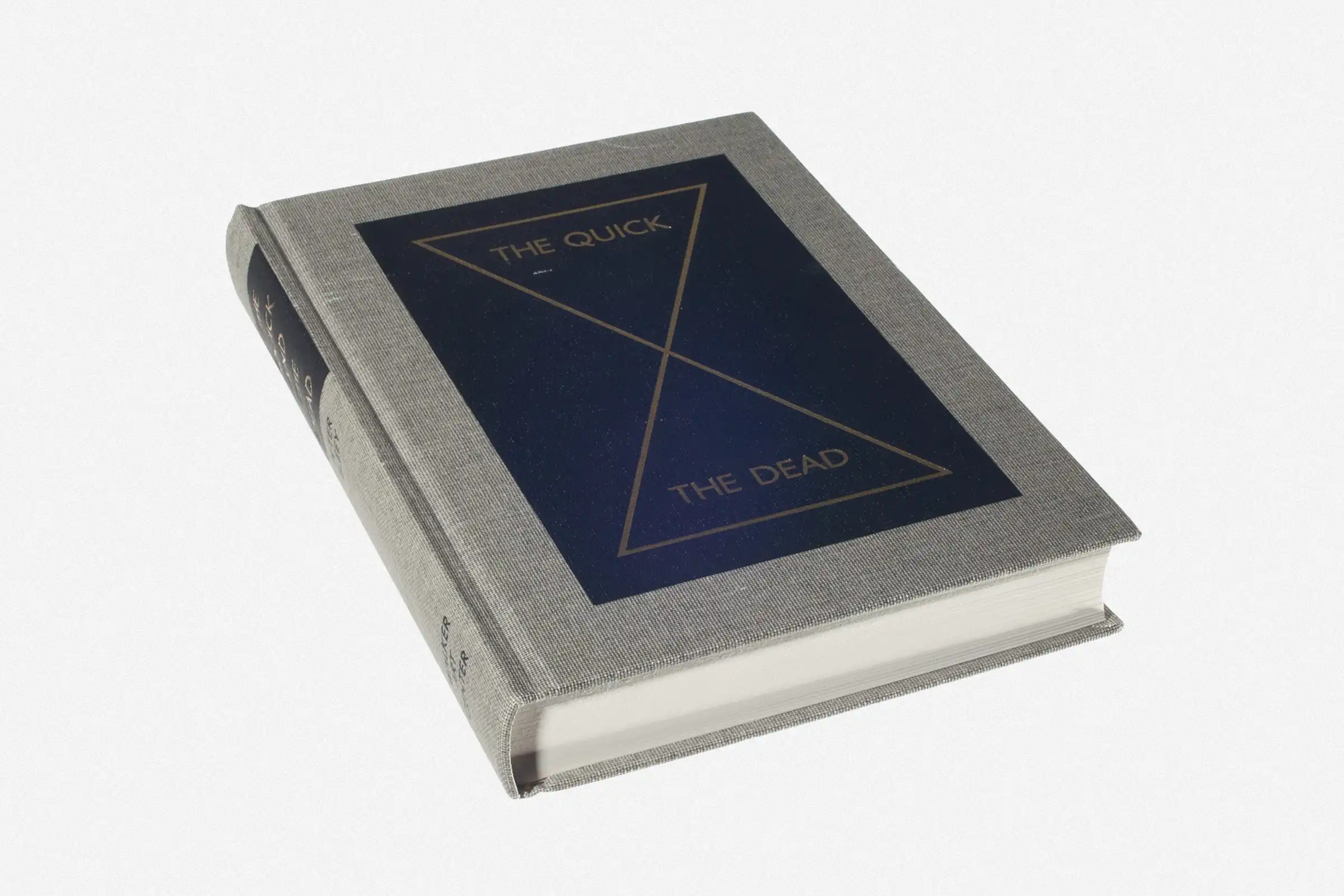
The Quick and the Dead
2009
Edited by Peter Eleey
Design Director: Andrew Blauvelt
Designer: Chad Kloepfer
Editor: Karen Jacobson
Publication Director: Lisa Middag
Image Production: Greg Beckel
Proofreader: Dianne Woo
Indexer: Candace Hyatt
The design of this book is dedicated to Charles Kloepfer
Printed and bound in Italy by EBS
Artists have always used their imaginations to see beyond visible matter–to posit other physics, other energies, new ways of conceiving the visible and new models for art–but the past century has seen an explosion of such investigations. In the fashion of a Wunderkammer, The Quick and the Dead takes stock of the 1960s and 70s legacy of experimental, or “research” art by pioneers like George Brecht, who posited objects as motionless events and asked us to consider “an art verging on the non-existent, dissolving into other dimensions,” and Lygia Clark, whose foldable sculptures sought to dissolve the boundary between inside and outside, each “a static moment within the cosmological dynamics from which we came and to which we are going.” In a series of encounters with art made strange by its expansions, contractions, inversions and implosions in time and space, The Quick and the Dead surveys more than 80 works by a global, multigenerational group of 50 artists, scientists and musicians–among them James Lee Byars, Joseph Beuys, Marcel Duchamp, Harold Edgerton, Ceal Floyer, Felix Gonzalez-Torres, Pierre Huyghe, The Institute for Figuring, Paul Ramirez Jonas, Stephen Kaltenbach, On Kawara, Christine Kozlov, David Lamelas, Louise Lawler, Paul Etienne Lincoln, Mark Manders, Kris Martin, Steve McQueen, Helen Mirra, Catherine Murphy, Bruce Nauman, Rivane Neuenschwander, Claes Oldenburg, Roman Ondák, Adrian Piper, Roman Signer and Shomei Tomatsu, among many others. Includes reprints of texts by diverse luminaries such as John McPhee, Jalal Toufic, Oliver Sacks, Allan Kaprow and Robert Smithson.
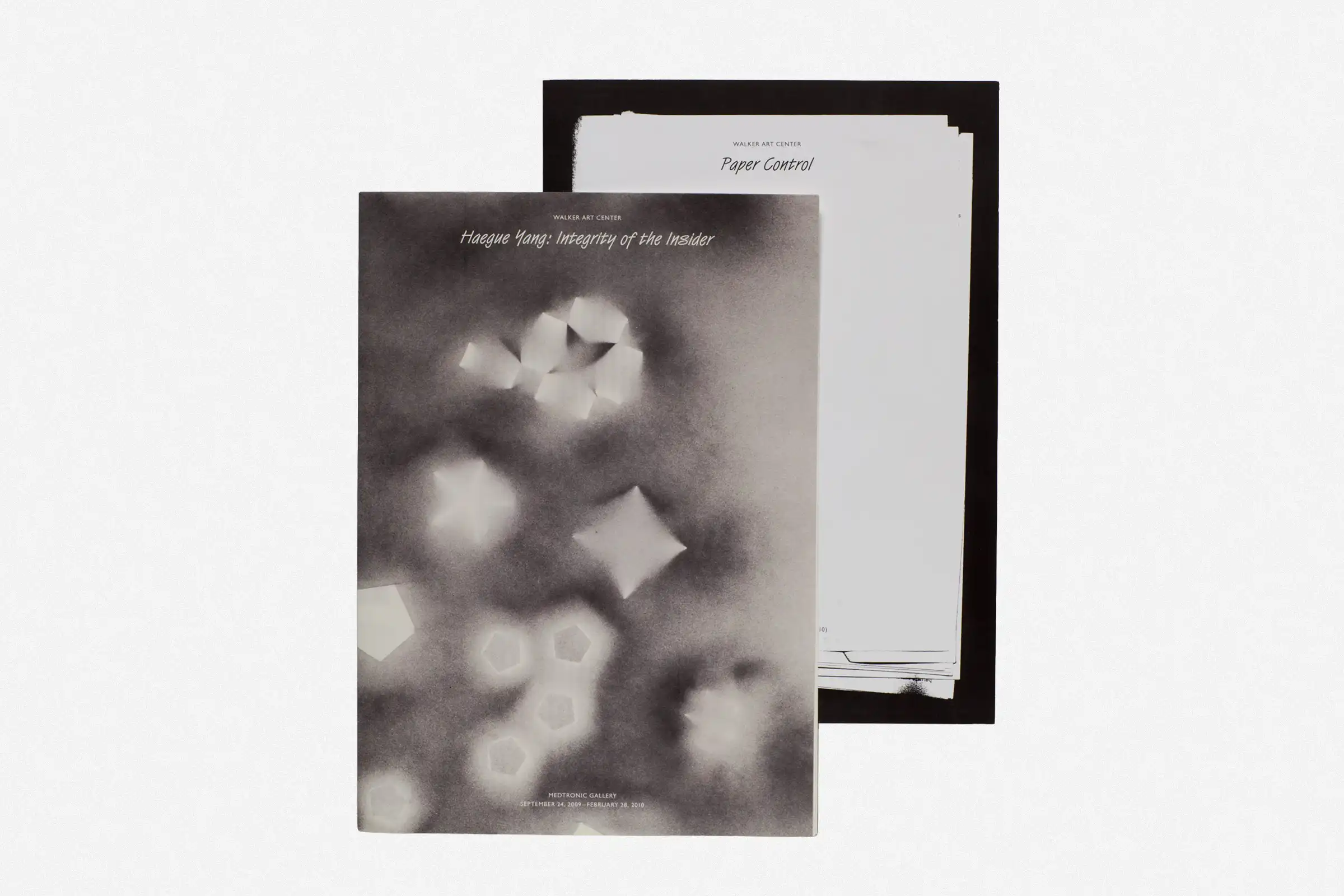
Haegue Yang: Integrity of the Insider
2009
Edited by Haegue Yang, Doryun Chong
Working with nontraditional materials such as customized Venetian blinds, lights, infrared heaters, fans, and other electrical devices, Haegue Yang creates carefully orchestrated and nuanced installations that operate as microcosms of sensory experiences. These works result from Yang’s ongoing engagement with specific historical figures of interest—people whose life narratives are characterized by a shared political commitment, along with personal failings or tragedies. Yearning Melancholy Red (2008), the exhibition’s centerpiece, specifically arose from the artist’s exploration of the life of French writer and filmmaker Marguerite Duras (1914-1996). Dura’s biography, which has close and problematic parallels with her work, is a complex composite of colonial birth and upbringing, devotion to the Resistance during WWII, and dramatically intertwined personal relationships. While Yang’s bond with this storied figure feeds the intellectual reservoir of her art, no specific references to concrete names, events, or realities emerge from the work itself. Instead, through the unique language of abstraction—namely, geometry, light, and sound—Yang’s practice translates the landscape of her own emotional and intellectual life into a “democratic” space of experience, a space generously open to viewers by way of sensory perceptions that almost anyone can experience. By doing so, she also asks whether abstraction can harbor possibilities for social and political consciousness, which primal perceptual experiences can evoke.
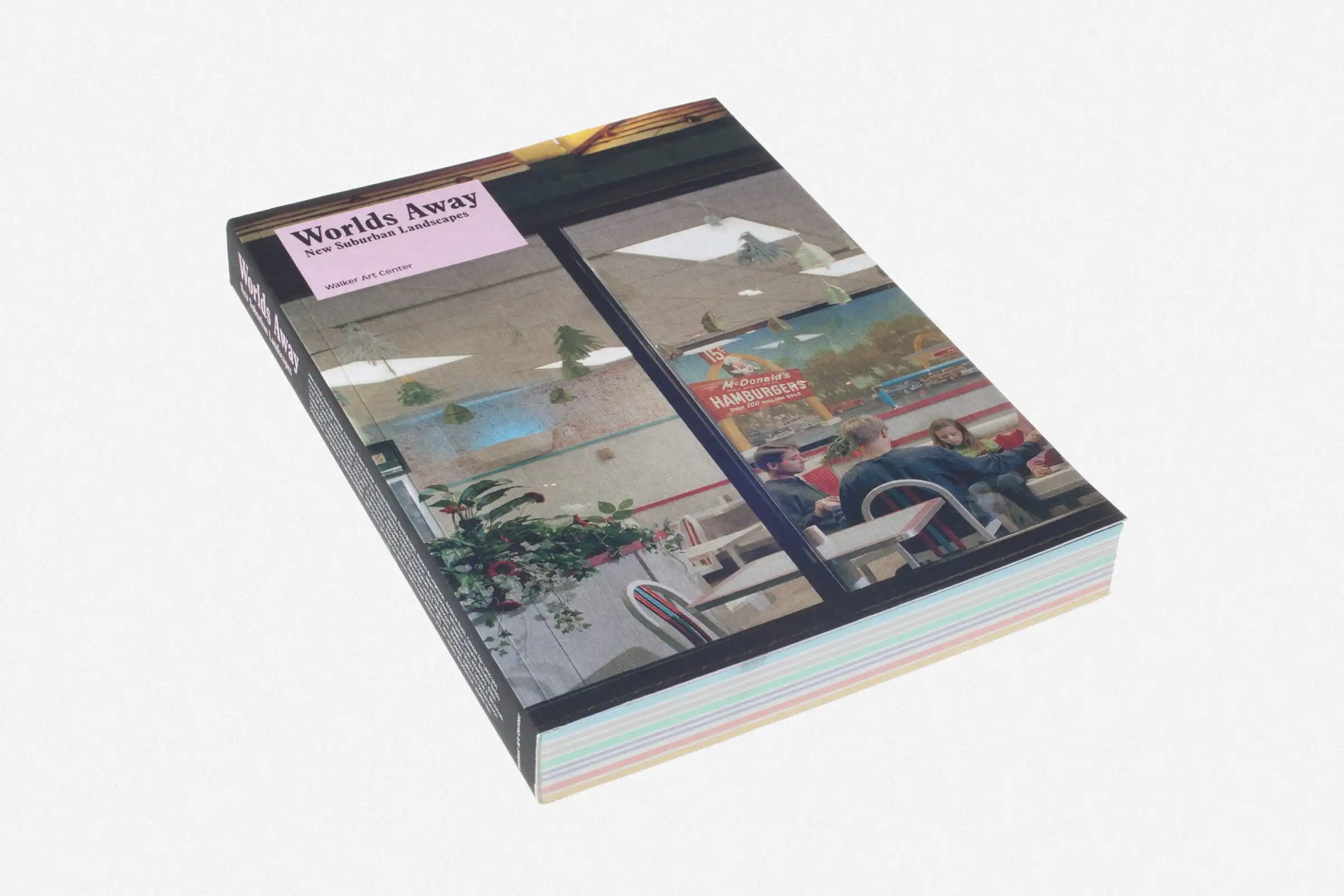
Worlds Away: New Suburban Landscapes
2008
Edited by Andrew Blauvelt
Designers: Andrew Blauvelt and Chad Koepfer
Editors: Pamela Johnson and Kathleen McLean
Publications Manager: Lisa Middag
Image Production: Creg Beckel
Indexer: Kathleen Preciado
Printed and bound in Belgium by die keure
The suburbs have always been a fertile space for imagining both the best and the worst of modern social life. Portrayed alternately as a middle-class domestic utopia and a dystopic world of homogeneity and conformity–with manicured suburban lawns and the inchoate darkness that lurks just beneath the surface–these stereotypes belie a more realistic understanding of contemporary suburbia and its dynamic transformations. Organized by the Walker Art Center in association with the Heinz Architectural Center at Carnegie Museum of Art, Worlds Away: New Suburban Landscapes is the first major museum exhibition to examine both the art and architecture of the contemporary American suburb. Featuring paintings, photographs, prints, architectural models, sculptures and video from more than 30 artists and architects, including Christopher Ballantyne, Center for Land Use Interpretation, Gregory Crewdson, Estudio Teddy Cruz, Dan Graham and Larry Sultan, Worlds Away demonstrates the catalytic role of the American suburb in the creation of new art and prospective architecture. Conceived as a revisionist and even contrarian take on the conventional wisdom surrounding suburban life, the catalogue features new essays and seminal writings by John Archer, Robert Beuka, Robert Breugmann, David Brooks, Beatriz Colomina, Malcolm Gladwell and others, as well as a lexicon of suburban neologisms.
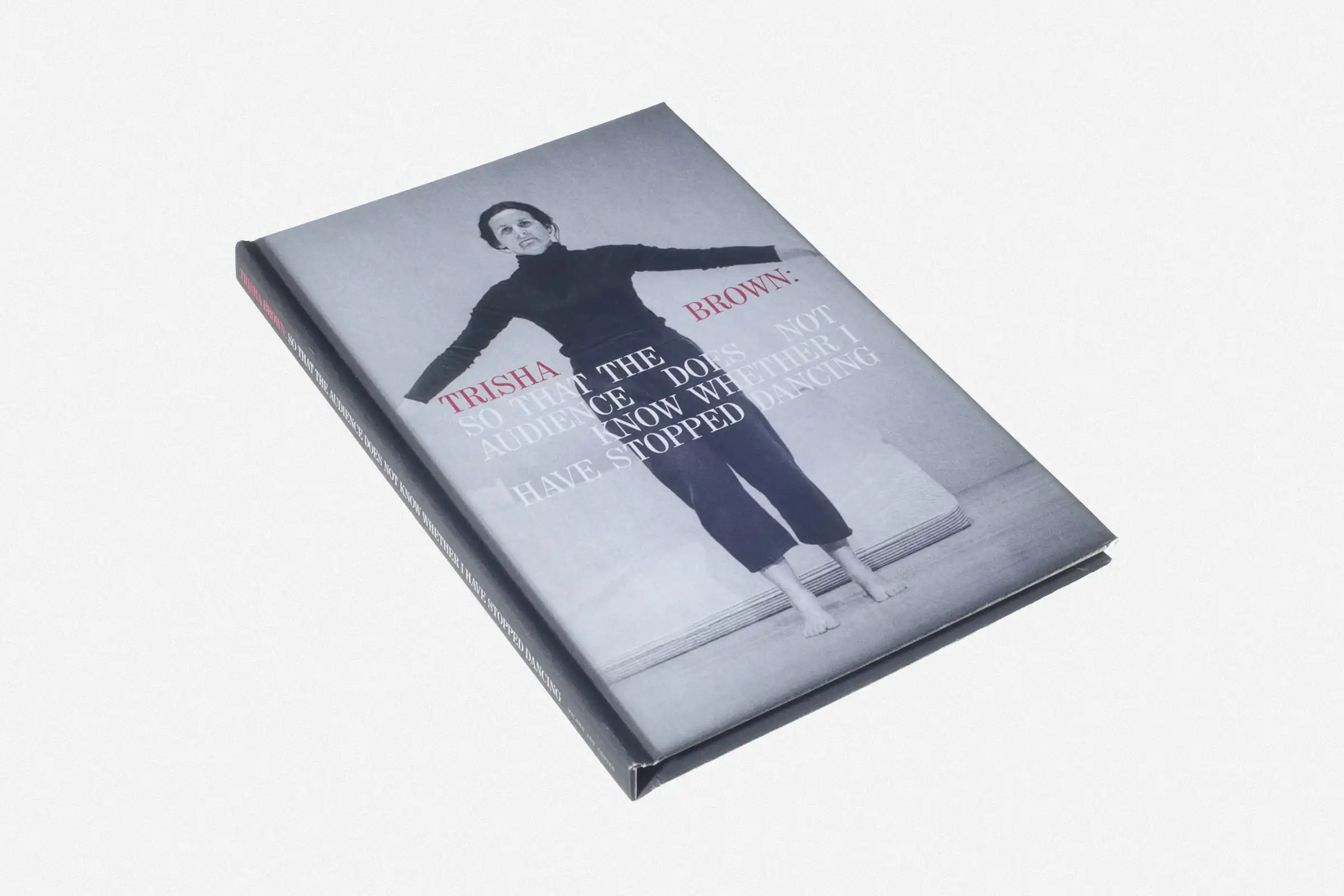
Trisha Brown: So That the Audience Does Not Know Whether I Have Stopped Dancing
2008
Purchase
Edited by Peter Eleey. Texts by Philip Bither and Peter Eleey.
Designers: Andrew Blauvelt, Ryan Nelson, and Vance Wellenstein
Editors: Pamela Johnson and Kathleen McLean
Publications Manager: Lisa Middag
Image Production: Greg Beckel
Printed and bound in Minneapolis, Minnesota by Bolger, Inc. and Midwest Editions, Inc.
Best known for her innovative choreography, which revolutionized Modern dance, Trisha Brown has for many years made drawings and other works beyond the stage that integrate the performing and visual arts. Drawing has long featured prominently in her practice, shifting from a tool for schematic composition into a fully realized component of her broader investigation into the limits of her own body. Whether she is working within the frame of a sheet of paper, on the wall or on the stage, Brown delights in the play between structure and improvisation, between repetition and invention and between choice and chance. This volume, published to accompany an exhibition at the Walker Art Center, presents a broad survey of Brown’s visual arts practice going back more than three decades. Featuring over 40 drawings, it includes essays by exhibition curator Peter Eleey and performing arts curator Philip Bither, as well as a specially-commissioned survey of Brown’s drawing vocabulary contributed by the artist.
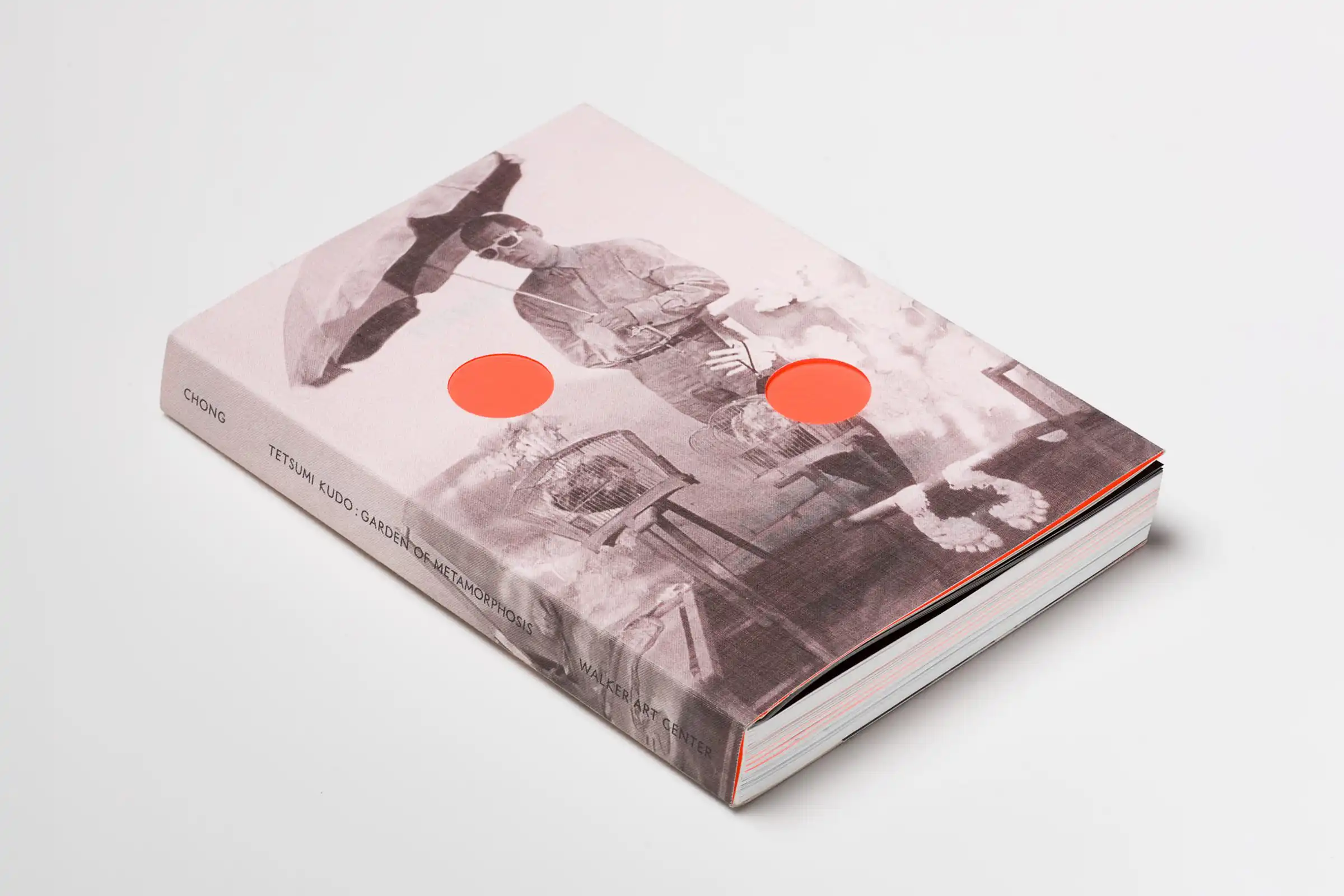
Tetsumi Kudo: Garden of Metamorphosis
2008
Edited by Doryun Chong. Texts by Mike Kelley, Hiroko Kudo, Nakahara Yūsuke, and Tetsumi Kudo
Publications Director: Lisa Middag
Editor: Michelle Piranio
Design Director: Andrew Blauvelt
Graphic Designer: Emmet Byrne
Design Fellow: Vance Wellenstein
Production Specialist: Greg Beckel
Typeface: Fox, by Chad Kloepfer
Printed and bound by CS Graphics, SIngapore
Tetsumi Kudo: Garden of Metamorphosis accompanies the first solo museum presentation of this highly original but under-studied artist’s work in the United States. Organized by the Walker Art Center in close collaboration with Hiroko Kudo, the artist’s widow, it features approximately 70 works covering the full trajectory of his amazingly productive career, which spanned from the late 1950s through the 80s. Born in Japan, Kudo first gained notoriety in the Tokyo art scene of the late 50s. He immigrated to Paris in 1962, working in a range of media–objects, sculpture, installation, drawing and painting–and presenting numerous Happenings and performances. Kudo’s work and activities intersect with many important postwar artistic trends–including French Nouveau Réalisme, Fluxus, Pop art, 60s anti-art tendencies and 80s Postmodernism. Throughout his life and career, Kudo remained particularly Japanese while his art and vision were consistently and uniquely transcultural, internationalist and cosmopolitan. This beautifully designed exhibition catalogue includes an essay examining Kudo’s philosophy, the evolution of his artistic vocabulary and his place in art history by curator Doryun Chong; a reflection by artist Mike Kelley; a selection of Kudo’s writings, interviews with the artist and other historical criticism; and an illustrated chronology by Hiroko Kudo.
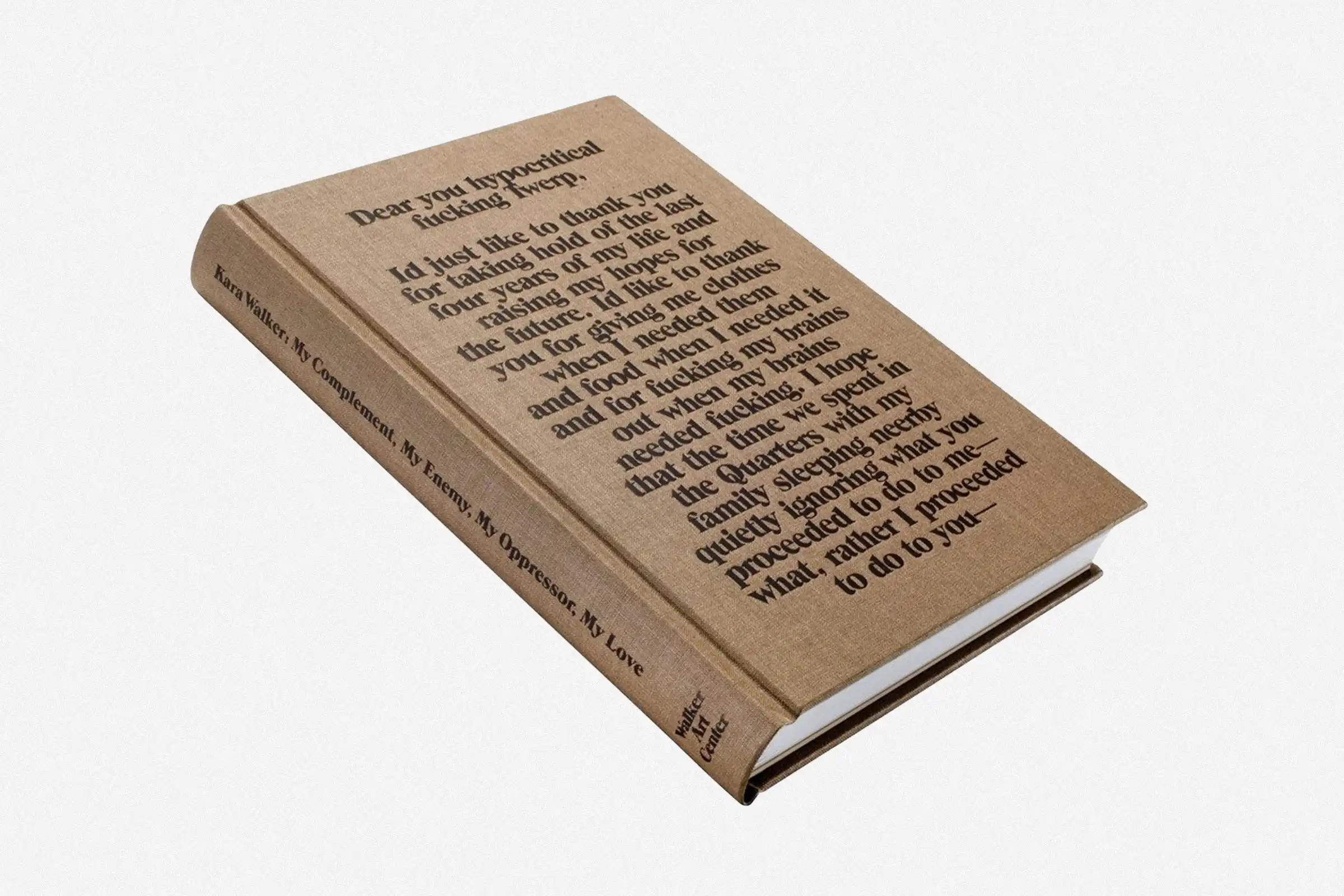
Kara Walker: My Complement, My Enemy, My Oppressor, My Love
2007
Edited by Philippe Vergne.
Publication Manager: Lisa Middag
Editor: Michelle Piranio
Proofreader: Sharon Rose Vonasch
Designers: Andrew Blauvelt and Emmet Byrne
Image Production: Greg Beckel
Printed and bound in Belgium by Die Keure.
Kara Walker is among the most complex and prolific American artists of her generation. Over the past decade, she has gained international recognition for her room-sized tableaux, which depict historical narratives haunted by sexuality, violence and subjugation and are made using the paradoxically genteel eighteenth-century art of cut-paper silhouettes. Set in the antebellum American South, Walker’s compositions play off of stereotypes to portray, often grotesquely, life on the plantation, where masters, mistresses and slave men, women and children enact a subverted version of the past in an attempt to reconfigure their status and representation. Over the years, the artist has used drawing, painting, colored-light projections, writing, shadow puppetry, and, most recently, film animation to narrate her tales of romance, sadism, oppression and liberation. Her scenarios thwart conventional readings of a cohesive national history and expose the collective, and ongoing, psychological injury caused by the tragic legacy of slavery. Deploying an acidic sense of humor, Walker examines the dialectics of pleasure and danger, guilt and fulfillment, desire and fear, race and class. This landmark publication, which is sure to win international design awards, accompanies Walker’s first major American museum survey. It features critical essays by Philippe Vergne, Sander L. Gilman, Thomas McEvilley, Robert Storr and Kevin Young, as well as an illustrated lexicon of recurring themes and motifs in the artist’s most influential installations by Yasmil Raymond, more than 200 full-color images, an extensive exhibition history and bibliography, and a 36-page insert by the artist.
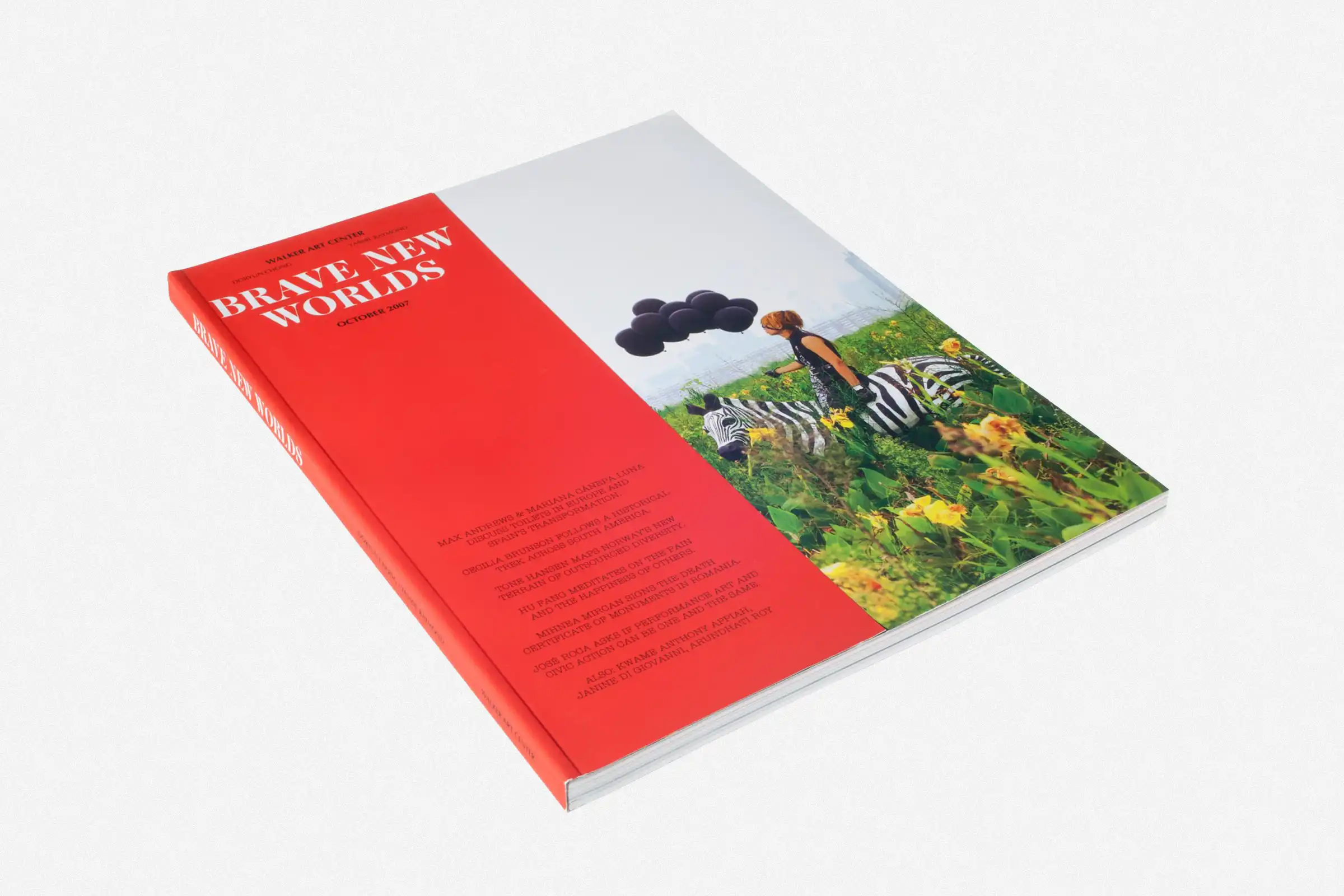
Brave New Worlds
2007
Edited by Doryun Chong and Yasmil Raymond.
Design Director: Andrew Blauvelt
Designer: Emmet Byrne
Design Fellow: Rachel Hooper
Editors: Pamela Johnson and Kathleen McLean
Publications Manager: Lisa Middag
Image Production: Greg Beckel
Printed and bound in Minneapolis by Bolger, Inc. and Midwest Editions, Inc.
Some artworks offer escape: fanciful worlds, soothing aesthetics, images and ideas made to calm and comfort. Others nudge us to question and reflect on realities facing us as individuals and as a society. The latter definition of art guides the exhibition Brave New Worlds, which considers the present state of political consciousness, expressed through the questions of how to live, experience, and dream. Organized by Walker visual arts curators Doryun Chong and Yasmil Raymond, the exhibition of some 70 works by 24 artists from 17 countries doesn’t resort to simplistic notions of “political art.” Instead, the diverse artistic voices gathered here seek different potentials for engagement and thus collectively offer a look beyond glib expressions of globalism.
The exhibition title, inspired by Aldous Huxley’s 1932 novel Brave New World, capitalizes on its ambivalent resonance. “We came upon ‘brave new worlds’ because we thought that in front of us are a range of approaches to the world that are critical but ultimately hopeful,” says Chong. “Then, we realized that the expression, in daily parlance, actually expresses ambivalence toward the relentless forward movement of modernity, and that’s precisely what’s found in Huxley’s book. His future society, one possible dead-end of modernity, is ultimately dystopian, but people are engineered to be perpetually ‘happy.’” Made into the plural form, “brave new worlds”—the micro-worlds proposed by the artists—present a multiplicity of interpretations and perspectives that critically cut through the collective haze of the “globe” that obscures the world’s many realities.
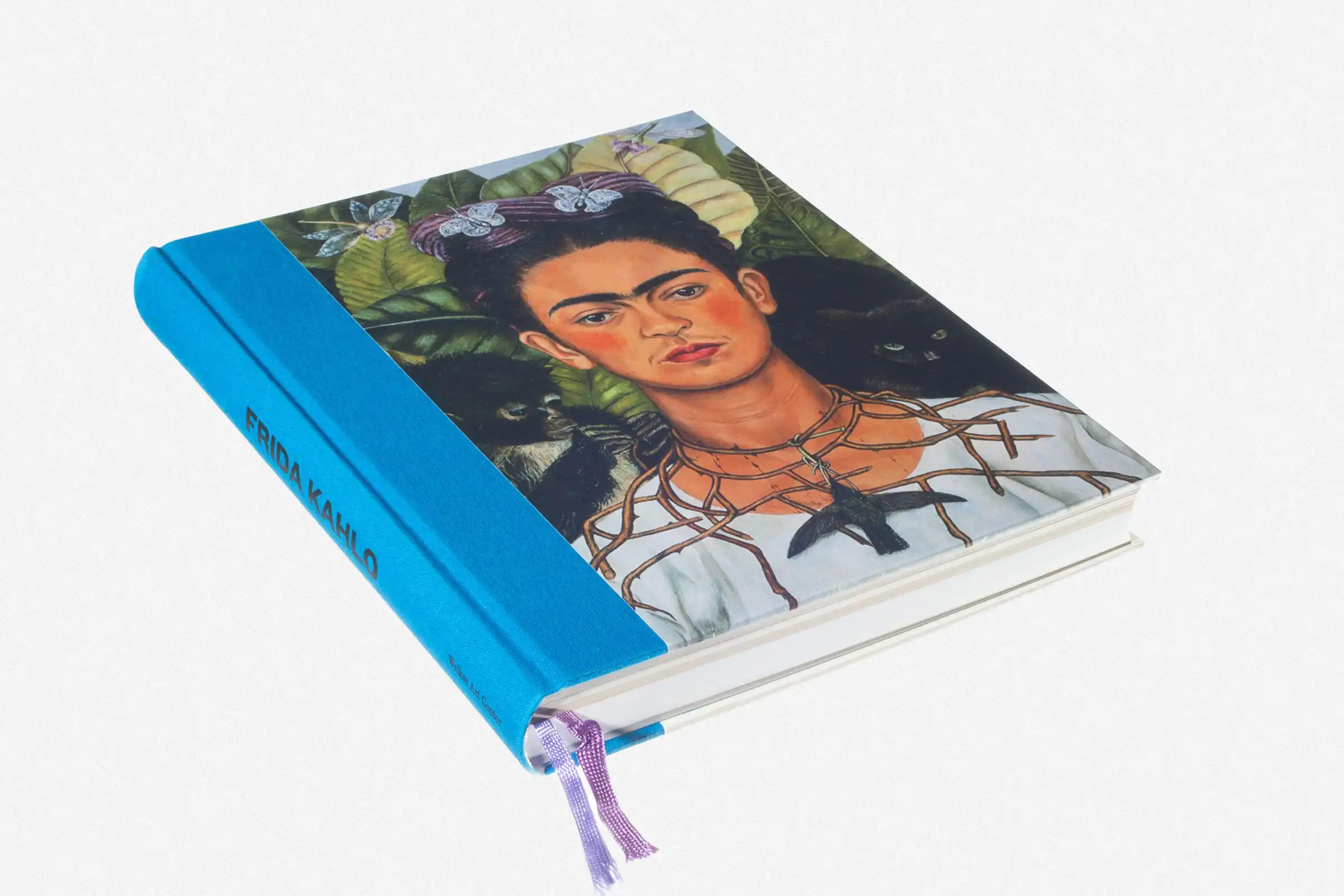
Frida Kahlo
2007
Edited by Elizabeth Carpenter. Texts by Elizabeth Carpenter, Hayden Herrera, and Victor Zamudio-Taylor.
Designers: Andrew Blauvelt, Chad Koepfer, and Jayme Yen
Editor: Karen Jacobson
Publications Manager: Lisa Middag
Image Production: Greg Beckel
Proofreader: Sharon Rose Vonasch
Indexer: Candace Hyatt
Fact-Checking (Timeline): Ann Bjorlin
Printed and bound in Germany by Cantz
Few artists have captured the public’s imagination with the force of Mexican painter Frida Kahlo. During her lifetime, she was best known as the flamboyant wife of celebrated muralist Diego Rivera. Theirs was a tumultuous relationship: Rivera declared himself to be “unfit for fidelity.” As if to assuage her pain, Kahlo recorded the vicissitudes of her marriage in paint. She also recorded the misery of her deteriorating health–the orthopedic corsets that she was forced to wear, the numerous spinal surgeries, the miscarriages and therapeutic abortions. The artist’s sometimes harrowing imagery is mitigated by an intentional primitivism and small scale, as well as by her sardonic humor and extraordinary imagination.
In celebration of the one-hundredth anniversary of Kahlo’s birth, this major new monograph is published on the occasion of the 2007-08 traveling exhibition. It features the artist’s most renowned work–the hauntingly seductive and often brutal self-portraits–as well as a selection of key portraits and still lifes; more than 100 color plates, from Kahlo’s earliest works, made in 1926, to her last, in 1954; critical essays by Elizabeth Carpenter, Hayden Herrera and Victor Zamudio-Taylor; and a selection of photographs of Kahlo and Rivera by preeminent photographers of the period, including Manuel Alvarez Bravo, Lola Alvarez Bravo, Gisele Freund, Tina Modotti and Nickolas Muray. The catalogue also contains snapshots from the artist’s own photo albums of Kahlo with family and friends such as André Breton and Leon Trotsky–some of which have never been published, and several of which Kahlo inscribed with dedications, effaced with self-deprecating marks or kissed with a lipstick trace–plus an extensive illustrated timeline, selected bibliography, exhibition history and index.
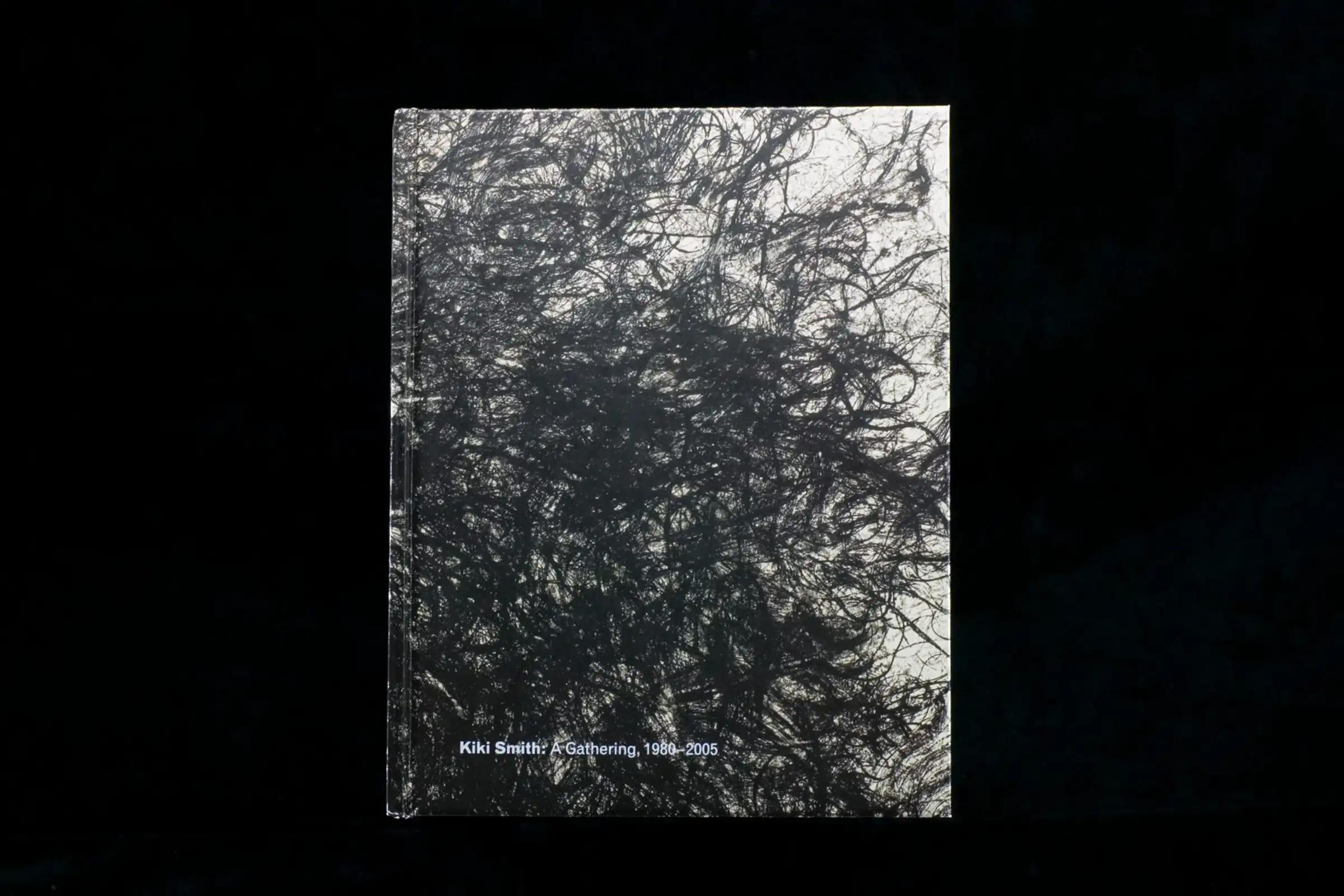
Kiki Smith: A Gathering, 1980-2005
2006
Edited by Siri Engberg. Texts by Linda Nochlin, Lynne Tillman, and Marina Warner.
Designers: Andrew Blauvelt, Emmet Byrne
Editor: Michelle Piranio
Proofreader: Sharon Vonasch
Indexer: Candace Hyatt
Publications Manager: Lisa Middag
Printed in Italy by Editoriale Bortolazzi-Stei
Widely considered to be one of the most engaging and fascinating artists of our time, Kiki Smith has, over the past 25 years, developed into a major figure in the world of twenty-first-century art. Her subject matter is as wide-ranging as the materials her work has encompassed. In the 1980s, with her earliest figural sculptures in plaster, glass and wax, Smith developed an elaborate vocabulary around the forms and functions of the body and its metaphorical as well as physical relationship to society. By the early 1990s, she began to engage with themes of a more religious and mythological nature. Her re-imaginings of biblical women as inhabitants of physical bodies–rather than as abstract bearers of doctrine–led her to make series of sculptural works related to the figure of the Virgin Mary, Mary Magdalene, Lilith and others. The artist has more recently considered fairy tales and folk narratives as well as nurturing a growing menagerie of work concerned with animals and the natural world. Smith has now earned a considerable reputation as a virtuoso printmaker and draftsperson, and as a re-inventor of the startling sculptural possibilities present in materials ranging from paper and resin to bronze and porcelain. Organized by the Walker Art Center with the full collaboration of the artist, the exhibition Kiki Smith represents the artist’s first full-scale monograph.
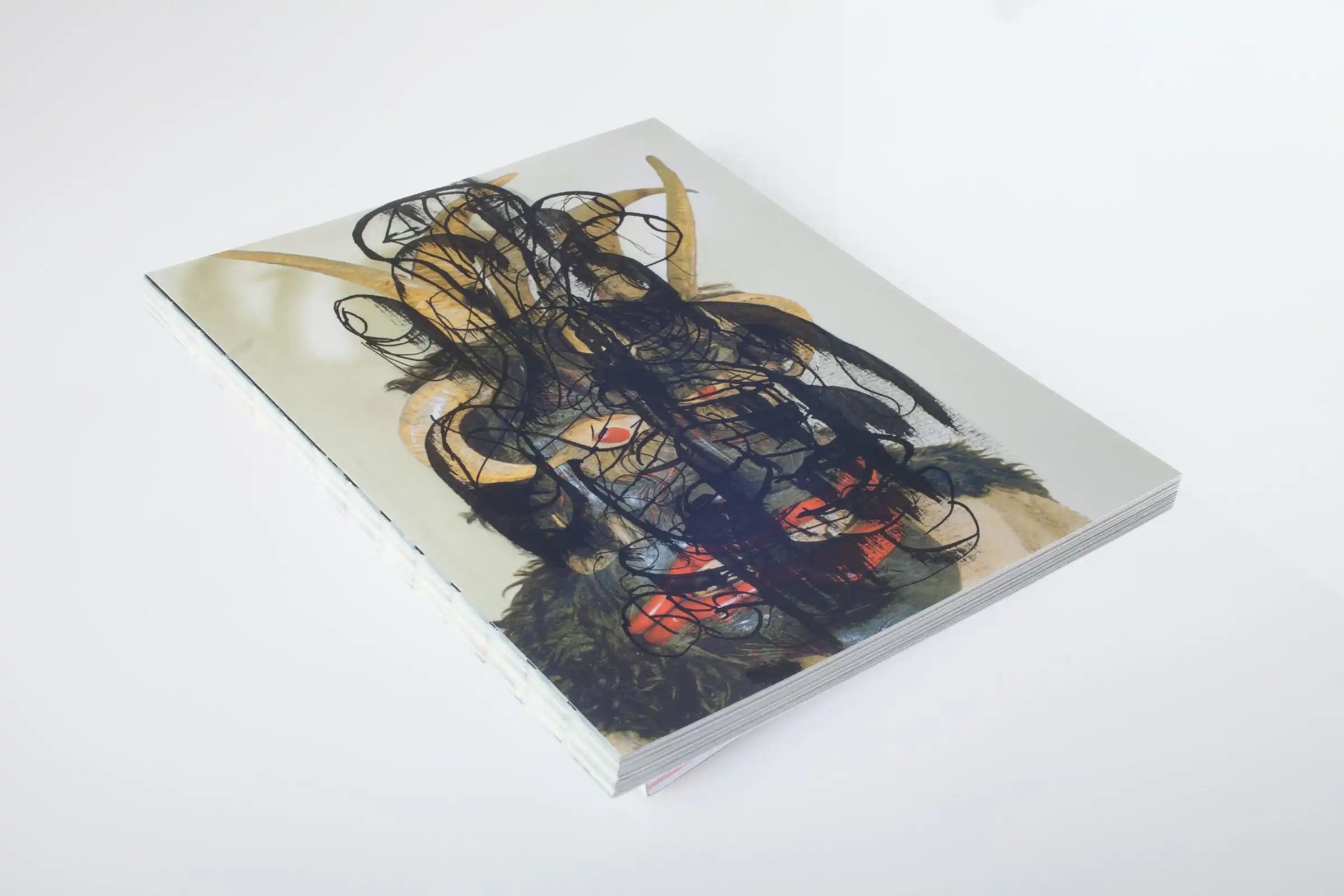
Cameron Jamie
2006
Edited by Philippe Vergne. Texts by texts by Charles Bukowski, Kathy Halbreich, and Philippe Vergne.
Catalogue Design: Lucie Liegeois
Book Production: Dorothee Charles
COlor Separations: La Compagnie des couleurs, Levallois, France
Photography, Walker Art Center: Cameron Wittig and Gene Pittman
Printed by die Keure, Brugge, Belgium
Cameron Jamie’s work–a blend of video, sound, performance, photography and drawing–confronts the dysfunction of European and American society. His critical gaze often focuses on ritualistic practices in popular culture, such as hot dog eating contests and backyard wrestling. Taking suburban phenomena of this sort as his primary material, Jamie explores the dark underbelly of the American dream in drawings, film and performance. This artist-designed exhibition catalogue features more than 60 works in various media, illuminating the artist’s process with selections from his personal archive of clippings and ephemera, as well as raw sketches for his projects. An essay by exhibition curator Philippe Vergne, a foreword by Walker director Kathy Halbreich and a reprint of a poem by Charles Bukowski selected by the artist provide context for this first large-scale, museum presentation of Jamie’s work.
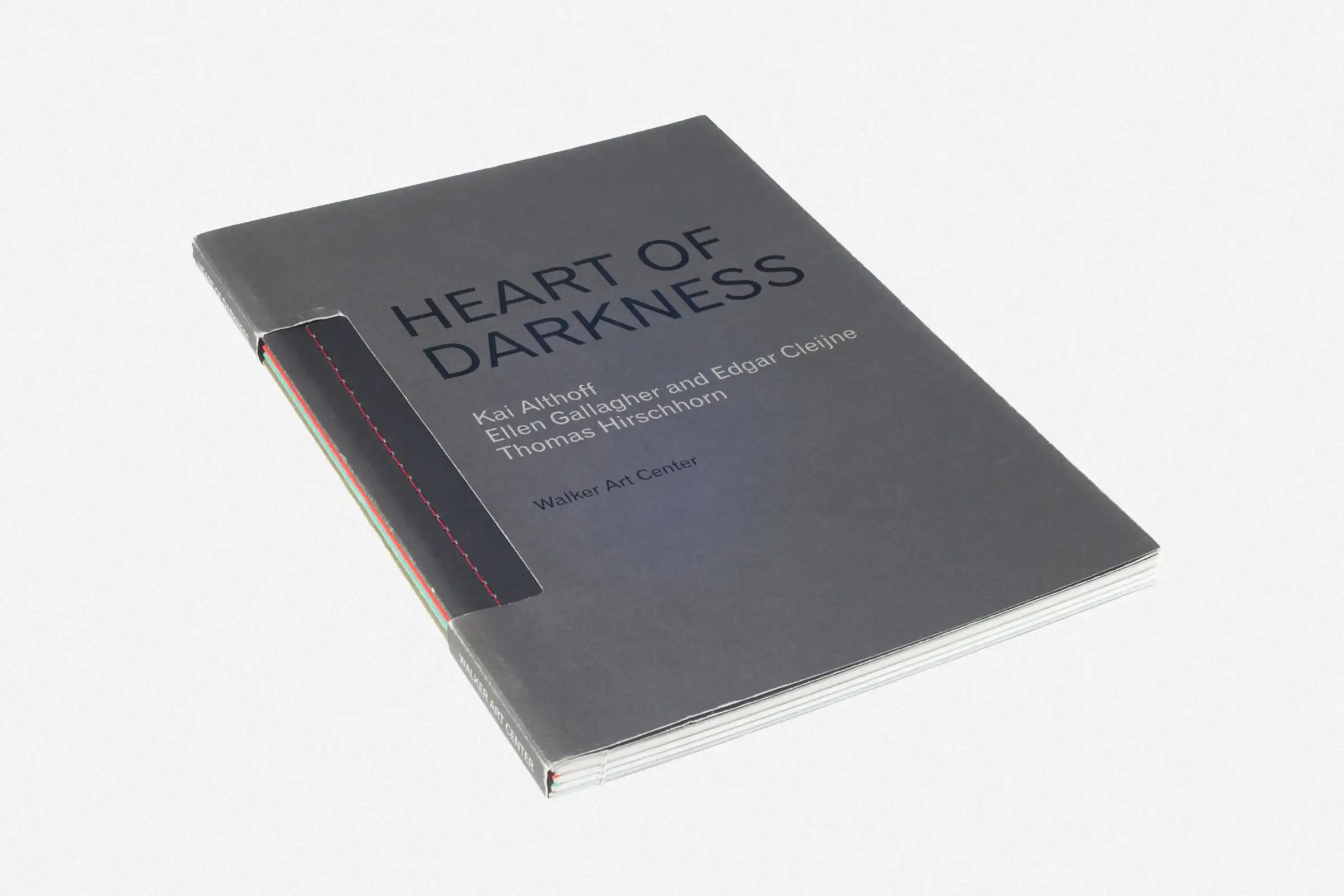
Heart of Darkness: Kai Althoff, Ellen Gallagher and Edgar Cleijne, Thomas Hirschhorn
2006
Edited by Philippe Vergne.
Designers: Andrew Blauvelt and Chad Kloepfer
Editors: Pamela Johnson and Kathleen McLean
Publications Manager: Lisa Middag
Production Specialist: Greg Beckel
Printed and bound in the USA by Shapco Printing, Inc.
Heart of Darkness centers on three large-scale installations by artists Kai Althoff, Ellen Gallagher and Thomas Hirschhorn. Working with fairy tales, science fiction and sensational imagery, these artists invite us to enter an uncanny world of their own creation, where darkness is not just a representation of chaos, madness and dystopia, but an artistic strategy in the search for clarity and empathy within the insurmountable nihilism of the twenty-first century. With an introduction by curator Philippe Vergne and individual interviews with the artists.
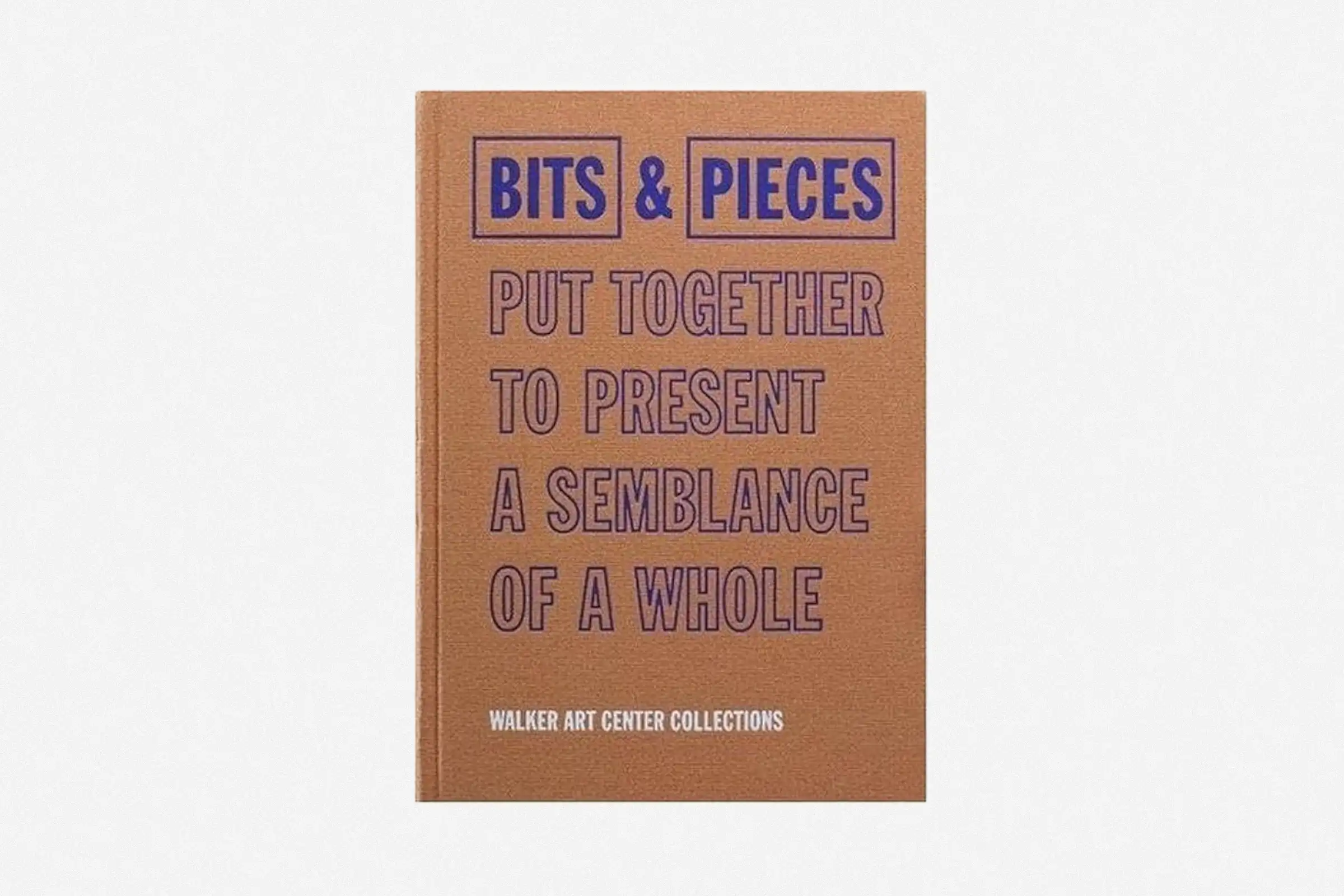
Bits & Pieces Put Together to Present a Semblance of a Whole: Walker Art Center Collections
2005
Edited by Joan Rothfuss and Elizabeth Carpenter.
Publication Manager: Lisa Middag
Editors : Pamela Johnson, Katheen McLEan
Designers: Andrew Blauvelt, Chad Kloepfer
Production Specialist: Greg Beckel
Printed ad bound in Belgium by Die Keure
One of the premier institutions of contemporary art in the country, the Walker Art Center also holds an important collection of over 11,000 objects from the early twentieth century to the present. These holdings reflect the Center’s renowned multidisciplinary program, and include paintings, sculpture, prints, photography, film, video, installations and digital arts that range in date from classic early Modernist to cutting edge contemporary.
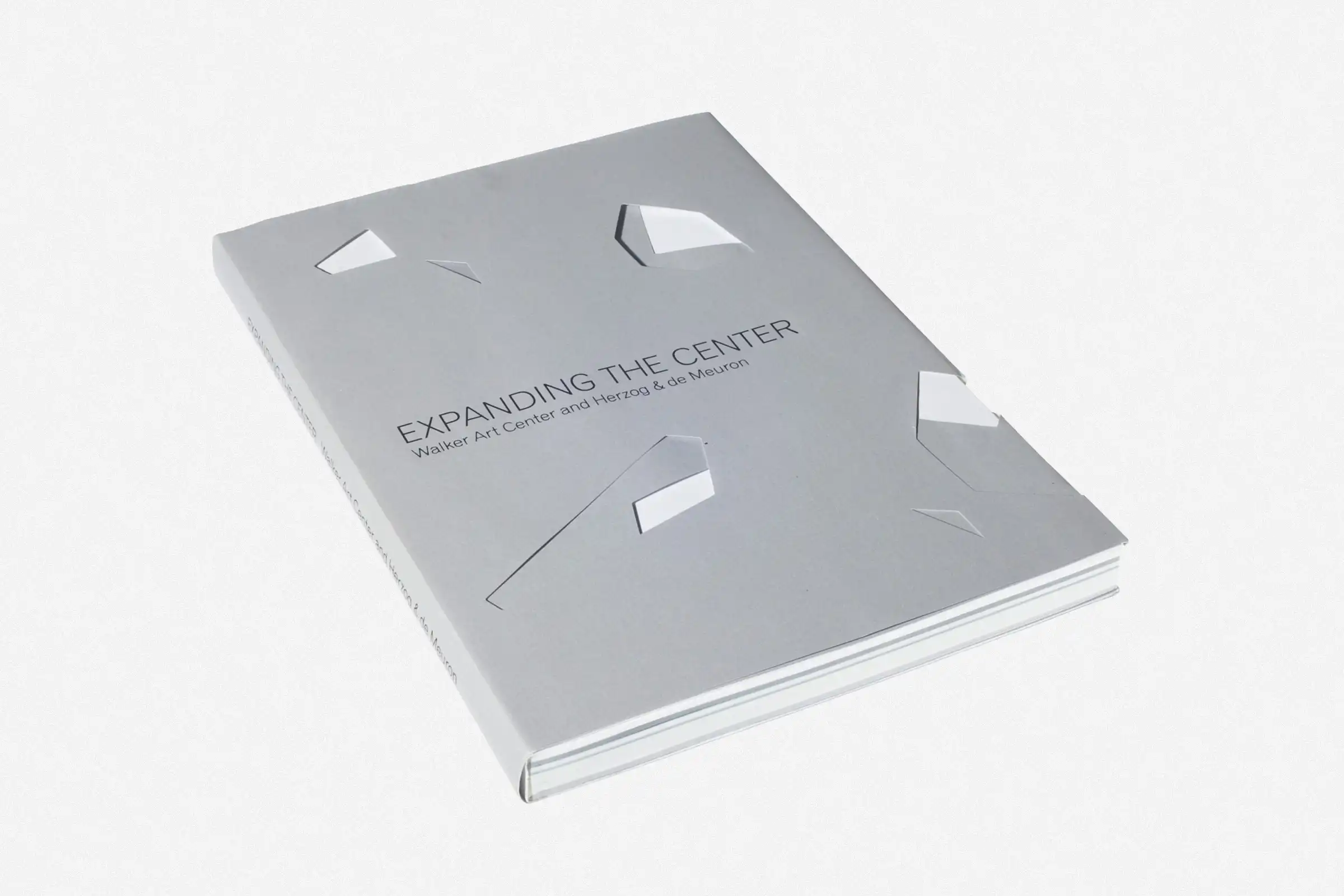
Expanding the Center: Walker Art Center and Herzog & de Meuron
2005
Edited by Andrew Blauvelt.
Designer: Andrew Baluvelt, Matthe Rezac
Editors: Pamela Johnson, Katheleen McLean
Publications Manager: Lisa Middag
Production Specialist: Greg Beckel
Printed in the USA by Print Craft, Inc., Minneapolis
Bound by Muscle Bound Bindery, Minneapolis
The Walker Art Center recently opened its expanded space, which includes a new theater, a new restaurant and more galleries, but is best known for being Herzog & de Meuron’s first public building in the United States. The project drew national coverage from media including The New York Times. Expanding the Center addresses this public interest in the building with a generous selection of images, including sketches, renderings and photographs of the construction process and the completed work. Herzog & de Meuron’s shimmering but grounded design mirrors the textures and shades of the Walker’s original space, and an institutional philosophy based in innovation and risk-taking, the exploration of alternative approaches to learning, the experimental use of technologies to communicate information, and the design of spaces to enhance a variety of museum experiences. The book is organized around the decisions and actions of the architects, builders, Walker staff and the audience–i.e. designing, constructing, unveiling, staging, gathering, patterning, framing, collecting–and highlights the thinking that led to the visible form of the Center as well as the innovative projects and initiatives that give it its inimitable character.
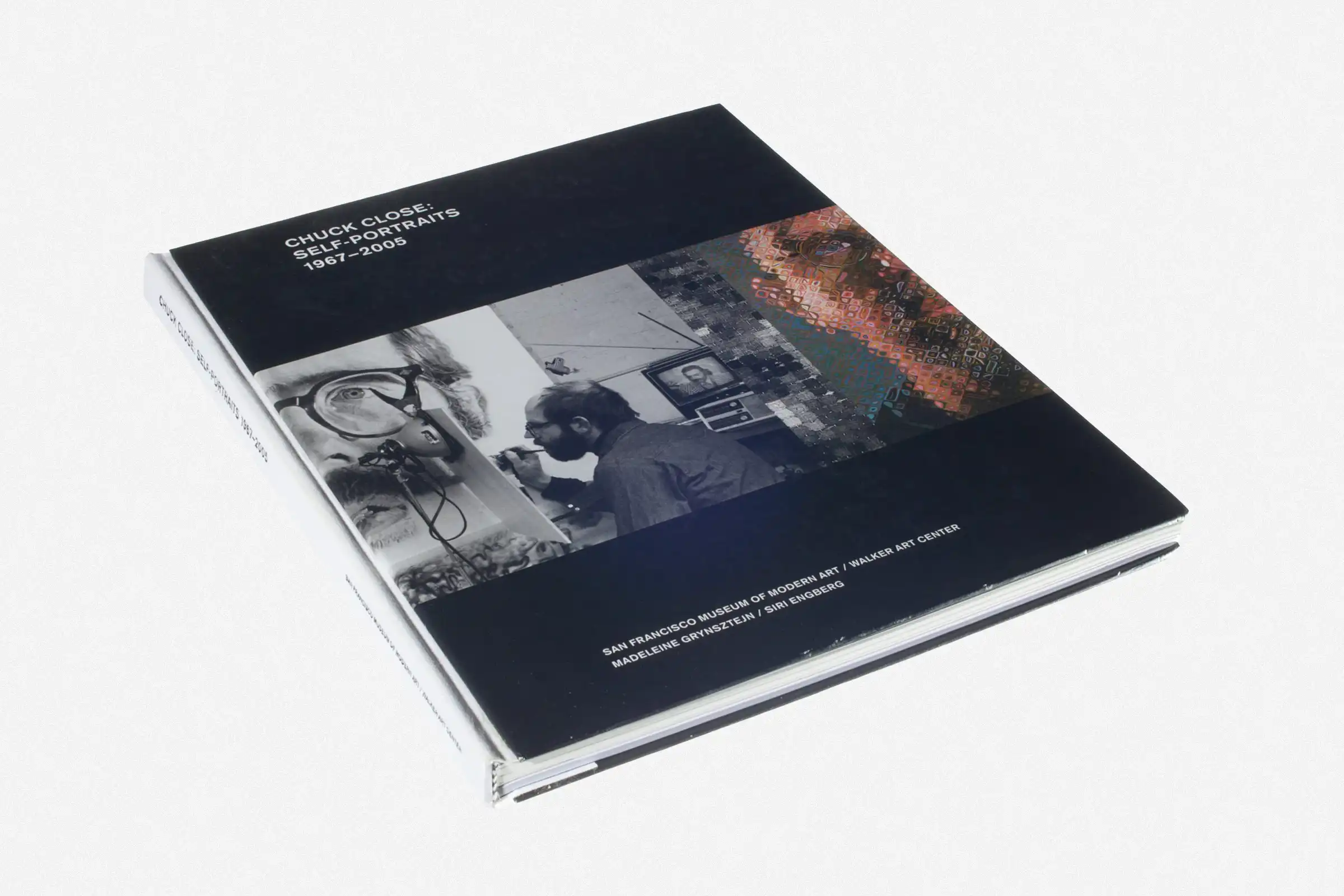
Chuck Close: Self-portraits 1967-2005
2005
Edited by Siri Engberg. Texts by Siri Engberg, Madeleine Grynsztejn, Douglas R Nickel.
Book Design: Feel Good Anyway (FGA), Portland, Oregon
Publication Manager and Editor: Michelle Piranio
Proofreader: Kathleen McLean
Printed and Bound in Italy by EBS.
Celebrated as one of the most influential figurative painters of our time, Chuck Close has remained a vital presence by focusing exclusively on portraiture, a genre often under-recognized in contemporary art. Since the 1960s, Close has used his inimitable style of realistic painting to portray a wide range of subjects, including friends, family, fellow artists, and himself. This exhibition, co-organized by the Walker Art Center and the San Francisco Museum of Modern Art, focuses exclusively on Close’s self-portraits in all of the media in which he works: painting, drawing, photography, collage, and printmaking. Including a broad array of examples from throughout Close’s career, the exhibition provides a fascinating glimpse of an artist’s self-examination through time, beginning with his first self-portrait acquired by the Walker in 1969.
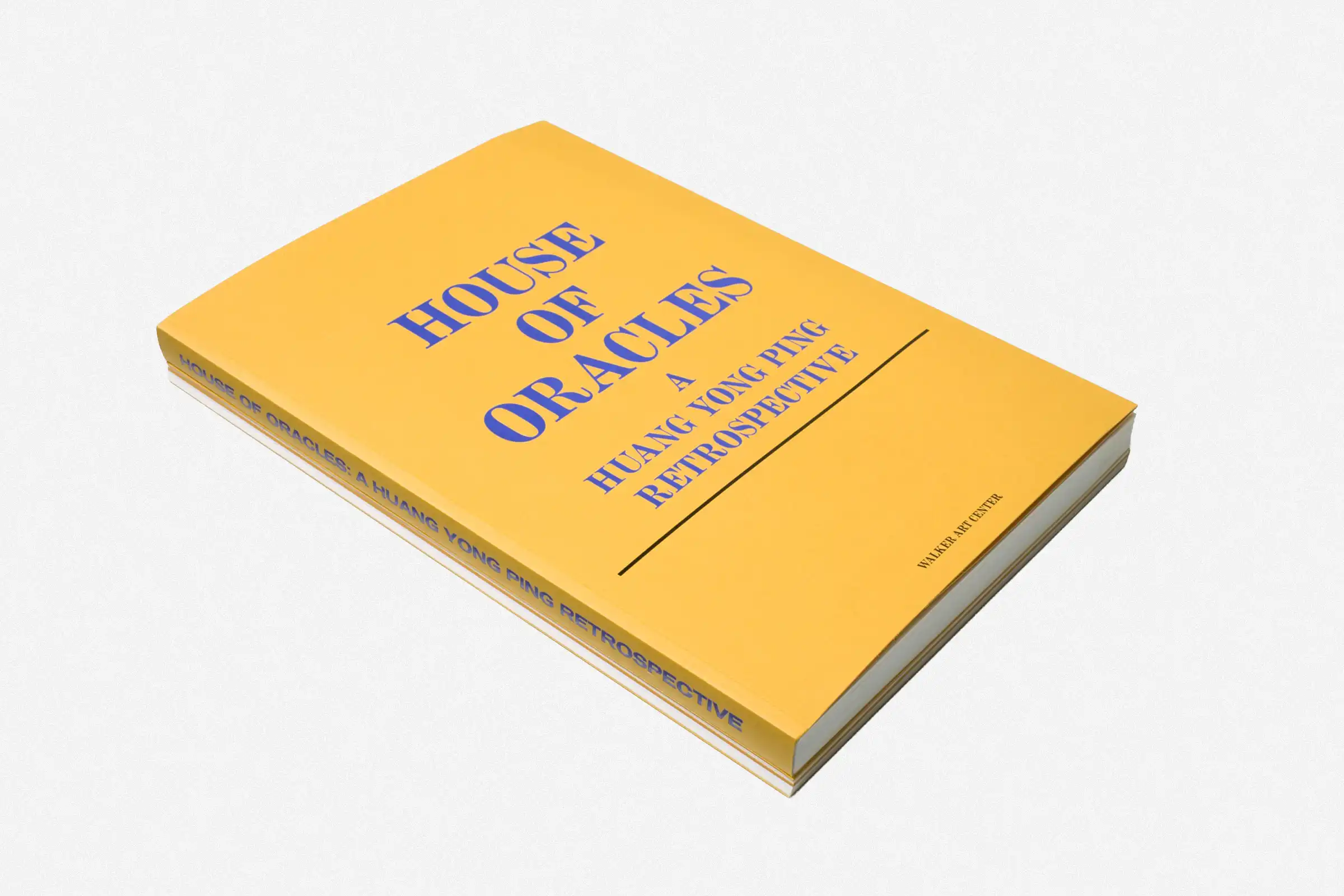
House of Oracles: A Huang Yong Ping Retrospective
2005
Edited by Philippe Vergne and Doryun Chong. Texts by Fei Dawei, Hou Hanru, Huang Yong Ping, and Huang Yong Ping.
Designers: Andrrew Baluvelt, Chad Kloepfer
Editor: Karen Jacobson
Publications Manager: Lisa Middag
Production Specialist: Greg Beckel
Printed and bound in Italy by EBS
As an exhibition, “House of Oracles: A Huang Yong Ping Retrospective” is historic: the first retrospective of an artist who is well known outside the United States for creating art that offers endless alternatives to confining classifications such as East and West, tradition and modernity. The catalogue brings together influential voices in contemporary art, including Paris-based curator/critic Hou Hanru (perhaps the foremost scholar on contemporary art in China), Walker deputy director and chief curator Philippe Vergne, critic/curator Fei Dawei, and Huang Yong Ping himself, as well as a conceptual travel guide by assistant curator Doryun Chong. It also presents some of Huang’s writings in English for the first time.
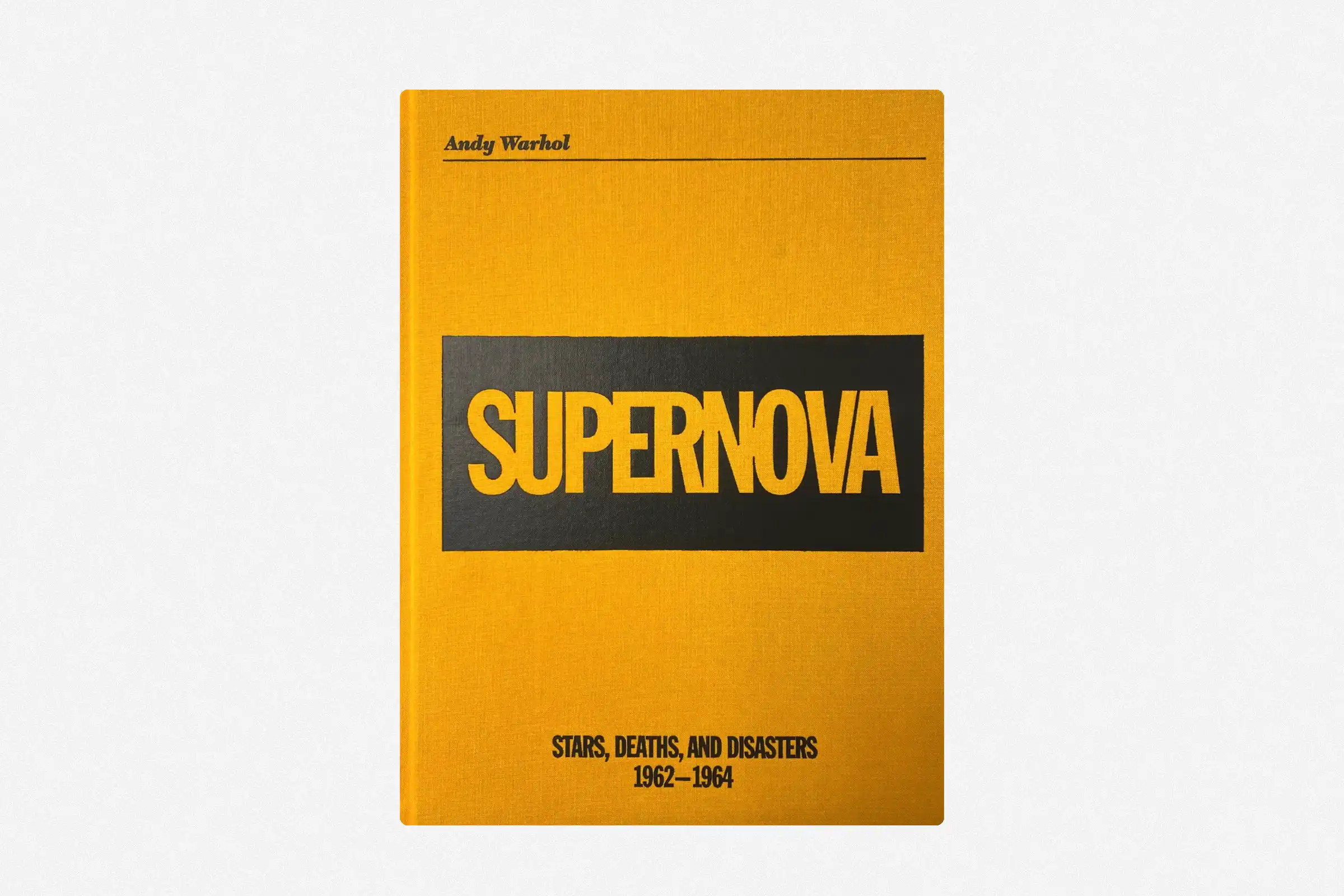
Andy Warhol/Supernova: Stars, Deaths, and Disasters, 1962-1964
2005
Printed in the USA by Diversified Graphics Incorporated, Minneapolis
Color separations by Professional Graphics Inc., Rockford, IL
In the age of mass media, American culture has displayed an unequaled fascination with both celebrities and disasters. Andy Warhol was one of the first artists to investigate these twin obsessions, beginning in the mid-1960s, as he shifted his practice from hand-painting to the mechanical photo silkscreen process. Andy Warhol/Supernova brings together more than 50 examples of the artist’s early silkscreen work, juxtaposing his iconic serial images of Marilyn Monroe, Elizabeth Taylor and Elvis Presley with his evocative and often disturbing appropriations of car crashes, electric chairs, and other “disasters,” appropriated from photojournalism and made side by side. The combination provides a glimpse into a prevailing condition of American modernity–this dual fascination with fame and tragedy–that remains a key component of our national identity. Looking back at this body of masterworks, now some 40 years old, it becomes clear that if some things have changed, more have stayed the same.
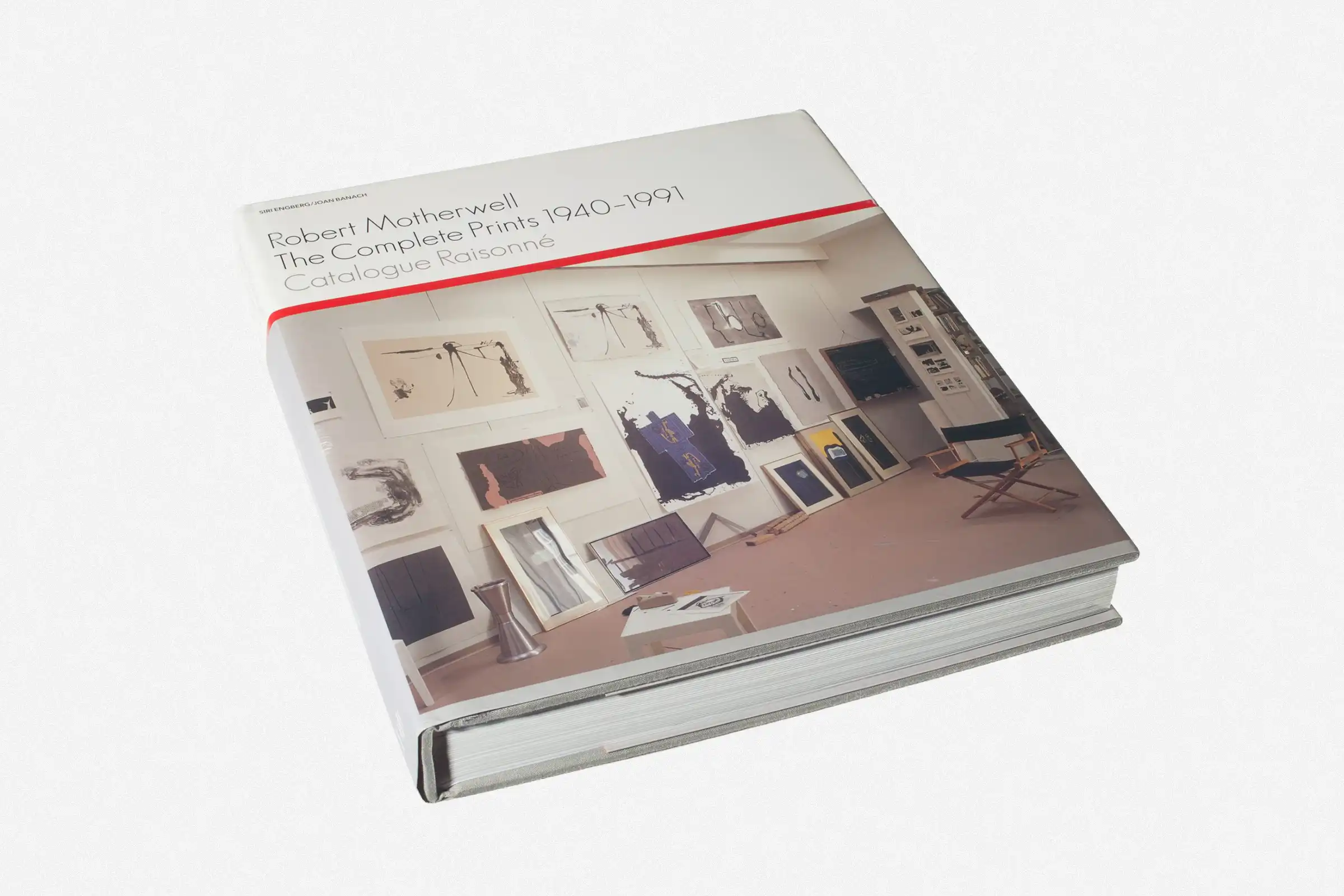
Robert Motherwell: The Complete Prints 1940-1991
2003
Edited by Siri Engberg and Joan Banach.
Editor: Michelle Piranio
Additional Editorial Services: Fronia Simpson
Research Assistance: Aimee Chang, Elizabeth Mangini, ALice Stock, Elizabeth Thomas
Designer: Santiago Piedrafita
Design Director: Andrew Blauvelt
Design Assistance: David Naj
Publication Managers: Eugenia Bell, Lisa Middag
Proofreaders: Pamela Johnson, Kathleen McLean
Robert Motherwell: The Complete Prints 1940-1991 presents for the first time a definitive catalogue raisonne of this aspect of the artist’s work, documenting more than 500 editions with all new research, photography, and commentary, and incorporating previously uncatalogued material. In addition, the book includes an essay on Motherwell’s printmaking history, an illustrated chronology, a comprehensive bibliography and exhibition history, and a concordance with past catalogues. Supplanting earlier publications as the standard reference on Motherwell’s editioned work, this book is an invaluable resource for scholars, collectors, and general enthusiasts of an artist who made an indelible impression on the history of twentieth-century printmaking.
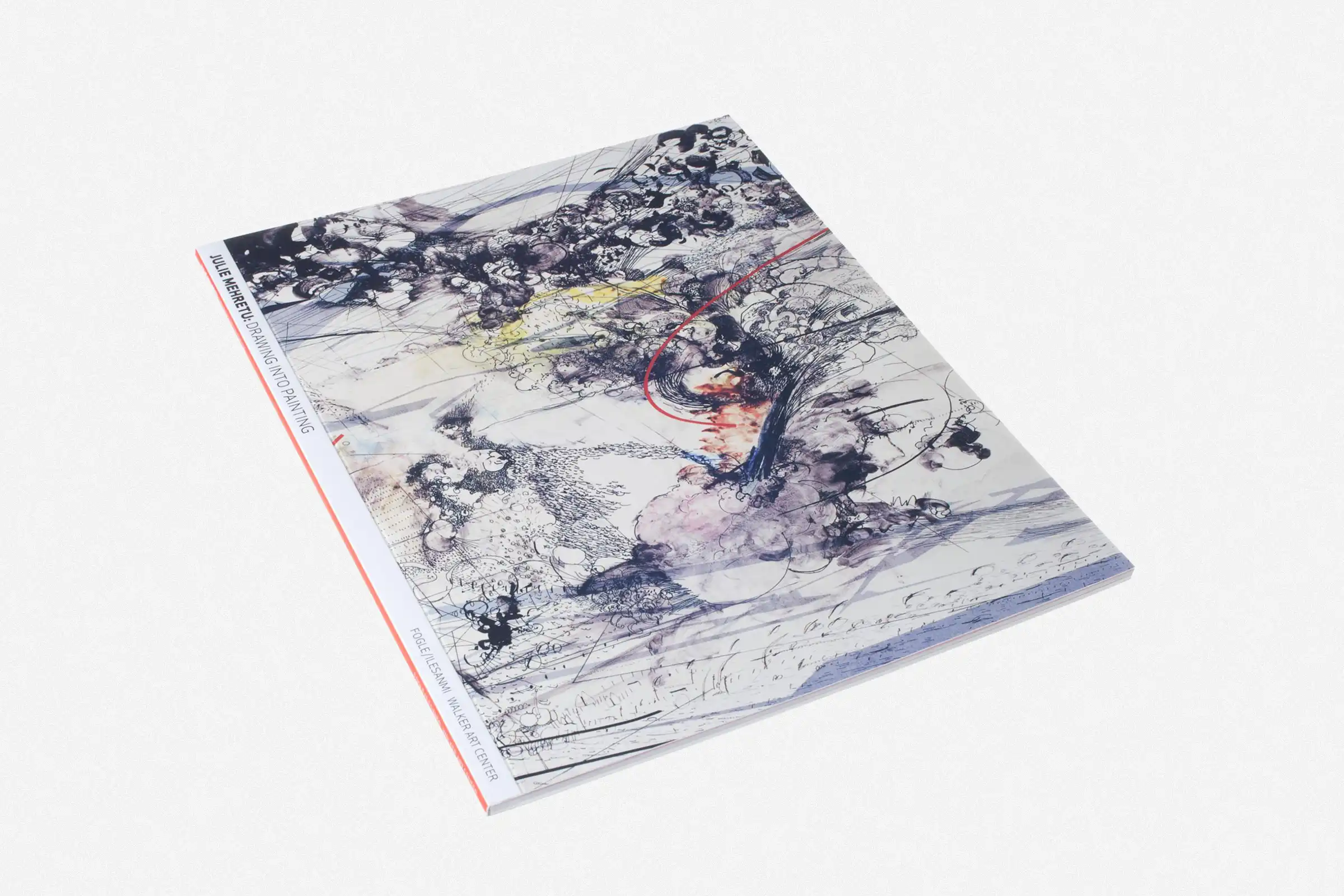
Julie Mehretu: Drawing Into Painting
2003
Edited by Douglas Fogle.
Designers: Andrew Blauvelt and Kyle Blue
Editors: Pamela Johnson and Katheleen McLean
Publications Manager: Lisa Middag
Printed and bound in the United States by Diversified Graphics Incorporated, Minneapolis
Julie Mehretu’s biography reads a bit like an atlas. She was born in Ethiopia, raised in Michigan, educated in Senegal and Rhode Island, and now lives in New York. It is no surprise, then, that her work incorporates the dynamic visual vocabulary of maps, urban-planning grids, and architectural forms as it alternates between historical narratives and fictional landscapes. One of the artists featured in Walker’s 2001 exhibition Painting at the Edge of the World, Mehretu creates beautifully layered paintings that combine abstract forms with the familiar, such as the Roman Coliseum and floor plans from international airports. This exhibition features nine newly commissioned, large-scale paintings and concludes her yearlong artist residency at the Walker.
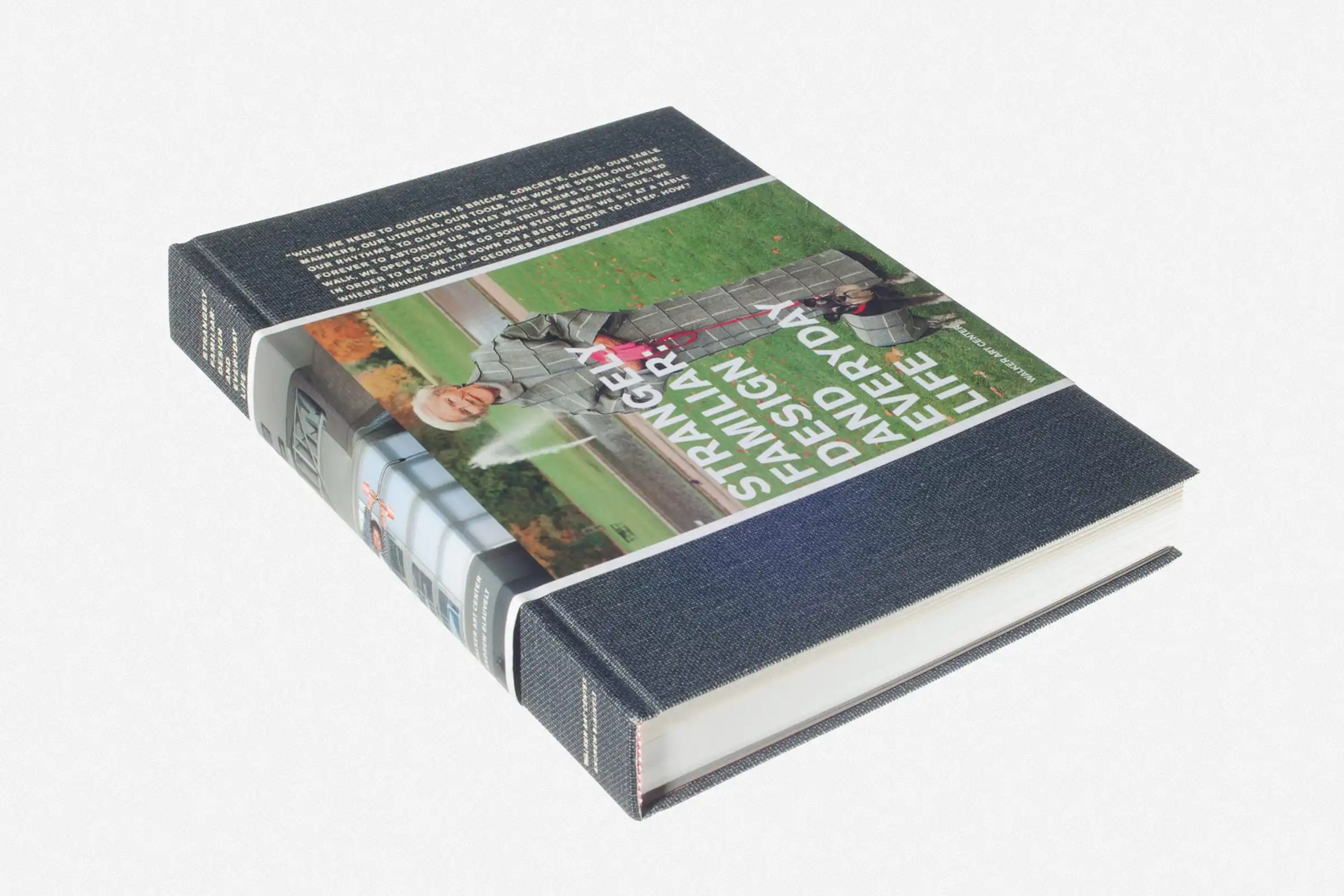
Strangely Familiar: Design and Everyday Life
2003
Edited by Andrew Blauvelt.
Designers: Andrew Blauvelt and Alex DeArmond
Editors: Pamela Johnson and Kathleen McLean
Publications Manager: Lisa Middag
Curatorial Assistants: Alisa EImen and Sara Marion
Printed and bound in Germany by Cantz
In the past decade, designers have become increasingly engaged with the quotidian. This shift away from more strictly formal and functional concerns has allowed them to freely explore design’s contexts and effects. A light that responds to silence, a table that knows where it is, a pig farm the size of a skyscraper, a coat that becomes a tent, a house that fits in your pocket–these projects by innovators in the field of design question the habitual, transform the commonplace, alter our notions of dwelling and blur the boundaries between form and function. Strangely Familiar: Design and Everyday Life explores the paradox of design in our daily lives. Anonymous and conspicuous, familiar and strange, design surrounds us while fading from view, becoming second nature to us and yet remaining still somehow elusive. This exhibition catalogue includes more than 40 innovative projects drawn internationally from the fields of architecture, product, furniture, fashion and graphic design. Among the designers and architects featured are Shigeru Ban, MVRDV, LOT-EK, Atelier Bow-Wow, Dunne & Raby, Marcel Wanders, Michael Anastassiades, Constantin and Laurene Leon Boym, and Allan Wexler. This richly illustrated volume includes essays on the tactics of formlessness and its impact on everyday consumption, the potential of an endlessly transformable environment to extend product lifecycles, and ruminations on the strange and familiar worlds of design.
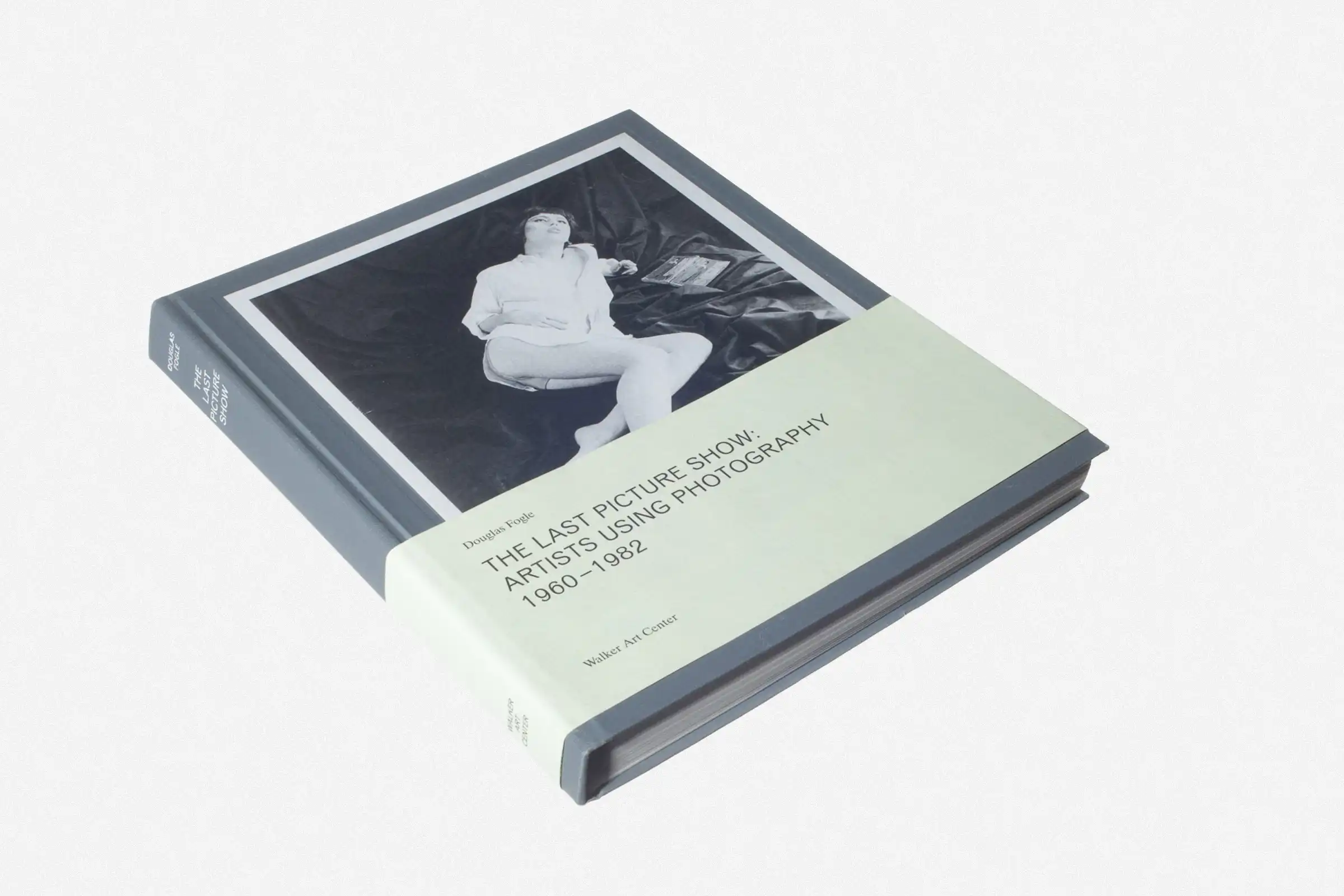
The Last Picture Show: Artists Using Photography, 1960–1982
2003
Edited by Douglas Fogle.
Designers: Andrew Blauvelt
Editor: Karen Jacobson
Publication Manager: Lisa Middag
Printed in the USA by Diversified Graphics Incorporated, Minneapolis
Color separations by Professional Graphics Inc., Rockford, IL
Photography has become an increasingly pervasive medium of choice in contemporary art practice and is even employed at times by artists who do not necessarily consider themselves to be photographers. How did this come to be? The Last Picture Show will address the emergence of this phenomenon of artists using photography by tracing the development of conceptual trends in postwar photographic practice from its first glimmerings in the 60s in the work of artists such as Bernd & Hilla Becher, Ed Ruscha and Bruce Nauman, to its rise to art-world prominence in the work of the artists of the late 70s and early 80s including Sherrie Levine, Richard Prince and Cindy Sherman. Intended as a major genealogy of the rise of a still-powerful and evolving photographic practice by artists, the checklist will include a wide array of works examining a range of issues: performativity and photographic practice; portraiture and cultural identity; the formal and social architectonics of the built environment; societal and individual interventions in the landscape; photography’s relationship to sculpture and painting; the visual mediation of meaning in popular culture; and the poetic and conceptual investigation of visual non-sequiturs, disjunctions and humorous absurdities. Bringing together a newly commissioned body of scholarship with reprints of important historical texts, The Last Picture Show seeks to define the legacy that has produced a rich body of photographic practice in the art world today.
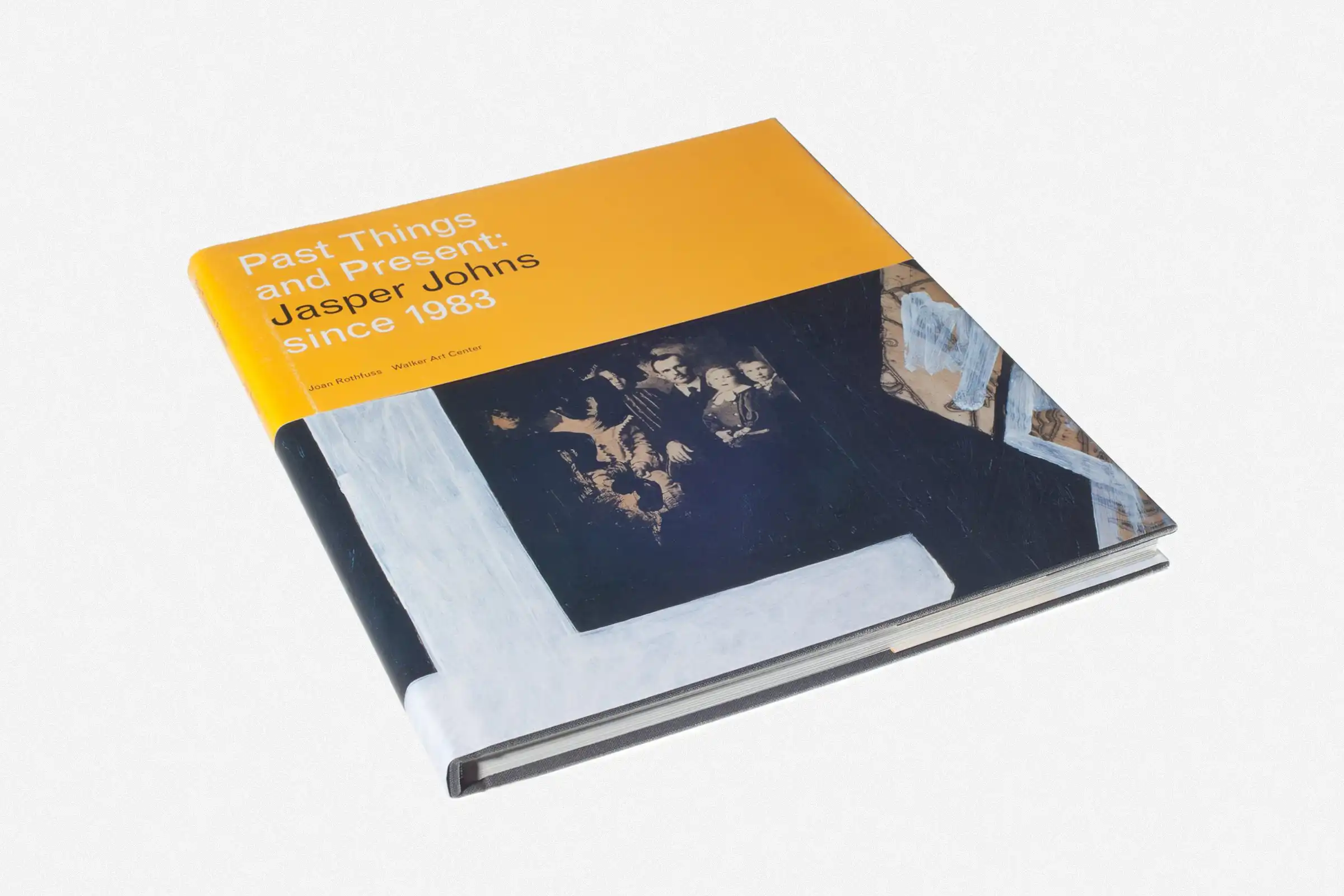
Past Things and Present: Jasper Johns Since 1983
2003
Edited by Joan Rothfuss.
Designers: Andrew Blauvelt and Alex DeArmond
Editors: Pamela Johnson and Kathleen McLean
Publications Manager: Lisa Middag
Curatorial Assistants: Alisa Eimen and Sara Marion
Printed and bound by CS Graphics, Singapore.
In 1984, Jasper Johns suggested to an interviewer that he had made a critical shift in his working process. “In my early work,” he said, “I tried to hide my personality, my psychological state, my emotions…I sort of stuck to my guns for a while, but eventually it seemed like a losing battle. Finally, one must simply drop the reserve.” His paintings of the 1980s and 90s bear this out: their imagery often includes objects and locations in his present studio and home, as well as allusions to memories of his childhood. These motifs are reiterated, altered, reworked and quoted in the context of new compositions, forming layered and complex spaces of recollection that merge past and present. This profusely illustrated volume, published in conjunction with an exhibition of paintings, prints and drawings organized by the Walker Art Center, is the first to look broadly at this period in Johns’ career. All of the artist’s major bodies of work from the past two decades–including those based on the Seasons, Green Angel and Catenary motifs–are covered in this study, with special consideration given to imagery appropriated from Picasso and Manet. Many of the works are published here for the first time, making this an invaluable tool for the study of Johns’ work.
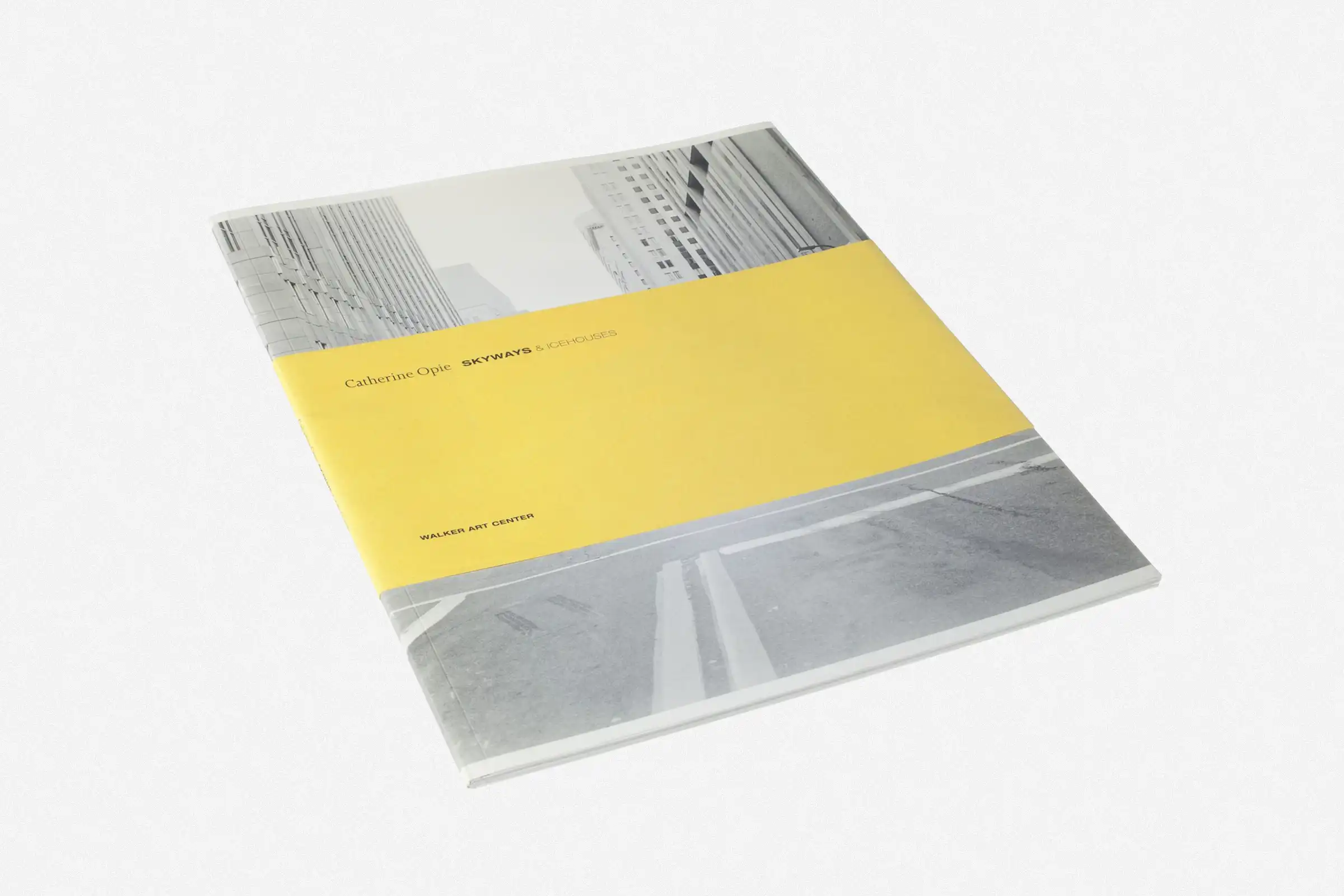
Catherine Opie: Skyways & Icehouses
2002
Edited by Douglas Fogle.
Exhibition curator: Douglas Fogle and Olukemi Ilesanmi
Curatorial Intern: Sara Marion
DesignL Linda Byrne and Andrew Blauvelt
Editors: Kathleen Mclean and Pamela Johnson
Publications Manager: Lisa Middag
Printed and bound in the US by Diversified Graphics Incorporated, Minneapolis
Catherine Opie’s entire artistic career can be seen as one long road trip across this continent in search, not of the American dream but rather a dream of an idea of the American community. When I first et the photographer in 1998, she was driving across the country in a late-model camper van with her dog, Nika. She had stopped in Minneapolis to shoot part of her series DOmestic, which documents lesbian couples, families, and friends in their households. Her three-month odyssey from Los Angeles to New York, with stops in Oklahoma, North Caroline, and Minnesota, resulted in robust and dignified portrays of her subjects in the realm of profoundly recognizable domesticity. What struck me in the wake of Ope’s visit, as she unplugged the camper from the outlet in my apartment and set off on the remainder of her trip, was how one captures the American cultural landscape that fascinates the artist as much as the character of those communities.
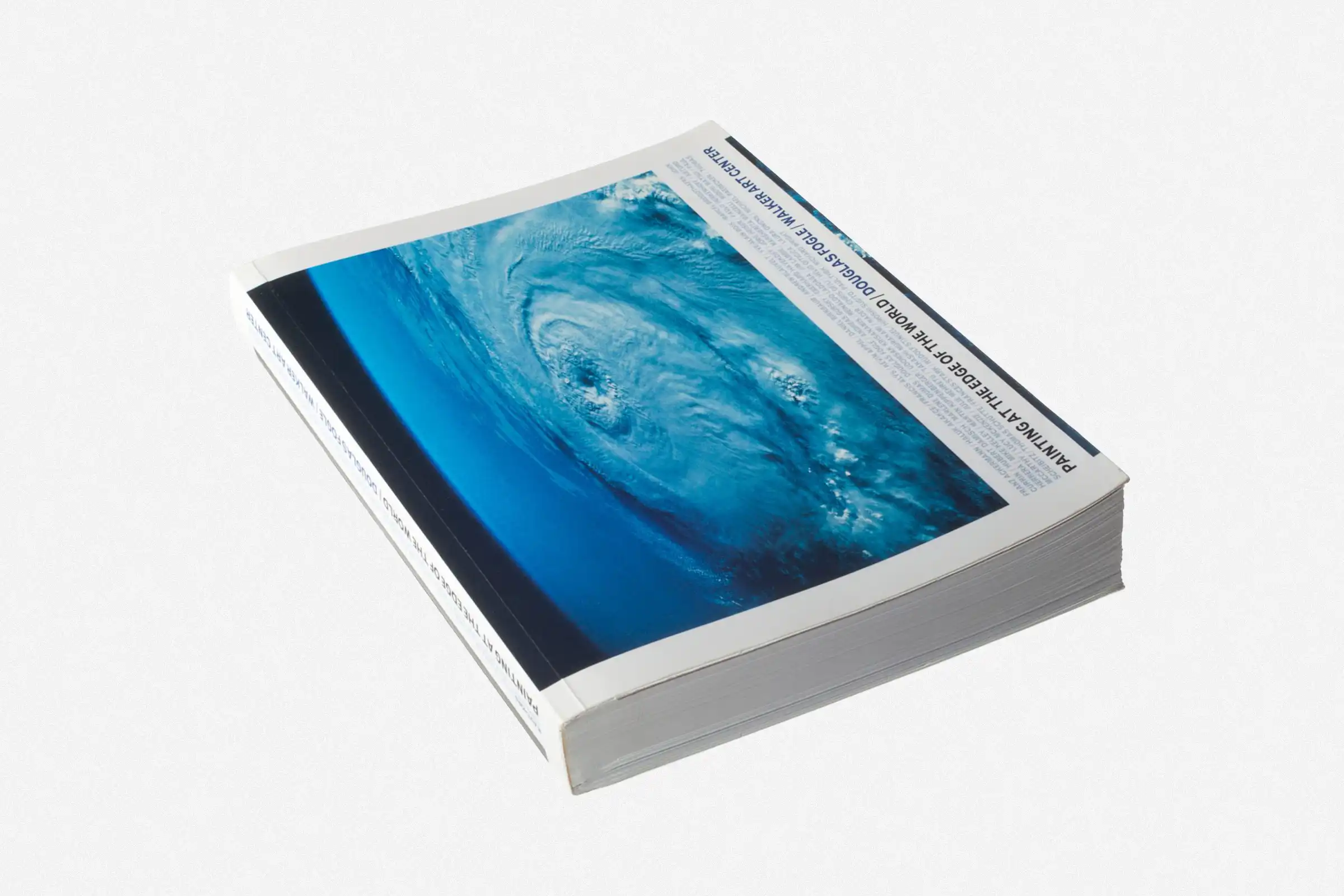
Painting at The Edge of The World
2001
Edited by Douglas Fogle.
Designers: Andrew Blauvelt and Santiago Piedrafita
Editor: Michelle Piranio
Publication Manager: Eugenia Bell
With the hotly discussed resurgence of painting at the dawn of the new century, it is clear that reports of the medium’s death have been greatly exaggerated. “Painting at the Edge of the World” explores the possibilities of a redefinition and ”hybridization” of painting begun in the 1960s, examining the manifestations of these new artistic vistas in the present day. This full-color catalogue features illustrations and a variety of critical texts by some of the most exciting established and emerging critical voices working today, in addition to work by an international and intergenerational group of artists hailing from places as diverse as Brazil, Ethiopia, Germany, South Africa, Scotland, Japan, Belgium, Iran, Italy, and the United States. Designed in two sections–a gatefold plate section containing reproductions of the work and a French-folded section containing critical essays–the book brings together a wide range of contemporary views on painting from a diverse array of disciplines, including the visual arts, film, architecture, design, and music in an attempt to assess the relevance of painting in the contemporary global context. In addition, “Painting at the Edge of the World” includes documentation of each artist’s work and an examination of their artistic methodology. Essays by: Daniel Birnbaum, Paulo Herkenhoff, Midori Matsui, Jorg Heiser, Frances Stark, Andrew Blauvelt, Reindaldo Laddaga, Yves-Alain Bois, Helio Oiticica, Takashi Murakami, Mike Kelley, and Cuauhtemoc Medina. Introduction by Douglas Fogle. Featuring artworks by Franz Ackerman, Haluk Akakçe, Francis Alÿs, Kevin Appel, Marcel Broodthaers, John Currin, Marlene Dumas, Andreas Gursky, Eberhard Havekost, Arturo Herrera, Mike Kelley, Martin Kippenberger, Udomsak Krisanamis, Jim Labie, Margherita Manzelli, Paul McCarthy, Lucy McKenzie, Julie Mehretu, Takashi Murakami, Nader, Chris Ofili, Helio Oiticica, Michael Raedecker, Thomas Scheibitz, Rudolph Stingel, Hiroshi Sugito, Paul Thek, and Richard Wright.
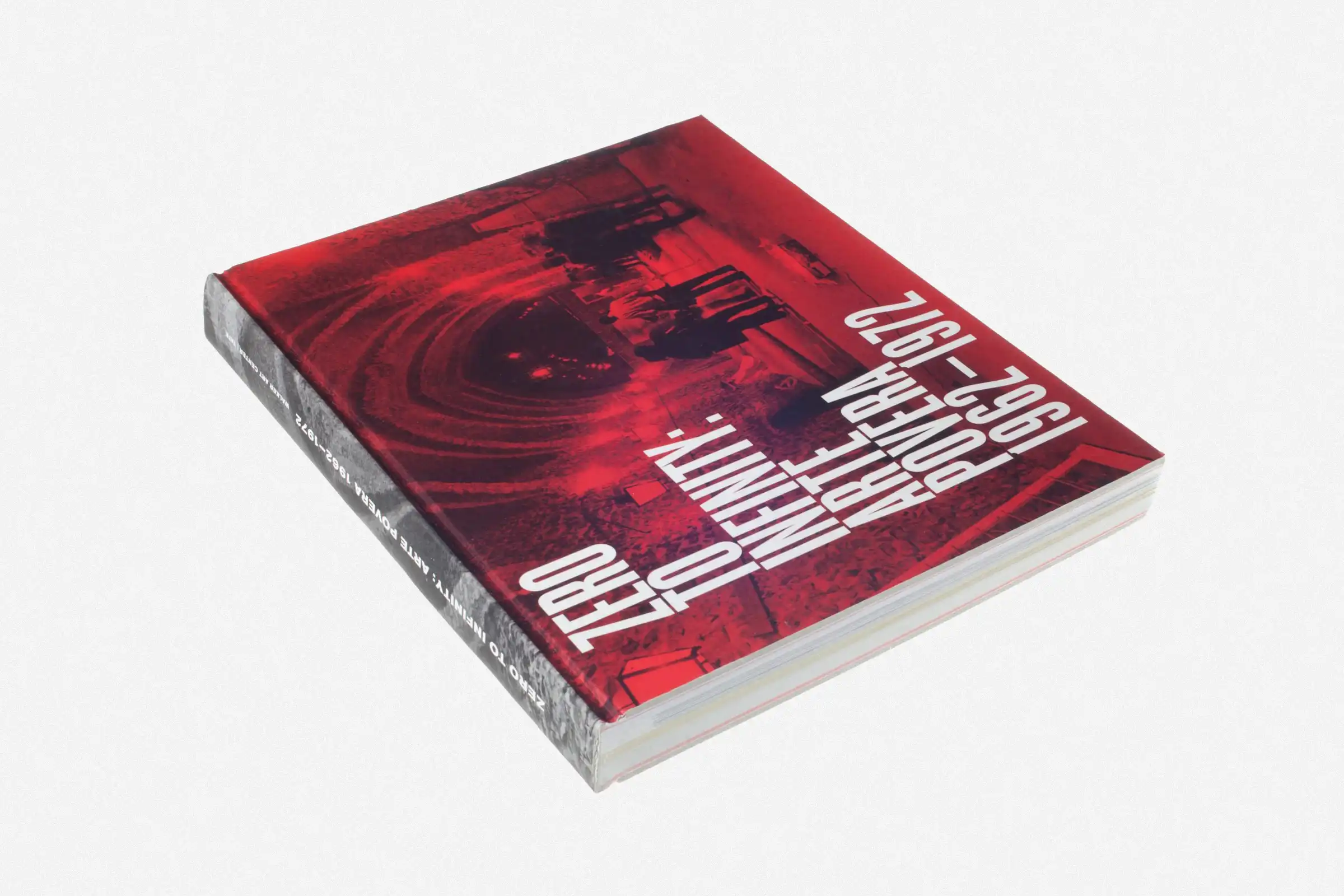
Zero to Infinity: Arte Povera 1962-1972
2001
Edited by Richard Flood, Frances Morris
Design: Andrew Blauvelt and linda Byrne
Editor: Karen Jacobson
Publications Manager: Eugenia Bell
Copy editors: Pamela Johnson and Kathleen McLean
Italy and art are synonymous. When either is mentioned, images of Etruscan sculptures, Renaissance frescoes, and extraordinary architectural treasures that bridge the centuries come to mind. Even today, those powerful reminders of a distant past continue to influence contemporary Italian art and design.
With Zero to Infinity: Arte Povera 1962-1972, the Walker Art Center and the Tate Modern have undertaken an ambitious project—to represent a crucial yet seldom-seen period in Italian modern art. As the U.S. tour sponsor of Zero to Infinity: Arte Povera 1962-1972, the Italian Trade Commission is proud to share the Walker Art Center’s enthusiasm in illustrating the evolution of artistic expression in Italy as reflected in all aspects of Italian life.
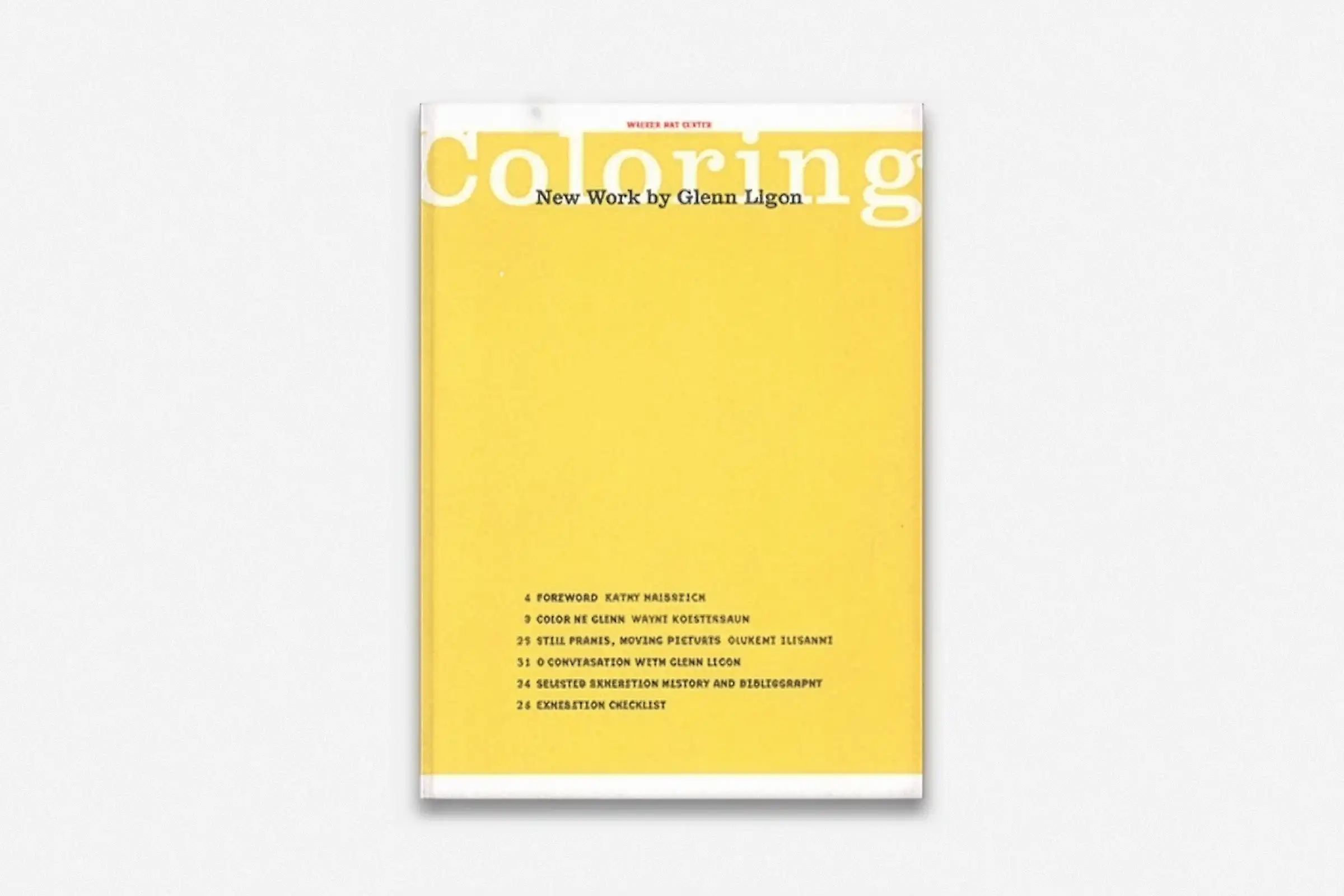
Coloring: New Work by Glenn Ligon
2001
Edited by Kathy Halbreich
Designer: Matthew Peterson
Editor: Kathleen McLean
Publication Manager: Eugenia Bell
Photo: Dan Dennehy
Printed and bound in the US by Shapco Printing, Minneapolis
A defining feature of the Walker is that many of our relationships with artists are nurtured over the long term through conversations and interactions that include exhibitions, acquisitions, commissions, and residencies. Happily, our association with Glenn Ligon is one of these. His work has appeared on our walls many times since its inclusion in the 1991 exhibition Interrogating Identity, organized by Walker’s then-adjunct curator Kellie Jones. Since then, we have gradually acquired a representative selection of Ligon’s work, including the 1993 print portfolios Runaways and Narratives, a sculptural collaboration with Byron Kim, and a recent coal-dust painting from his Stranger in the Village series.
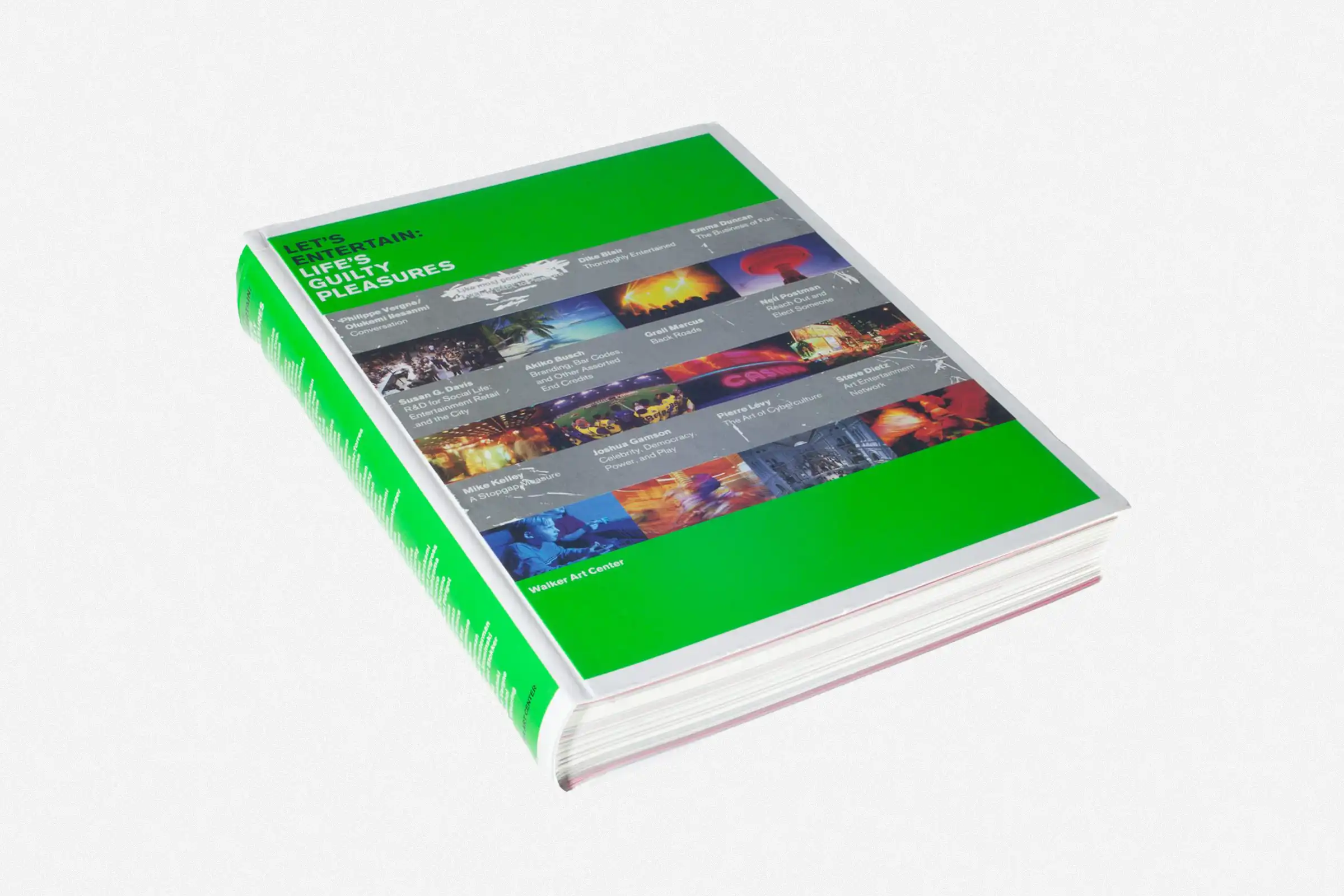
Let’s Entertain: Life’s Guilty Pleasures
2000
Edited by Philippe Vergne
Let’s Entertain: Life’s Guilty Pleasures examines the “spectacularization” of everyday experience through the twin lenses of contemporary art practice and cultural criticism…. and challenges us not to simply renounce entertainment per se, but to understand how its strategies can be used to tell a different kind of story. The story that unfolds is sweet, amusing, and, like a fairy tale, often cruel.
1990–1999
1999
Stan Brakhage: The Art of Seeing, A Regis Dialogue and Retrospective.
ed. Bruce Jenkins
Robert Gober: Sculpture + Drawing
ed. Richard Flood
Dialogues: Paul Beatty / Wing Young Huie
eds. Olukemi Ilesanmi and Douglas Fogle
The Great Ecstasy of the Filmmaker Herzog, A Regis Dialogue and Retrospective.
Edward Ruscha : Editions, 1959-1999
ed. Siri Engberg
Scenarios: Recent Work by Lorna Simpson
Cremaster 2
ed. Richard Flood
2000 BC: The Bruce Conner Story, Part II
eds. Peter Boswell, Bruce Jenkins, and Joan Rothfuss
1999
Stan Brakhage: The Art of Seeing, A Regis Dialogue and Retrospective.
ed. Bruce Jenkins
Robert Gober: Sculpture + Drawing
ed. Richard Flood
Dialogues: Paul Beatty / Wing Young Huie
eds. Olukemi Ilesanmi and Douglas Fogle
The Great Ecstasy of the Filmmaker Herzog, A Regis Dialogue and Retrospective.
Edward Ruscha : Editions, 1959-1999
ed. Siri Engberg
Scenarios: Recent Work by Lorna Simpson
Cremaster 2
ed. Richard Flood
2000 BC: The Bruce Conner Story, Part II
eds. Peter Boswell, Bruce Jenkins, and Joan Rothfuss
1998
Minneapolis Sculpture Garden
ed. Kathy Halbreich
Abbas Kiarostami: In Retrospect, A Regis Dialogue and Retrospective
What is Sculpture? : 100 Years of Sculpture: From the Pedestal to the Pixel
A Propos de Denis: Claire Denis, A Regis Dialogue and Retrospective.
Dialogues: Sam Easterson, T.J. Wilcox
Sculpture on site: Robert Fischer, Chris Larson, Dorit Cypis
Performance in the 1970s: Experiencing the Everyday
Art performs life: Merce Cunningham, Meredith Monk, Bill T. Jones.
eds. Philip Bother, Philippe Vergne, Siri Engberg, and Kellie Jones
Regards, Barry McGee
ed. Eungie Joo
The Shock of the View : Artists, Audiences, and Museums in the Digital Age
And now for something completely different: The Films of Terry Gilliam, A Regis Dialogue and Retrospective.
Unfinished History
ed. Francesco Bonami
Commission Possible
1997
What is Modern Art? Selections from The Permanent Collection
70 years at Vineland Place
ed. Kathy Halbreich
Dialogues: Todd Norsten/Kristin Oppenheim
ed. Douglas Fogle
On a Balcony: A Novel (Mark Luyten)
ed. Kathy Halbreich
No Place (Like Home): Zarina Bhimji, Nick Deocampo, Willie Doherty, Kay Hassan, Kcho, Gary Simmons, Meyer Vaisman, Kara Walker
ed. Richard Flood
G is for Greenaway: the films of Peter Greenaway
Dialogues: Mary Esch/Daniel Oates
The Art and Life of Anne Ryan
Frank Stella at Tyler Graphics
Diana Thater: Orchids in the Land of Technology
Joseph Beuys, The Multiples
ed. Jörg Schellmann
Jessica Lange: in retrospected.
Art of the 1960s: Media Is The Message
Stills: Emerging Photography in The 1990s
1996
Willem de Kooning: The Late Paintings, The 1980s
eds. Gary Garrels, Robert Storr
Alchemists of Animation: The Films of the Brothers Quay
ed. Terrence Rafferty
Robert Motherwell: Reality and Abstraction
ed. Kathy Halbreich
Peter Fischli, David Weiss: in a restless world
ed. Elizabeth Armstrong
Chris Marker and William Klein : silent movie / moving pictures
Tom Hanks: in dialogue
The photomontages of Hannah Höch
eds. Maria Makela, Peter Boswell
Spike Lee: In Retrospect
Edward Hopper: Office at Night 1940
1995
Ellsworth Kelly: The Process of Seeing
Passion in Perspective: the Films of Jane Campion
Econo Mies: Hans Accola and Rirkrit Tiravanija
Sigmar Polke: Editions 1966-1995, Der Doppelgänger
ed. John Proletti
Sigmar Polke: Illumination
ed. Richard Flood
Haile Gerima: Assertions of Resistance
eds. Ada M. Babino and Audrey Ware
Joel Shapiro: Outdoors
eds. Peter Boswell, Deborah Emont Scott
Bordering on Fiction: Chantal Akerman’s D’Est
ed. Bruce Jenkins
Paul Shambroom: Hidden Places of Power
eds. Elizabeth Armstrong, Douglas Fogle
Agnieszka Holland: In Retrospect
ed. Amy Taubin
Dawoud Bey: Portraits 1975-1995
ed. Kelly Jones
Brilliant!: New Art from London
eds. Richard Flood, Joan Rothfuss, Kathleen McLean, and Douglas Fogle
Shu Lea Cheang’s Bowling Alley
ed. Marlina Gonzalez-Tamrong
1994
Bruce Nauman: 30 de noviembre de 1993-21 de febrero de 1994
Bruce Nauman: A Guide to the Exhibition
eds. Toby Kamps, Phil Freshman
Bruce Nauman
ed. Joan Simon
Open Studio Day: 10 open studios
Carrie Mae Weems: Guide to the Exhibition
Duchamp’s Leg
Magdalena Abakanowicz: an installation in the Minneapolis Sculpture Garden
eds. Martin Friedman
1993
United States Ambassador’s residence, Tokyo: guide to the art collection
ed. Siri Engberg
Liv Ullmann : From Actor to Auteur
In the spirit of Fluxus
eds. Elizabeth Armstrong and Joan Rothfuss
Michael Sommers/Susan Haas: THE QUESTION OF HOW
eds. Elizabeth Armstrong and John Killacky
On the Road with Jim Jarmusch
1992
In Retrospect: Danny Glover
Photography in Contemporary German Art: 1960 to the Present
ed. Gary Garrels
Ann Hamilton, David Ireland
Robert Altman: An American Maverick
The Once and Future Park
Viewpoints: John Snyder
ed. Joan Rothfuss
Viewpoints: Guillermo Gómez-Peña and Coco Fusco
ed. Gary Garrels
Public Address: Krzysztof Wodiczko
Malcolm X: Man, Ideal, Icon
ed. Kellie Jones
1991
Home Screenings Catalogue: A Listing of Video Rentals
Tourisms: suitcase studies / an installation by Elizabeth Diller and Ricardo Scofidio
Jodie Foster, growing up on-screen : a retrospective
The Legacy of Surrealism
ed. Margaret Lee
Produced by Pressman
Edge of a City: Steven Holl
Keith Carradine: in retrospect
John Sayles: From Alligators to Agitators
Alan Rath
ed. Peter Boswell
Ken Burns: Imaging America
Viewpoints: Jac Leirner
Wim Wenders: In the Course of Time
1990
Walker Art Center: Painting and Sculpture from the Collection
ed. Martin Friedman
Jasper Johns: Printed Symbols
ed. Elizabeth Armstrong
Building Minnesota, Hachivi Edgar Heap of Birds
ed. Joan Rothfuss
Geological Architecture: the work of Stanley Saitowitz
Clint Eastwood Directs
Viewpoints: Mel Chin
ed. Peter Boswell
Merchant Ivory Productions Re-Viewed
Jeff Goldblum: In Character
1980–1989
1989
Cinema Outsider: The Films of William Klein
ed. Bruce Jenkins, Nancy E. Robinson
Vanishing Presence
ed. Martin Friedman
Viewpoints: Landscape Re-Viewed; Contemporary Reflections on a Traditional Theme
ed. Peter Boswell
Marcel Broodthaers
ed. Marge Goldwater
Architecture Tomorrow: Morphosis: Three Houses
ed. George Rand
First Impressions: Early Prints by Forty-six Contemporary Artists
eds. Elizabeth Armstrong, Sheila McGuire
Viewpoints: Jim Tittle
ed. Adam D. Weinberg
Viewpoints: Hannah Collins
ed. Marge Goldwater
The Films of John Cassavete
ed. Ray Carney
Graphic Design in America: A Visual Language History
ed. Caroline Hightower
Architecture Tomorrow: Domestic Arrangements, A Lab Report
eds. Tod Williams and Billie Tsien
1988
Dennis Hopper: From Method to Madness
Ed. J. Hoberman
Viewpoints: Tim Rollins, K.O.S.
ed. Lawrence Rinder
Lines in two directions and in five colors on five colors with all their combinations / Sol Lewitt
Sculpture Inside Outside
ed. Martin Friedman
Pauline Kael on Jonathan Demme
Frank Stella: The Circuits Prints
ed. Elizabeth Armstrong
Architecture Tomorrow: Franklin D. Israel
eds. Jeffrey M. Chusid, Diane Favro
1987
Tyler Graphics: The Extended Image
eds. Kenneth E. Tyler, Elizabeth Armstrong, Pat Gilmour
Graphic Design in America: A Visual Language History
ed. Caroline Hightower
Architecture Tomorrow: Domestic Arrangements, A Lab Report
eds. Tod Williams and Billie Tsien
Viewpoints: Edward Henderson
ed. Elizabeth Armstrong
Past/Imperfect: Eric Fischl, Vernon Fisher, Laurie Simmons
ed. Marge Goldwater
Viewpoints: Paul kos, Mary Lucier
ed. Bruce Jenkins
Cross-References: Sculpture Into Photography
ed. Marge Goldwater
Open Studio Day 1987
Jan Dibbets: essays by R.H. Fuchs, M.M.M. Vos
ed. Martin Friedman
1986
Viewpoints: Alexis Smith
ed. Robert M. Murdock
On The Line: The New Color Photojournalism
ed. Adam D. Weinberg
Tokyo: Form and Spirit
ed. Mildred Friedman
Viewpoints: Eric Bainbridge
ed. Marge Goldwater
The Architecture of Frank Gehry
ed. Henry N. Cobb
Of Angels and Apocalypse: the Cinema of Derek Jarman
ed. William Horrigan
1985
Walker Art Center: A History
Viewpoints: Audrey Glassman, Jeff Millikan
Paperworks: Paperworks from Tyler Graphics
Jennifer Bartlett / Marge Goldwater, Roberta Smith, Calvin Tomkins
Viewpoints: Steven Campbell
Robert Motherwell: The Collaged Image
eds. Jack Flam, Elizabeth Armstrong
Viewpoints: Doug Argue, Jim Lutes
Roy Lichtenstein As Sculptor: Recent Works 1977-1984
1984
Matt Brown: Paintings, Viewpoints
Jim Dine: Five Themes
ed. Graham W. J. Beal
Viewpoints: Judith Shea, Nick Vaughn
The Knee Plays by Robert Wilson and David Byrne / the American section from the CIVIL warS: a tree is best measured when it is down by Robert Wilson
POSTERS: The 20th-century poster, design of the avant-garde
ed. Dawn Ades
Viewpoints: William Roode
Images and Impressions: Painters Who Print
Prints from Tyler Graphics
1983
Mark Rothko: Seven Paintings from the 1960s
John M. Miller: Paintings, Viewpoints
Michelle Stuart: Place and Time
The Media Arts in Transition
Hockney Paints the Stage
ed. Martin Friedman
1982
The American New Wave: 1958-1967
De Stijl: 1917-1931, Visions of Utopia
Eight Artists: The Anxious Edge
Deborah Butterfield : Sculpture
The Frozen Image: Scandinavian Photography
ed. Martin Friedman
Nancy Randall: Prints and Drawings
ed. Graham W.J. Beal
Wegman’s World
eds. Lisa Lyons, Kim Levin
Sound Syzygy: Liz Phillips, Viewpoints
1981
Paul Sharits: Filmmakers Filming 14
ed. Stuart Liebman
George Landow: Filmmakers Filming 15
ed. P. Adams Sitney
Wayne Thiebaud: Painting
ed. Graham W.J. Beal
Robert Moskowitz: Recent Paintings
Robert Graham: Statues
eds. Graham W.J. Beal, George W. Neubert
Artists’ Books Introduction
New Dance USA
Midwest Photography: A Viewpoints Exhibition
1980
Picasso: from the Musée Picasso, Paris
Drawings by Lesák and Rainer
eds. Graham W. J. Beal, Lisa Lyons
New Music America
Close Portraits
eds. Martin Friedman, Lisa Lyons
Kay Kurt, Paintings
ed. Graham W.J. Beal
Artist and Printer: Six American Print Studios
Larry Jordan: Filmmakers Filming 11
ed. P. Adams Sitney
Pat O’Neill: Filmmakers Filming 9
ed. Grahame Weinberg, C. Noll Brinckmann
Jonas Mekas: Filmmakers Filming 8
ed. Judith E. Briggs
Robert Breer: Filmmakers Filming 7
ed. Sandy Moore
Ernie Gehr: Filmmakers Filming 6
ed. P. Adams Sitney
Kenneth Anger: Filmmakers Filming 5
ed. Robert A. Haller
1970–1979
1979
Wiley Territory
eds. Graham W. J. Beal, John Perreault
The Romantic Vision: 19th Century American Landscape Painting, In the Walker Art Center Permanent Collection
eds. Ronnie L. Zakon
Mark Rothko, 1903-1970
ed. Clair Zamoiski
Filmmakers Filming 4: To Tightrope Walkers Everywhere: The Collaborative Films of Robert Nelson and William T. Wiley
ed. J. Hoberman
Bruce Baillie: Filmmakers Filming 3
ed. Ernest Callenbach
Ken Jacobs: Filmmakers Filming 2
ed. Lindley Hanlon
Stan Brakhage: Filmmakers Filming 1
ed. Marie Nesthus
1978
Noguchi’s Imaginary Landscapes
ed. Martin Friedman
Gene Davis: Recent Paintings
George Segal: Sculptures
eds. Martin Friedman, Graham W. J. Beal
1977
Walker Art Center: History, Collection, Activities
Morris Louis: The Veil Cycle
ed. Dean Swanson
Invitation ’77: Ten Painters
Scale and Environment: 10 Sculptors
Press photography: Minnesota Since 1930
1976
The Rivals of D.W. Griffith: Alternate Auteurs 1913-1918
ed. Richard Koszarski
The River: Images of the Mississippi
Sculpture Made In Place: Dill, Ginnever, Madsen
Invitation ’76: Cowette, Hartman, Rose
1975
Robert Israel / Design For Opera
ed. Dore Ashton
Selections from the Martha Jackson
eds. Judith Hoos, Mark Lassiter
Oldenburg: Six Themes
Akagawa, Byrne, Kahn, Leicester, Axelrod, Bjorklund, Herdegen, Sorman
1974
De Kooning: Drawings / Sculptures
eds. hilip Larson, Peter Schjeldahl
Invitation 1974: Joe Breidel, Larry Brown, Carole Fisher, Stuart Nielsen, and Tom Rose
ed. Dean Swanson
Jim Nutt
ed. Stephen Prokopoff
Johns, Kelly, Lichtenstein, Motherwell, Nauman, Rauschenberg, Serra, Stella: Prints from Gemini G.E.L.
Projected Images: Peter Campus, Rockne Krebs, Paul Sharits, Michael Snow, Ted Victoria, Robert Whitman
ed. Martin Friedman
Naives and Visionaries
1973
Jean Dubuffet: Monuments, Simulacres, Practicable
Interchange
George Morrison: Drawings
Photographers: Midwest Invitational
Printmakers: Midwest Invitational
Nevelson: Wood Sculptures
ed. Martin Friedman
1972
Mario Merz
Painting: New Options: Bartlett, Benglis, Davis, Holland, LeWitt, Marden, Young
ed. Philip Larson
Robert Motherwell: Recent Paintings
American Indian Art : Form and Tradition
Richard Sussman : Watercolors and Brush Drawings, A memorial exhibition
1971
Walker Art Center: History, Collection, Activities
Drawings: 10 Minnesota Artists
Miró Sculptures
Burgoyne Diller: Paintings, Sculptures, Drawings
Abstract Design in American Quilts
ed. Jonathan Holstein
1970
Figures / Environment
ed. Dean Swanson
9 Artists / 9 Spaces
eds. Richard Koshalek, Mike Steele
1960–1969
1969
Twentieth Century Sculpture, Walker Art Center: selections from the collection
14 Sculptors: The Industrial Edge
ed. Martin Friedman
Richard Lindner
ed. Dore Ashton
1968
Nicholas Krushenick
ed. Dean Swanson
Jackson Pollock: works on paper
ed. Bernice Rose
Wayne Thiebaud
ed. John Coplans
6 artists, 6 exhibitions
1968 biennial of painting and sculpture : Iowa, Minnesota, North Dakota, South Dakota, Wisconsin
Prints from London : Hamilton, Kitaj, Paolozzi, Tilson / Walker Art Center
1967
Invitation 1967 : Painting and Sculpture
Light / Motion / Space
Roy Lichtenstein
ed. John Coplans
George Rickey: recent kinetic sculpture
Tony Smith Sculptures
Les Levine Environments
Eugene Larkin, Monoprint Collages
Art of the Congo
Prints from London : Hamilton, Kitaj, Paolozzi, Tilson / Walker Art Center
1966
Lucio Fontana : The Spatial Concept of Art
Alexander Hunenko : Sculpture / Thomas Cowette : Painting
Michelangelo Pistoletto : A Reflected World
Fifth Exhibition : paintings, gouaches, watercolors, drawings, sculptures, assemblages, reliefs
1966 Biennial of Painting and Sculpture
Eight Sculptors : the ambiguous image
ed. Martin Friedman
Hubert Damisch, and hand written texts and drawings by Matta Echaurren
Art of the Congo
Prints from London : Hamilton, Kitaj, Paolozzi, Tilson / Walker Art Center
1965
London: The New Scene
Invitation 1965
Charles Biederman : The Structurist Relief 1935-1964
New Accessions, 62 – 65
Robert Rauschenberg : Paintings 1953-1964
Twelve Chicago Painters
Drawing in Minnesota 1965
NOT SEEN and/or LESS SEEN of/by MARCEL DUCHAMP/PROSE SELAVY 1904-64
ed. Richard Hamilton
Katherine Nash : Recent Sculpture
George Ortman : Constructions/Paintings/Drawings
1964
Estados Unidos da America
Invitation 1964
Feldman / Falcon Press
Ten American Sculptors
Fourth Exhibition: Collectors Club of Minnesota
Lewis Brown / Costume Design
Carleton college and Minoru Yamasaki
Richard Randell: work in progress 9/’63-5/’64
Prints on Art Fabric: The 3M Collection
New Art of Argentina
1964 Biennial of Painting and Sculpture: Iowa, Minnesota, North Dakota, South Dakota, Wisconsin
1963
Recent Paintings by Jerry Rudquist
ed. Suzanne Foley
Jerome Liebling Photographs
Tanya Moiseiwitsch : Design for the Theater
Adolph Gottlieb
ed. Martin Friedman
Invitation 1963
Richard Stankiewicz, Robert Indiana
Recent Paintings by Freddy Munoz
1962
Stephen Pace, George McNeil
Elof Wedin 1960 to 1962
New Art of Brazil
ed. Martin Friedman
The Sculpture of Herbert Ferber
ed. Wayne Andersen
Recent Acquisitions 1960 through 1962
Peter Busa Paintings
Third Exhibition: Collectors Club of Minnesota
The Vision of René Magritte
1962 Biennial of Painting and Sculpture
1961
Watercolors and Drawings by Walter Quirt and Richard Sussman
Eighty Works from the Richard Brown Baker Collection
Paintings and Drawings by Edward Corbett
Marsden Hartley
Pottery by Alix and Warren MacKenzie
The Mendota Sculpture Foundry
Howard Wise Loan Collection: International Painting
1960
Paintings by Tony Urquhart
Sculpture by Dorothy Berge
John and Dorothy Rood Collection: John Rood Sculpture Collection at the University of Minnesota
Paintings by Tseng Yu-ho
Paintings, Prints and Drawings by Rudy Pozzatti
60 American Painters, 1960
ed. Nancy B. Miller
Paintings by William Saltzmann
16 Younger Minnesota Artists
John Rogers Shuman Memorial Exhibition
First National Bank Exhibition, First National Bank, Minneapolis
The Precisionist View in American Art
ed. Martin Friedman
1950–1959
1959
Second Collectors Club exhibition
Walker Art Center Permanent Collection
Paintings by Josephine Lutz Rollins
School of Paris 1959
Recent paintings by Louis Schanker
The Leon B. Walker Memorial Collection of Contemporary American Prints
Toys Old and New
Art Fair ’59
1958
Antoine Bourdelle
Sculpture by Eleanor De Laittre
Painting and Drawings by Wilfred Zogbaum
Bittan Valberg
1958 Biennial Paintings Prints Sculpture
Paintings and Drawings by Kurt Seligmann
Recent Paintings by Urban Couch
Small Sculpture by Paul Manship
Little Magazines
Sculpture by Germaine Richier
Recent Work by Herbert Bayer
Prismatic Sculpture by Fred Dreher
Byron Burford
1957
An exhibition of work by Philip Morton
Stuart Davis
Recent Work by Elsa Jemne: Oils, Watercolors, Drawings
Collectors Club Exhibition
Portraits by Walter Gramatté
Tworkov
1956
Sculpture by Paul Granlund
Expressionism, 1900-1955
1956 biennial of paintings, prints and sculpture from the Upper Midwest
Paintings by Hazel Moore
Paintings and Drawings by Phyllis Downs
Theodore Roszak
1955
Richard Sussman
The Sculpture of Ann Wolfe, 1945-1955
Vanguard 1955: A Painter’s Selection of New American Paintings
1954
4th Biennial Exhibition of Paintings and Prints from the Midwest
Leonid
Tchelitchew
Jean Arp
ed. Curt Valentin
Reality and Fantasy 1900-1954
Photographs by Robert Doisneau
Sculpture and Drawings by John Rood
Photographs by Sabine Weiss
The Sculpture of Jacques Lipchitz
Recent Work by Bernard Arnest
WESTWARD THE WAY: The character and development of the Louisiana Territory as seen by artists and writers of the nineteenth century
1953
Saul Baizerman : an exhibition initiated by the Walker Art Center
Purcell and Elmslie, Architects, Minneapolis, Chicago, Philadelphia
The Classic Tradition in Contemporary Art
An Exhibition of Paintings by Cameron Booth
Sculpture and Drawings by Harold Tovish
Gerhard Marcks
Paintings by Ben Benn
1952
Odilon Redon, 1840-1916: Pastels and Drawings
C.S. Price, 1874-1950: a memorial exhibition
An Exhibition of Finnish Fine and Applied Arts
Contemporary American Painting and Sculpture
Edith and Milton Lowenthal Collection
1951
Knife / Fork / Spoon
ed. D.S. Defenbacher
Arshile Gorky Memorial Exhibition
5th Six-state Sculpture Show
3rd Biennial Exhibition of Paintings and Prints from the Upper Midwest
1950
5th Biennial Purchase Exhibition: Contemporary American Painting
Pictures for the Home
Alvin Lustig: an exhibition of his work
Recent Sculpture by Katherine Nash
1940–1949
1949
A New Direction in Intaglio
Max Weber Retrospective Exhibition
John T. Baxter Memorial Collection of American Drawings
A.H. Maurer, 1868-1932
Second Biennial Exhibition of Paintings and Prints
1948
Jewelry: modern jewelry under fifty dollars, the work of thirty-two artists assembled by the Walker Art Center
New Paintings to know and buy
Modern Art in Advertising: an exhibition of designs for container corporation of America
1947
John Marin: A Retrospective Exhibition 1947
4th Annual Sculpture Show
First Biennial Exhibition Paintings and Prints
Photographs by Erling Larsen
82 drawings by William Bushman
The second exhibition of the La Tausca art competition
1946
The Gallery of EVERYDAY ART
Alonzo Hauser
WATERCOLOR – U.S.A
ed. D.S. Defenbacher
June Corwine Exhibit: 17 recent paintings
5 Minnesota painters
136 American painters of today
Useful gifts
1945
American watercolor and Winslow Homer
Second annual regional sculpture exhibition
Eleanor Harris
Jades of the T.B. Walker collection
1944
Minnesota Sculpture Exhibition 1
LeSueur so far
110 American painters of today
The Sublime is Now: The Early Work of Barnett Newman; Paintings and Drawings, 1944-1949
ed. Jeremy Strick
1943
92 Americans
3rd Annual Spring Salon for the Camera Clubs of Minneapolis
1942
2nd Annual Spring Salon for the Camera Clubs of Minneapolis
Chinese paintings: a benefit exhibition
1941
1941 Spring Salon for the Camera Clubs of Minneapolis
1940
Walker Art Center
Letters, Words and Books. An Exhibition of 5000 Years of the Graphic Arts
Artistry In Glass
An exhibition of “unpopular” art
1900–1939
1927
Illustrated Catalogue of Indian Portraits Followed by Portraits of Scouts, Guides, General, Etc. All Painted by Henry H. Cross
The Walker Galleries, Minneapolis Minn.
ed. R.H. Adams
1925
Catalogue Art Collection of the Honorable T.B. Walker Minneapolis, Minnesota
ed. T.B. Walker
1919
The T.B. Walker Art Collection Minneapolis, Minnesota 1919
1916
Alphabetical list of artists and paintings in the T.B. Walker art collections
1913
Descriptive catalogue of the Thomas B. Walker art collection
1912
Descriptive catalogue of the Thomas B. Walker art collection
1909
Catalogue of Ancient Art
Catalogue of painting and sculpture placed in the Minneapolis Public Library by Thomas B. Walker
1907
Catalog of the Art Collection of T.B. Walker