Walker at Home Digital Content Series Offers Curator Introduction to Living Collections Catalogue Volume III, Videos from the Archives, and More

As we enter week four of our quarantine and continue to explore new ways to bring you art digitally, the Walker team is focusing on two topics that are very much on our minds these days. Let’s start with community, more specifically collaborative communities.
Watch
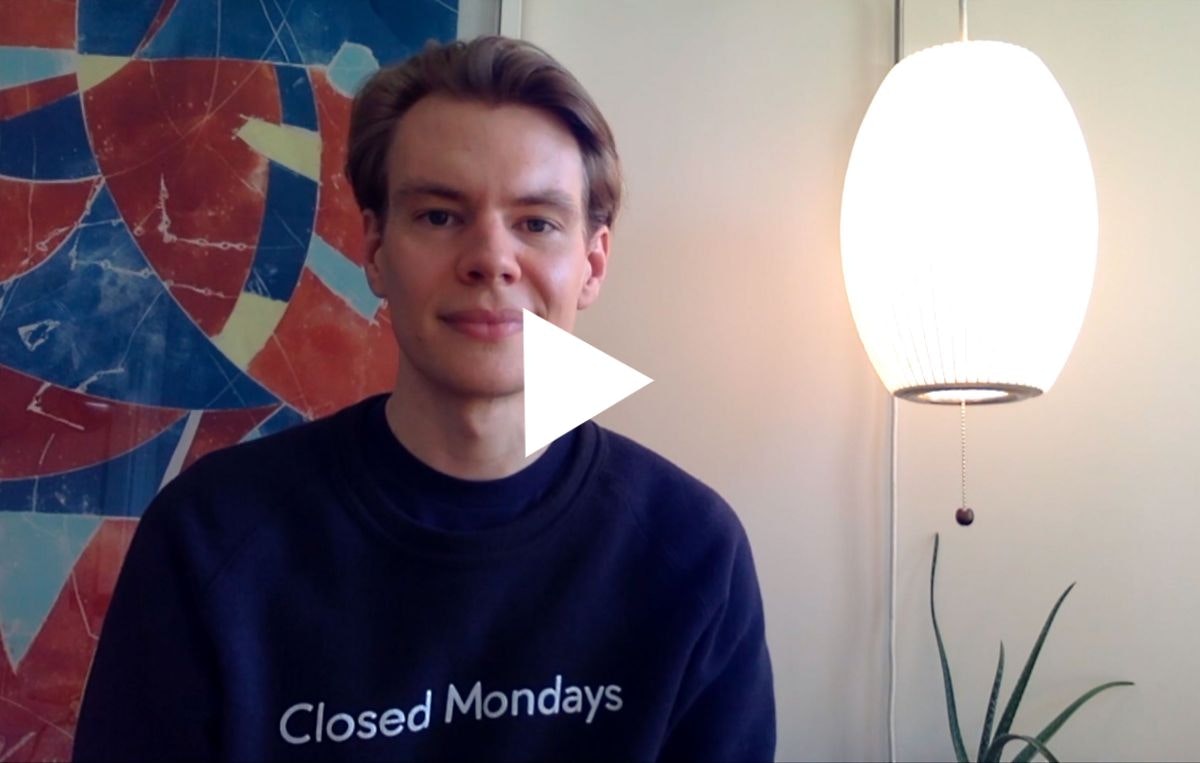
Curator Pavel Pyś on Volume III of the Living Collections Catalogue
How do members of a community work best together? As we think of vital parts of our own community (a big shout-out to first responders, service workers, medical staff, and other heroes!), we share Side by Side: Collaborative Artistic Practices in the United States, 1960s–1980s, the newest addition to the Walker’s Living Collections Catalogue. Visual Arts curator Pavel Pyś introduces the volume, which “explores the work of artists whose practices were highly collaborative, interdisciplinary, and often aligned with concurrent social movements.” That sounds like just what we need now.
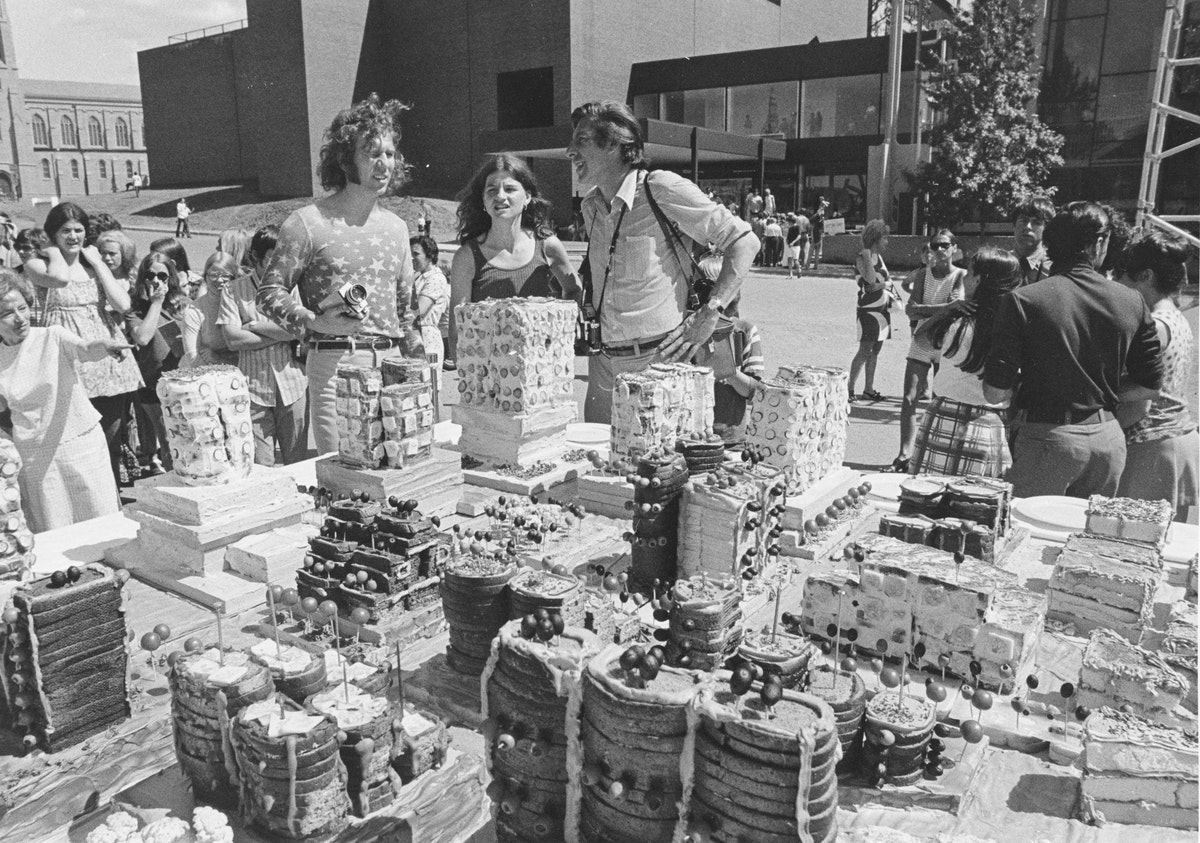
Haus-Rucker-Co, Food City I, 1971, presented in the Armory Gardens (now the Minneapolis Sculpture Garden), June 13, 1971. Walker Art Center Archives.
Read
Common Ground: Haus-Rucker-Co’s Food City I and Collaborative Design Practice
By Ross Elfine
The role of food seems especially meaningful as we “shelter in place” and share meals with family or yearn for a gathering with friends. The notion of nourishment, through food or through art, is also on our minds right now. Chapter 3 of Side by Side: Collaborative Artistic Practices in the United States, 1960s–1980s tells the story of Haus-Rucker-Co’s Food City I, a participatory event staged outside the Walker in 1971. Food, of course, has featured prominently in art—from prehistoric cave paintings of hunting scenes to a certain big cherry on a spoon, from the still life drawing class’s focus on fruit to feasts depicted in so many masterpieces.
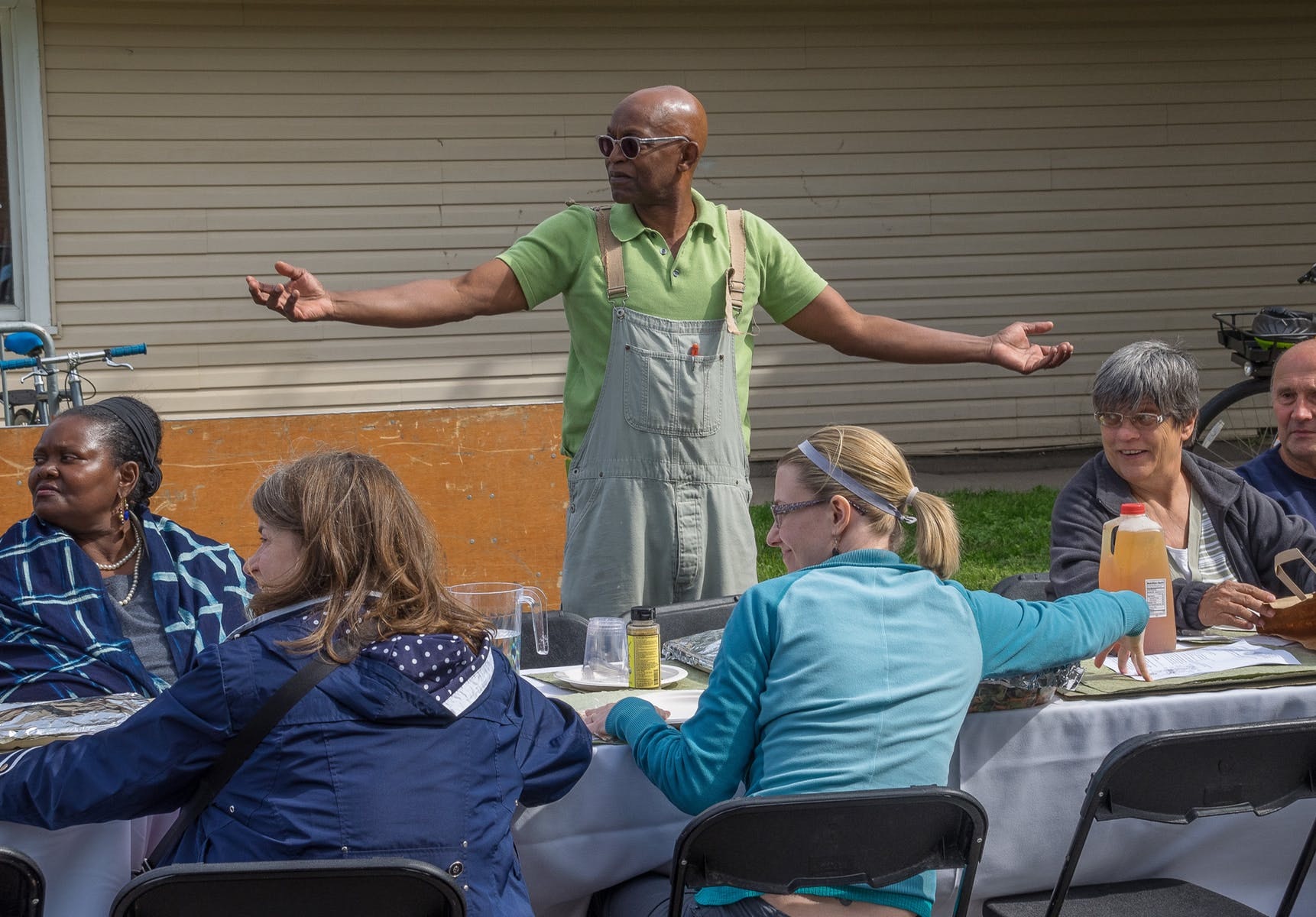
Seitu Jones at The Community Meal, presented on a half-mile-long table in St. Paul on September 14, 2014. Photo courtesy Public Art Saint Paul
Read
By Nicole J. Caruth
What would it feel like, especially now, to eat together with our community—thousands of us? In 2014, we looked at two big tables for communal experiences, Seitu Jones’s half-mile long The Community Meal and Theaster Gates’s Holding Court, artworks designed to spark dialogue about “systemic reform, in local foodways and cultural institutions.”
As Nicole J. Caruth wrote in “A Seat at the Table,” “The metaphor of the table evokes images of folks coming together to break bread, to discuss personal and political issues, and to cultivate an atmosphere of community.”
From the Archives
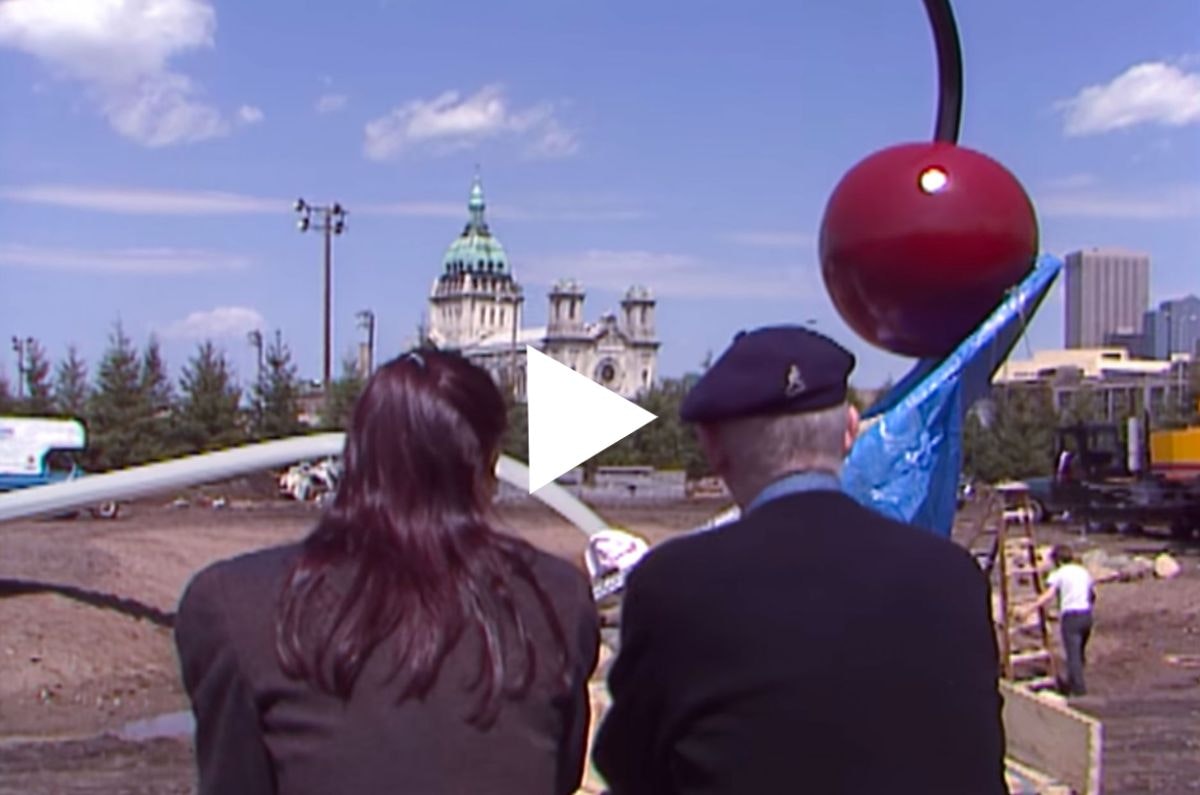
Claes Oldenburg discussing Spoonbridge and Cherry, video courtesy Walker Art Center Archives.
Watch
As their iconic fountain-sculpture was being installed in the Minneapolis Sculpture Garden in 1988, artists Claes Oldenburg and Coosje van Bruggen spoke with school children about the ideas behind Spoonbridge and Cherry.