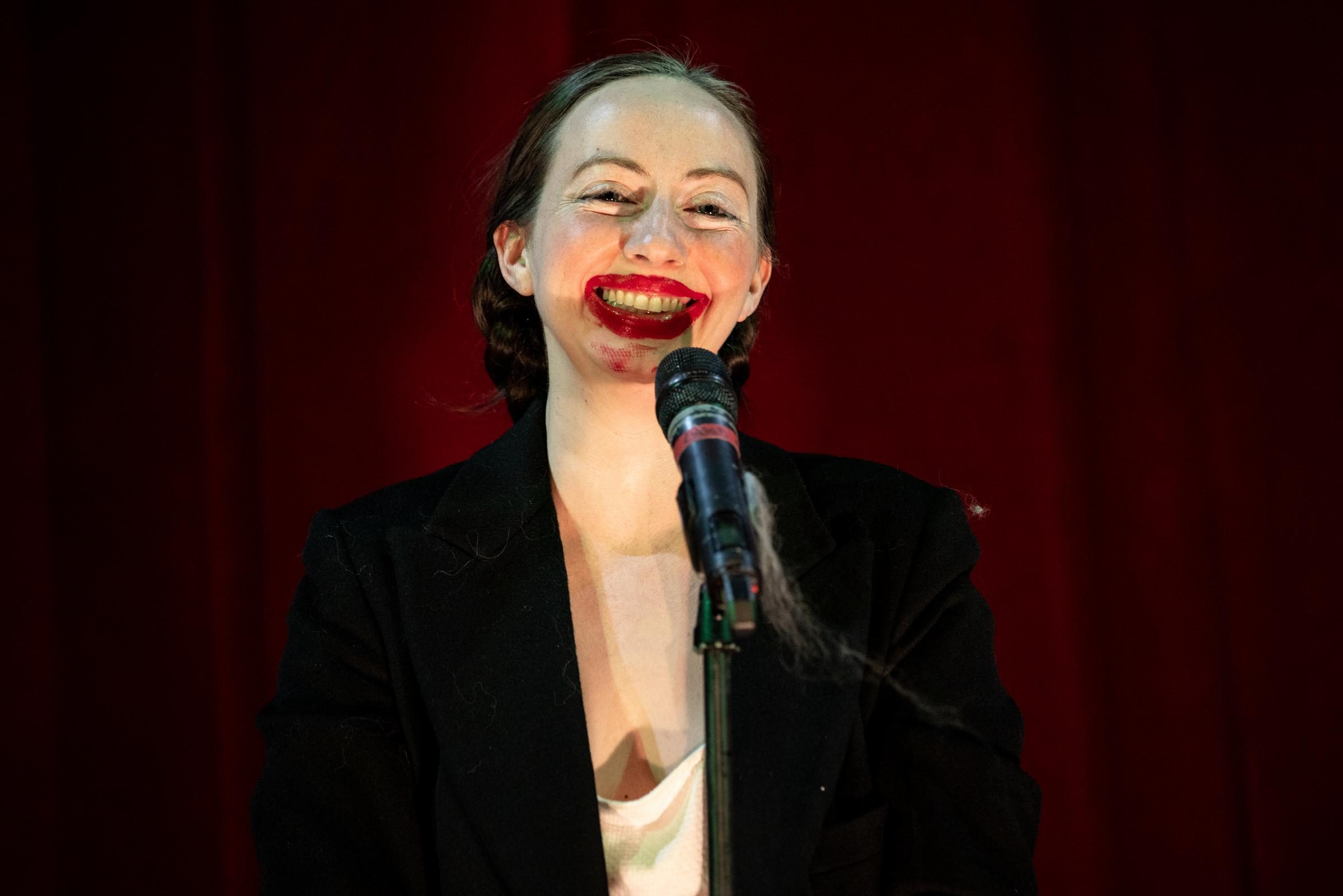
Spells are Called Spells for a Reason: Alex Tatarsky and Sad Boys in Harpy Land
By Amy Ching-Yan Lam
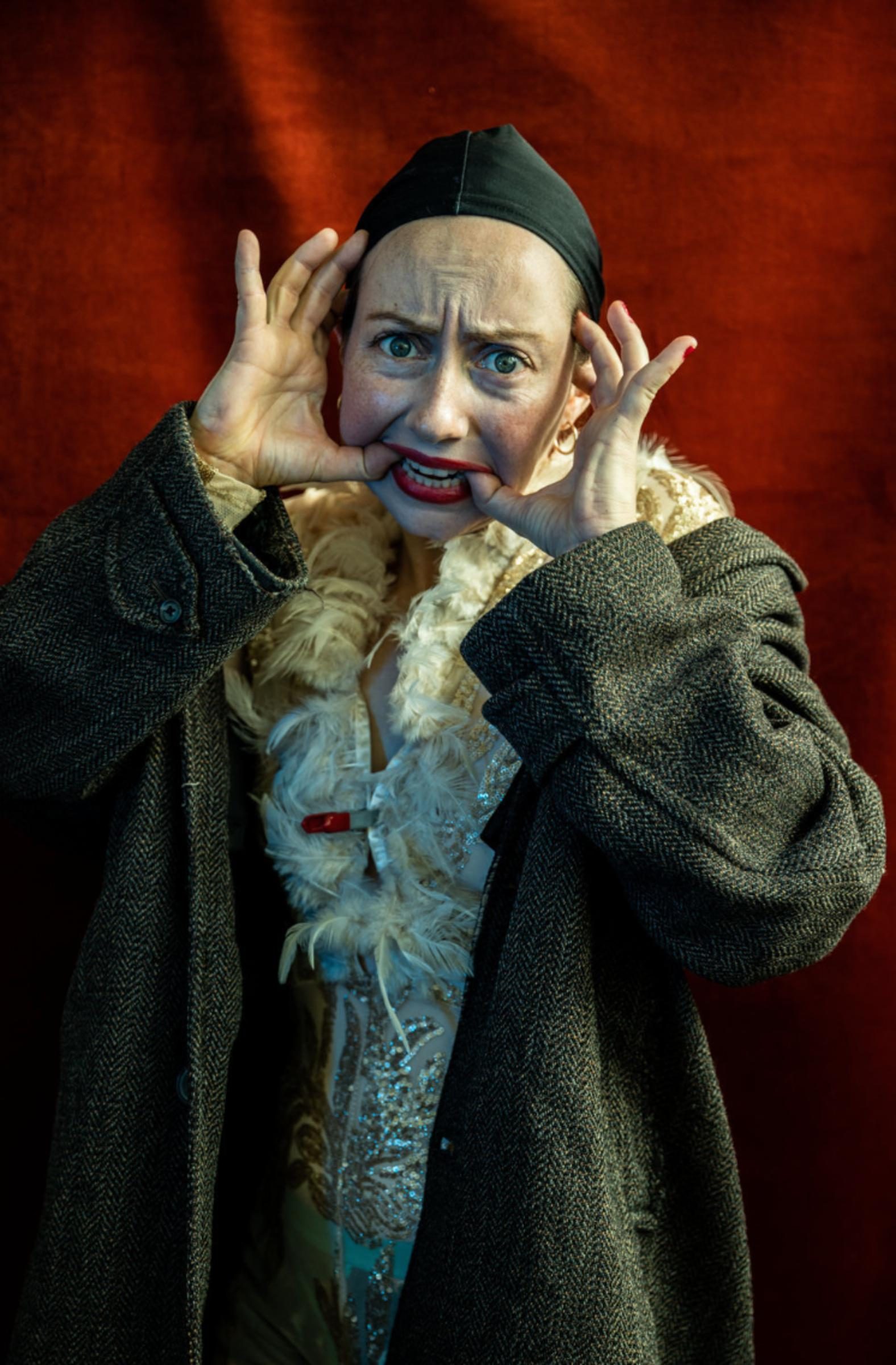
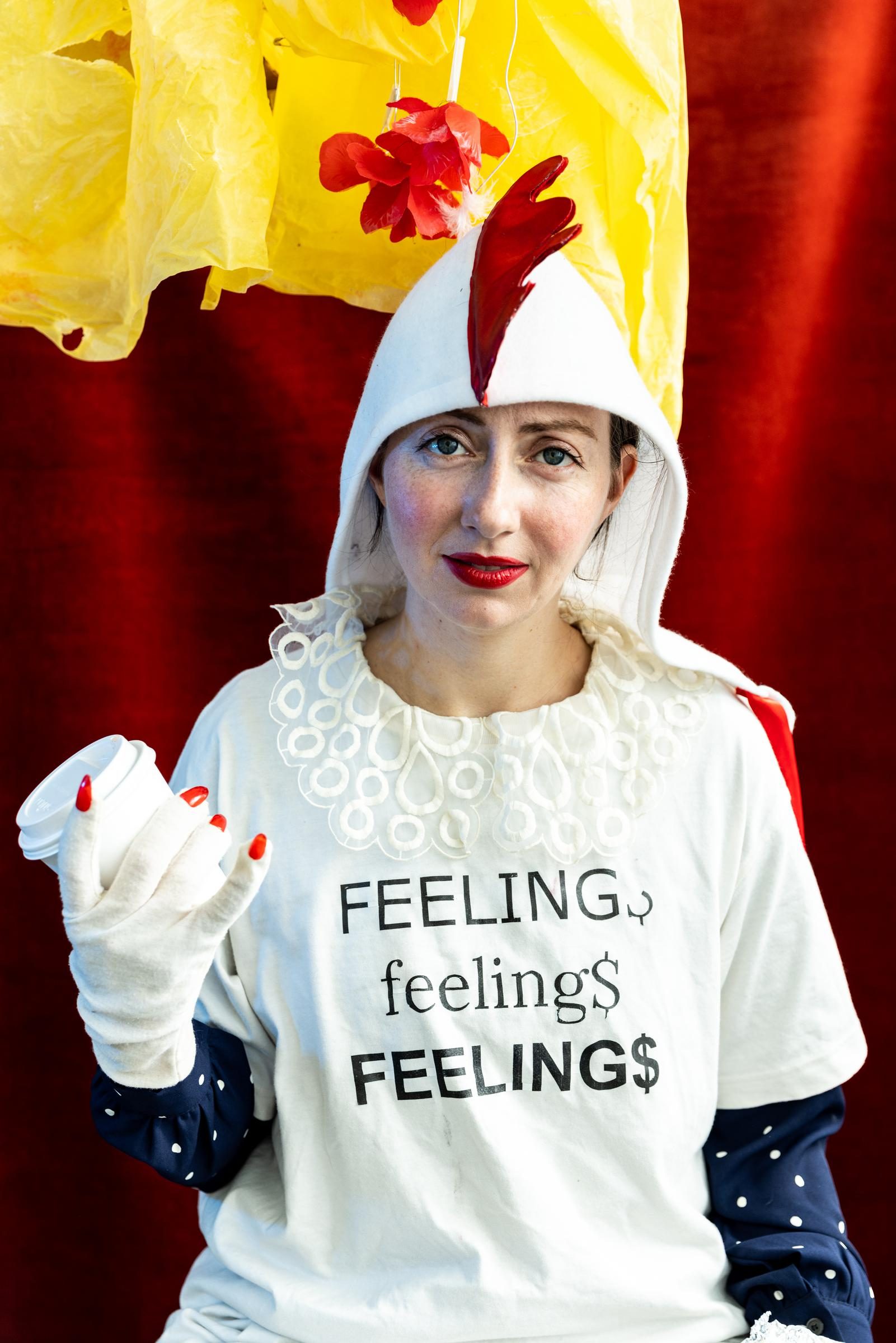
A proud third-generation East Villager, Alex Tatarsky is a performer, writer, and researcher who makes work within the in-between zone of comedy, poetry, dance-theater, and deluded rant.
In the lead-up to presenting their work, Sad Boys in Harpy Land, at the Walker, Tatarsky sat down with artist and writer Amy Ching-Yan Lam to discuss the power of language, Anna Karenina, and the role of the artist.
Amy Ching-Yan Lam
In a document titled future writing ideas 🙂, I have a note that reads simply “DESPAIR.” I looked at it the other day and knew exactly why I wrote it down, but also laughed at myself for writing down such a useless note.
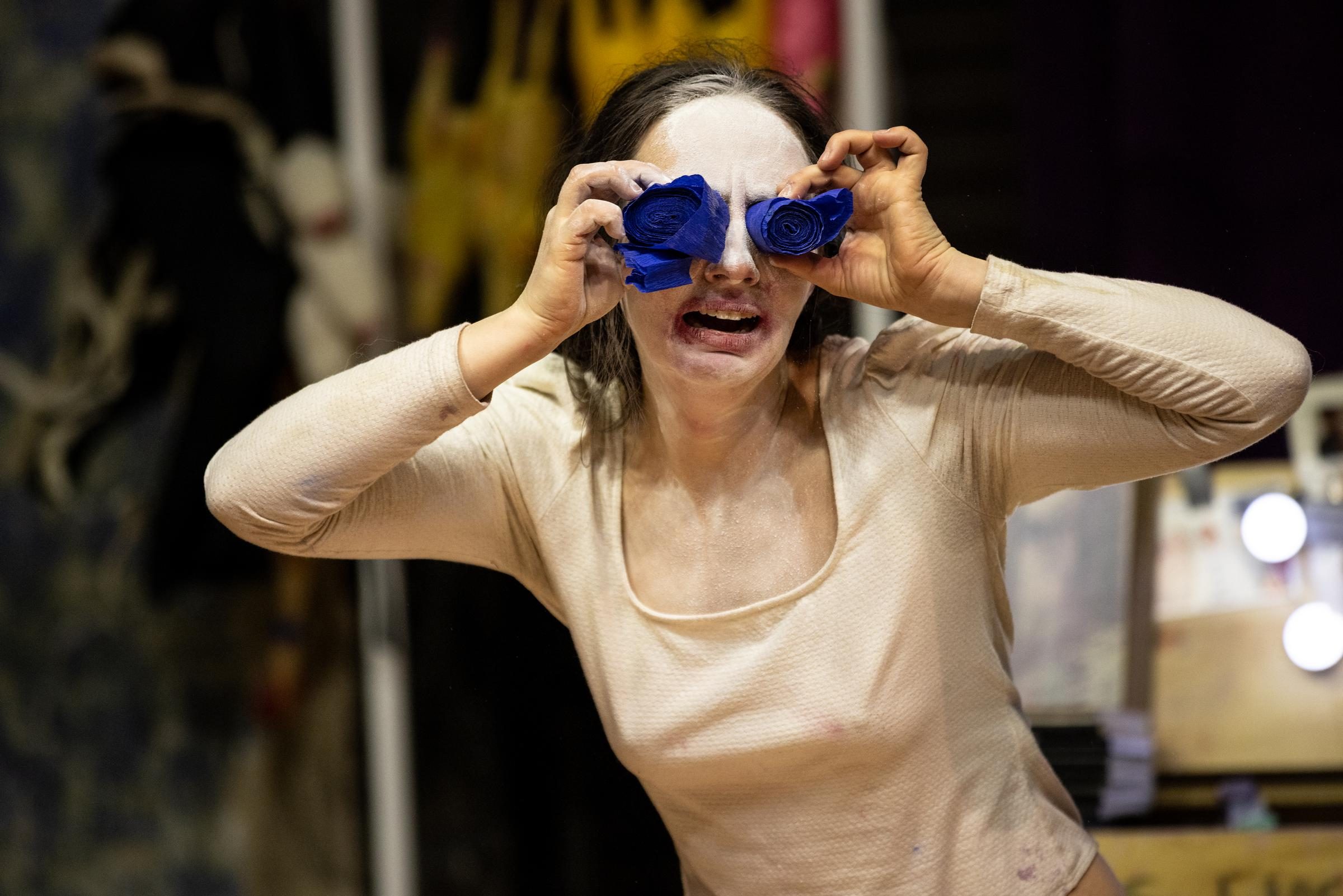
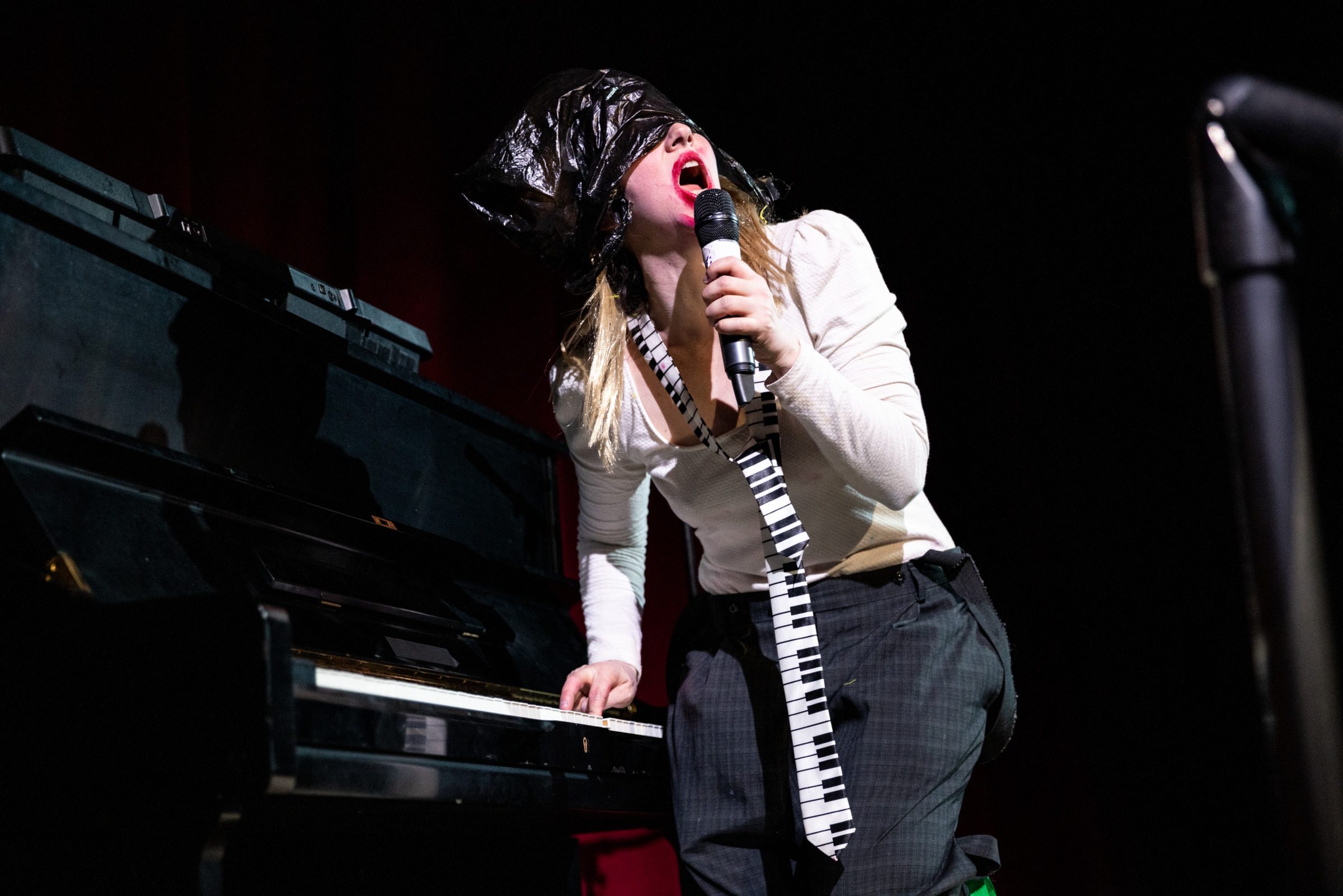
There’s a part in Sad Boys in Harpy Land where you take all the consonants out of a word, until it becomes a cry.
DESPAIR with no consonants is “EAI.” “EAI” could also be an acronym for “Every Auntie’s Insults” or “Ever After Inferno” or “Each Artist’s Inertia.” And if we take all the consonants out of those words, we’d be left with: “EEYAUIEIU EEAEIEO EAAIIEIA.”
When there’s only vowels, it feels like what’s left is pure fear, or grief in its most distilled form, or, alternately, wild exuberance and unrestrained joy. A ululation.
When we put the consonants back, then we have the inheritances of family, the walls of hell, or the pressures of employment.
What I love about your performances is that they constantly flip back and forth between the two types of interpretations, allowing us to see both separate and together at the same time. We can see the flickering between the shapes that obstruct air to define sounds and the fleshiness of breath itself. We can see the flickering between the individual letters and the whole word. A quote from the show: “Despair . . . despair . . . this pear!”
I’m curious where this interest in the material of language comes from for you? And does it maybe relate to something else a character in the performance says, “I feel more comfortable when I talk like a baby?”
Alex Tatarsky
G-d spoke the world into being, made the world by languishing it.
That was auto correct. *Languaging it. We in turn imitate the divine by remaking the world, speaking into being a different world. Word world word world whirled.
Spells are called spells for a reason. The mystics believe that language creates reality and that we create new realities by taking this one apart and rebuilding it at the level of the letter. So this is what I am trying to do! Let the worms eat the words.
We call G-d the creator, the maker. At the end of the day, “He” is a frustrated artist! Just like you and me! (Well, I don’t want to be presumptuous, maybe you’re not as frustrated as I am.) I teach a class called “Performing Arts for Social Change” and I must confess I find the course title kind of embarrassing. Art changes everything and nothing. It is, I think, an always-failing attempt to describe the world and in doing so alter it. Or, as Genesis P-Orridge might say, altar it.
I love vowels because they are the breath that is life. But I love consonants because they remind us that constraint is what enables expression. A word is both more and less precise than a wail.
ACYL
Oh yeah, I’m a frustrated artist! And I totally agree with what you say: “Art changes everything and nothing.” I’m glad you brought in this course title because the idea that you can perform arts for social change is something that really bothers me lately. Or more than bothers—consumes.
Similar statements: “Art illuminates darkness” or “Art builds empathy.” Nowadays people will say things like, “We need art more than ever!” These platitudes seem especially useful in glossing over the material reality of art being reduced to luxury products and the inversely brutal working conditions of most artists. Or the reality of the art world as a place for money laundering, tax avoidance, and reputation-washing. The art institutions then take up and represent these critiques, without actually changing.
These working conditions eat me up from the inside. I felt this reflected in Sad Boys in Harpy Land. The show feels like such an accurate representation of what it’s like to be an artist: mucky and on the verge of disintegration, with flashes of joy.
The fact that you work with canonical texts by Goëthe and Günter Grass about the role of the artist makes it all the more relatable, because these are the texts that we often encounter first as aspiring young people. I remember when I was in high school, I thought: I want to be a writer, I must educate myself, I must read Anna Karenina! And I did, but I didn’t understand it, and I can’t tell you anything about the book now.
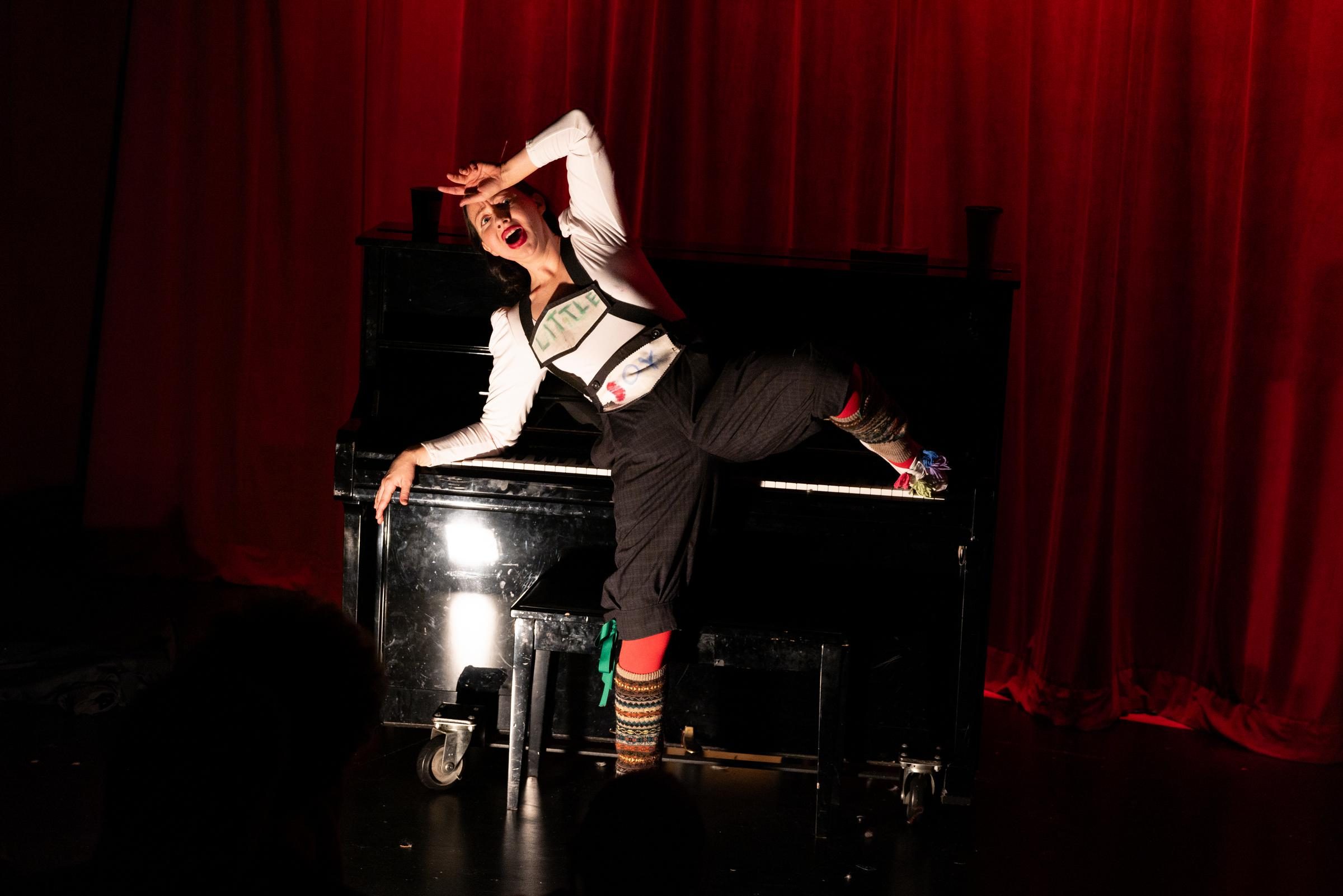
Coming back to the idea of change: What do you think making and performing this show has changed for you? How did you feel about the conditions of making art when you started, and how do you feel about them now? I’m also keeping in mind that this is a show you’ve said you’ll do your whole life, so there isn’t a clear beginning or end to the process.
AT
Oh my gosh, Anna Karenina! (Did you know I was a Russian major in college?) Whatta depressing tale. She has an affair and then throws herself in front of a train! And on top of it all, you didn’t even remember that!
Actually, Tolstoy is a great case study for these questions because he wrote gorgeous, devastating novels—to some people, I guess, if not to you!—and then, at some point, he had a spiritual crisis and mostly shifted to writing highly didactic, moralizing tracts. I think about this a lot because I totally relate to what I imagine to be Tolstoy’s crisis. In a world of such horrifying inequality, how dare we spend our time sitting around writing novels? Ought we not use our facility with language to convince people to change their ways? At the same time, I’m so grateful Tolstoy wrote a bunch of pretty wild, juicy novels depicting humans in all our complexity and contradiction! That feels like perhaps an important contribution.
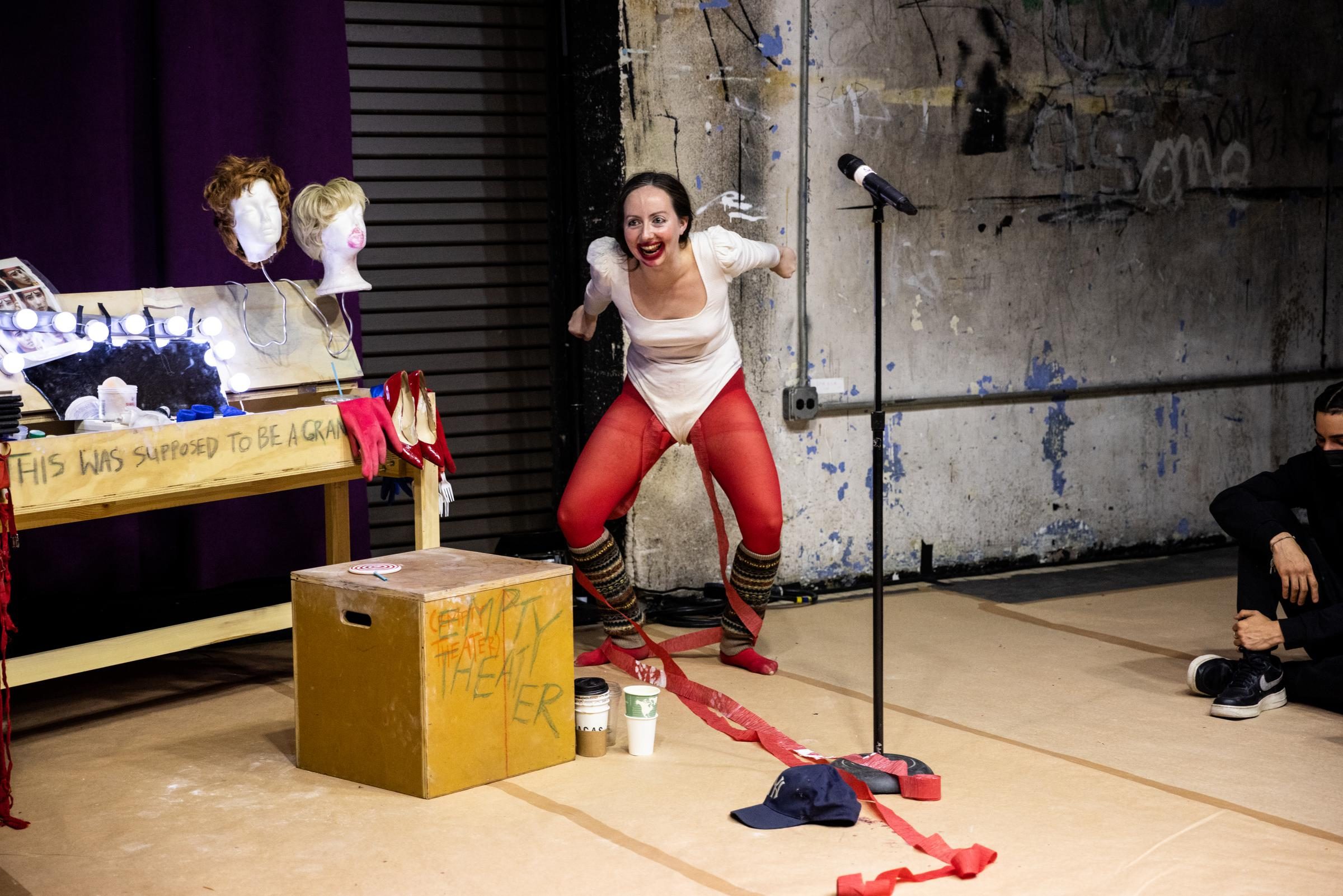
It’s like this one time I was going on one of my usual rants about environmental catastrophe, etc., and how what I really want to do is be the hermit caretaker of a huge composting site, and my amazing set and costumes designer (who is from Romania) texts me: YOU BETTER NOT HAVE A KID AND BECOME A PLANET. I had no idea what she meant, but I really loved the sentence. Eventually I realized what she had wanted to say was: Please don’t have children and then quit the theater to become an environmentalist.
So many people in our field quit and shift to something more . . . useful-feeling? Financially sustainable? In Wilhelm Meister’s Apprenticeship—the book I am adapting in Sad Boys—even Wilhelm quits the theater! First, to be a businessman and then to join a mystical society. So, you see, the story really continues to be unnervingly hashtag-relatable. We’re really in trouble if only people in their early 20s and the independently wealthy can afford to make theater!
Okay, okay, so what can I say about the conditions of making art right now? Oy vey! I’ve been really, really lucky to have folks supporting my work, and even so I can’t afford to live in the city I grew up in. It’s bleak. And the Trump DOGE cuts decimated a lot of art spaces that relied on what were already quite small grants. So that’s upsetting and infuriating.
But the funding cuts are also a good reminder of how truly threatening art can be to dominant mores and power structures. Art certainly made me into a deviant! And not necessarily because it healed me or made me more compassionate (although maybe it did that, too!) but because it made me value freaks and freakiness above all else.
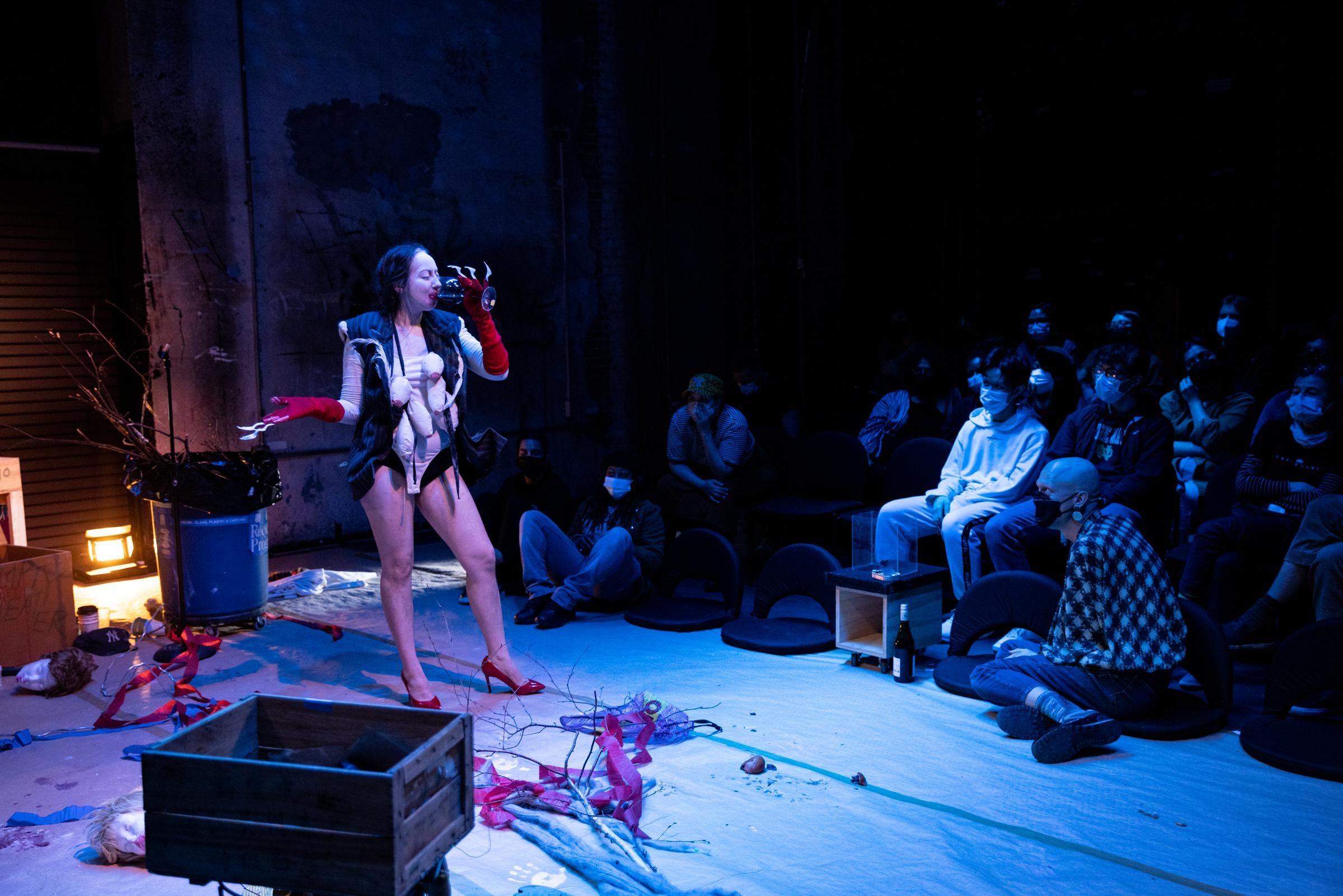
I am so grateful to the many wonderful arts institutions that present experimental performance; they are doing the lord’s work in very challenging circumstances. However, and I’m really cringing at myself for saying this in an Official Walker Arts Center Artist Interview, but here goes:
Artists exist without Art Institutions. But Art Institutions do not exist without Artists.
Sometimes all of us—artists and arts institutions alike—would do well to remember this and reflect upon its implications.
ACYL
Thank you for reminding me of the value of not quitting. There’s something important about clearly seeing all the contradictions in art—that actually the institutions, like any employer, are mostly our enemies—and to still keep going, fed by the rice and beans and frustration and solidarity with artist friends. Also, I will now always remember what Anna Karenina is about, having been exposed in this interview. I wanted to ask you a bit about the specific figure of the clown, or buffon, and how that might relate to this problem of feeling trapped in inaction.
This problem feels like a central vortex of Sad Boys in Harpy Land. From a text you wrote about the show: “The world was going to hell, and all you did was nothing.” Actually, I bet that many environmental activists, aka “planets,” are also plagued by this feeling of not doing enough! Maybe they’re also a good audience for Sad Boys.
Thinking about inaction reminded me of Black theorist Charles W. Mills’s conception of white ignorance, which he introduces as:
“Ignorance is usually thought of as the passive obverse to knowledge, the darkness retreating before the spread of Enlightenment. But . . . Imagine an ignorance that resists. Imagine an ignorance that fights back. Imagine an ignorance militant, aggressive, not to be intimidated, an ignorance that is active, dynamic, that refuses to go quietly—not at all confined to the illiterate and uneducated but propagated at the highest levels of the land, indeed presenting itself unblushingly as knowledge.1”
There’s a special type of inaction—white and otherwise—that is “militant, aggressive, active, dynamic.” A weaponized type of inaction that is, in effect, action.
In Sad Boys, I was struck by how you dealt with one of my least favorite phrases, which is exemplary of this kind of inaction/ignorance: “Life’s not fair.” One of your characters declares it while perched on a rehearsal cube, and then shapes a necklace into a mirror and asks: “Who’s the fairest of them all?” The mirror then becomes a noose. This overused, status-quo phrase quickly slides down a chain of associations to become a tool of death.
Is there something about this idea of weaponized inaction or ignorance that relates to the role of the clown or the buffon? Or could you talk a bit about where the clown stands in relation to the status quo?
AT
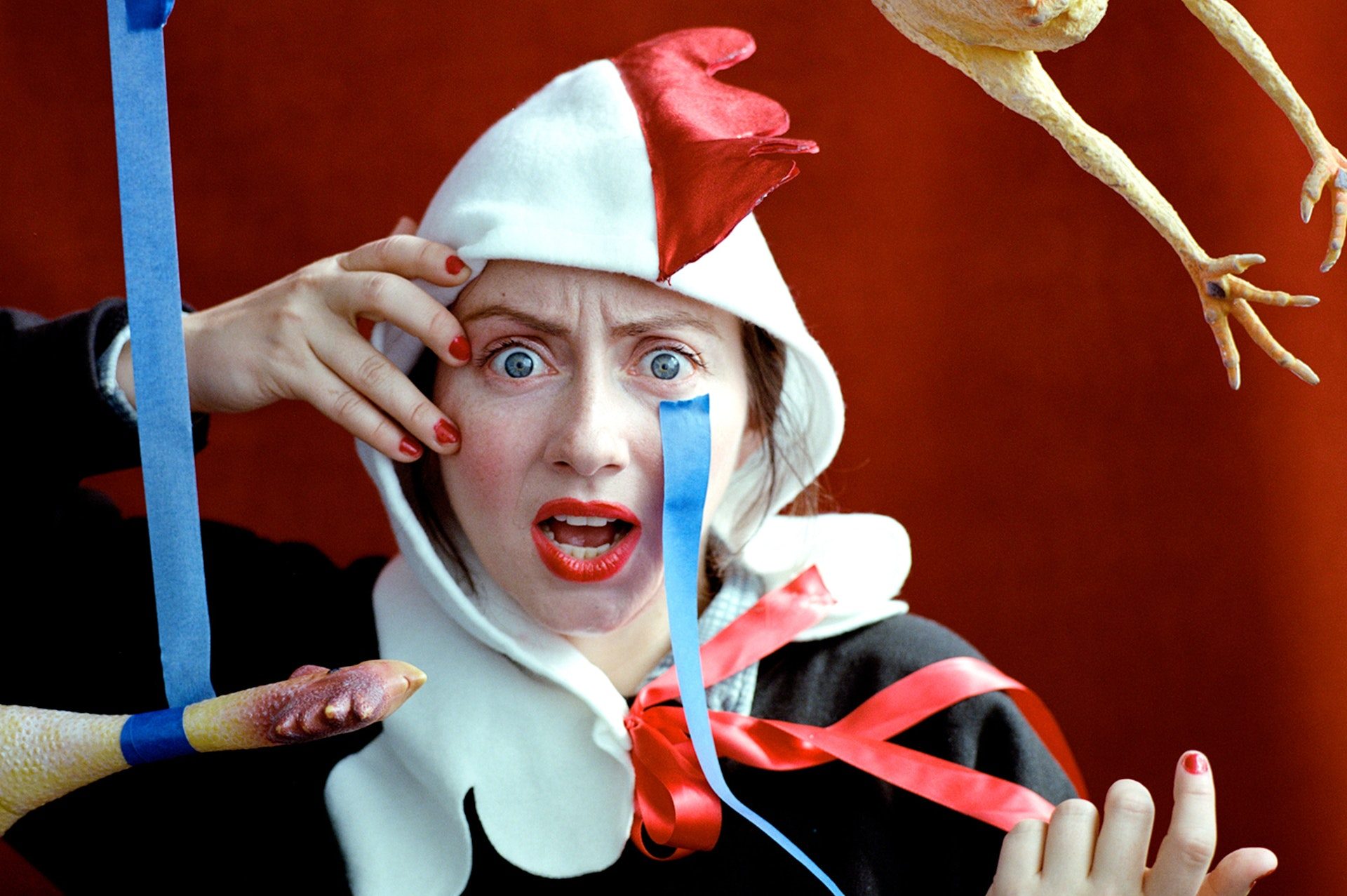
Yes, certainly the buffon could be said to play in the realm of weaponized ignorance. The buffon is a kind of grotesque clown, often performed with an absurdly misshapen body, dark circles under the eyes, and blacked-out teeth. The myth of the buffons is that they are a community of outcasts, kicked out of society and relegated to live in the swamps. But it is from these marshy margins that they are able to better observe society, with all its hypocrisies, contradictions, and cruelty. And so the buffons become expert mimics. They learn to imitate the behaviors of those people who go on living in the kingdom, oblivious to their privilege, willfully looking away from those who are forced to live in the swamp.
The buffon’s grotesque mimicry functions as a mockery and critique of the world from which they have been excluded. One day out of the year during carnival, the buffons are invited back into the kingdom to perform for the court. And of course they want to take this chance to communicate their critique, to change the minds of the people in power! But they have to be cute and funny while they do it, otherwise they will be killed! (And also, like all of us, they maybe kind of want to be rich and famous, too.)
So they have to be really, really charming while still saying what they want to say. They can get away with it in part because they appear monstrous—but also nonthreatening. “We’re just cute weird little freaks, that’s all! The lowest of the low! Don’t worry about us :)” But then they go in for the jugular. A wink and a knife. Weaponizing freakishness, perhaps. Finding the power in powerlessness to speak truth to power.
To bring in the Mills quotation, I think a lot of this project for me is about grappling with the so-called Enlightenment, an age of Rationality that laid the justifications for an utterly irrational world, based on invented categories used to justify violence. The human gets separated out from “Nature” and only the property-owning white Christian male is afforded full humanness. All others, then, are subhuman, which allows for or even necessitates their subjugation in the name of civilizing.
The bildungsroman (the kind of novel I’m adapting in Sad Boys) is a “development-novel”; it follows the progression of a protagonist as they become a functioning member of society. I guess my question is, if the society is dysfunctional, then what does it mean to function well within it? Might being dysfunctional or nonfunctional then be a valid—even rational—response to a world that makes no sense?
ACYL
This is an amazing description of the buffon. Maybe the type of dysfunction that the buffon embodies is the exact inverse to the weaponized ignorance that the rich and powerful people at the top wield every day? Demonstrating that, actually, all of this is as shifty and movable as a joke in a swamp.
Following up on the separation of the human and nature: the lowly onion plays a very important role in Sad Boys in Harpy Land! A few months ago, I saw an exhibition by the artist-dancer Simone Forti, in which she had a piece titled Onion Walk (1961). An onion that’s started to sprout is placed on its side over the opening of a wine bottle. The green sprouts grow until the weight of the onion becomes unbalanced, and it falls off the bottle. When I visited, it was near the end of the exhibition’s run: the bottle had been placed near a window, and the onion was lying in the sun on the ground. I’m not sure if anyone was there to witness the fall.
What’s so beautiful about Sad Boys in Harpy Land is that it feels as totally simple and completely unpredictable as an onion growing and rolling away. But you also take it much, much further: We get to see—metaphorically!—the onion chopped up, cried over, cooked in a delicious sauce, savored, chewed up, swallowed, digested, pooped out, used as manure, and return as a brand new . . .? As a final question: What would this new plant be?
AT
Haha, I’m a devoted composter so I can’t help but think literally in response to this question. If the onion gets chopped up, cried on, cooked, chewed up, and pooped out, it will fertilize the soil. It feeds us and then it feeds the earth. So I guess what grows depends on what else is in that soil. Or what we choose to cultivate and care for. As a performer, I have a special place in my heart for the tomato.▪︎