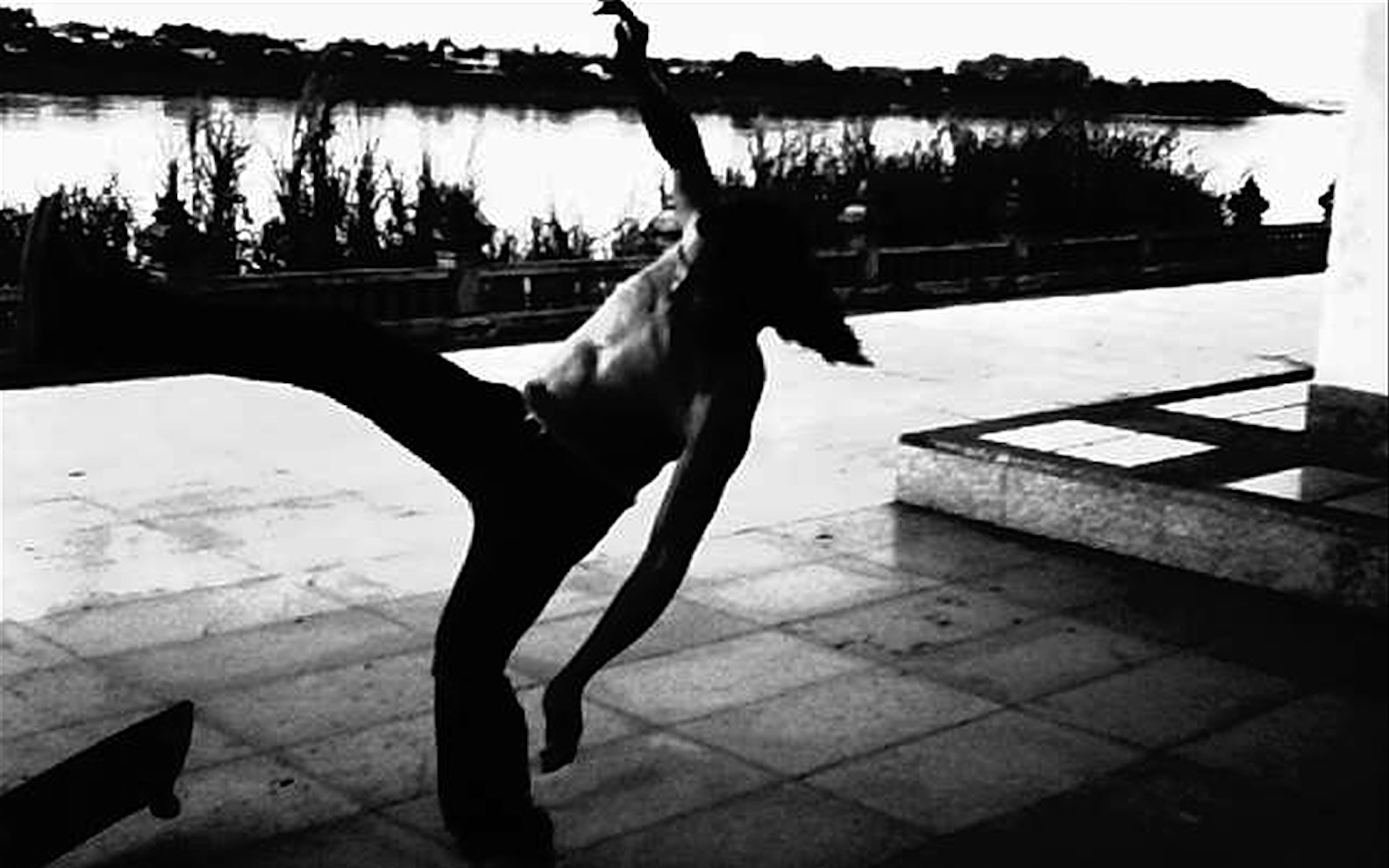
Native Americans make up only around 0.4 percent of characters in prime-time television and popular films, according to a recent study; even fewer can be found behind the camera lens. In conjunction with the INDIgenesis film series, four voices in Indigenous film—filmmakers Sky Hopinka, Adam Khalil, and Alex Lazarowich, and the Sundance Institute’s Hud Oberly—consider what it means for Native people to bring their own stories, working processes, and worldviews to film audiences.
"Jim Crow of the North has helped break the silence on the history and impact of northern segregation as the film has been carried across the community as a catalyst for convening, conversation, consternation, and change." Filmmaker and Twin Cities PBS producer Daniel Bergin on documentary's power in “restorative storytelling.”
Documentary Practices Can Give Visibility to Trans History
Oral history projects offer rich fodder for documentarians "who emphasize the voices of their subjects using their own words, no matter how odious they may be to power structures involved," writes Andrea Jenkins, a poet, Minneapolis City Council member, and transgender oral historian at the University of Minnesota’s Jean Nicholas Tretter Collection Archives in GLBT Studies.
Documentary Can Reveal an America Hiding in Plain Sight
"Documentary hails its viewers. In the words of Louis Althusser, it interpellates us, bringing us into the world we can see on screen, one often invisible, forgotten, left out of the picture." Author and English professor Paula Rabinowitz on the ways documentary films can burst our political bubbles.
Documentary Can Shift the Paradigm in Labor History
"Documentary film provided a means to bring the stories of past workers to the attention of contemporary workers." East Side Freedom Library co-founder Peter Rachleff on the power of documentary in the fight for fair labor practices.
Documentary Can Reflect the Complexities of Working-Class Life
Steve Bognar and Julia Reichert’s American Factory shows "how workers and managers inhabit a world of fragmentation, in which there is no single working-class tale nor even a unified story among those who manage and own the factory." Historian Elizabeth Faue on how documentaries can tell complicated stories of working-class life.
Movement artist Miguel Gutierrez notices that, especially in the US, more and more people are starting their bios by naming their nationality, sexual orientation, or race. "While I understand this kind of specification as a call to consciousness around minoritarian presence, I also wonder if it ends up making their/our position…. inert?" As guest editor of a new edition of Soundboard, he invites four Latinx voices in performance—Brianna Figueroa, Xandra Ibarra, Pedro Pablo Lander, and Sebastián Castro Niculescu—to consider the question of identity.
"When I identify myself, please read it as a personal ad and not a biographical fact." Writer, artist, organizer-curator, and performer Sebastián Castro Niculescu on identity and performance.
Identity Is a Bureaucratic Nothing Attempting to Be Vital
"Creating work about conditions and structures that shape my body is not always helpful for me as an artist. I am not interested in making my pain and my body consumable for liberal satisfaction." Artist Xandra Ibarra on identity and performance.
"Identity is all at once stable and fluid, grounding and brittle, entirely bullshit and undeniably real." Dance historian, performance scholar, dramaturg, and choreographer Brianna Figueroa on identity and performance.
Instead of Smashing Icons, Film Restoration F*cks with the Canon
"At Milestone Films, we sought out films that reflected the lives and work of African Americans, women, LGBTQ people, and Native Americans. Rather than smashing icons, we decided to work to radically reshape and enlarge the pantheon." In a four-part Soundboard feature, Amy Heller discusses how her company's restoration work amplifies traditionally marginalized voices in cinema.
In-House Film Preservation Allows a Curatorial Shift to Hidden Stories
"Given our current political climate and the escalating assaults on the basic human rights of people from many walks of life, especially trans people of color, it is imperative that archivists and curators utilize their institutional privilege and resources to develop increased access streams to the hidden stories of our underserved and under-protected communities." UCLA's Todd Wiener on the power of preservation in sharing stories of marginalized people.
Restoration Gives New Life to Lost, Forgotten, or Dismissed Films
"Discoveries like The Juniper Tree inspire us to keep digging and remind us that as we continue to advocate for preservation, one film at a time, we are also expanding and rewriting cinema history." The Film Foundation director Margaret Bodde on how the foundation restores not just individual films but the legacies or indipendent filmmakers.
Film Restoration Can Turn the Lens Toward Marginalized Voices
Mining the metaphorical potential of Richard Sale's Abandon Ship (1957), a film that addresses the moral conundrum of who to save in a lifeboat with a limited number of seats, Ina Archer looks at how digital technologies can help media archivists diversify the cinematic canon and, hopefully, spark "more equitable decisions about the fascinating moral dilemma of who gets to stay in the lifeboat."
Toronto-based artist and designer Sage Paul (Denesųłįné) discusses how she "carved out space for our fashion to thrive, staking out space for 'Indigenous fashion'” in co-founding Indigenous Fashion Week Toronto.
Indigenizing Fashion: Reclaim Ownership of Our Cultural Imagery
"The Indigenizing of fashion is really about us doing it on our own terms—setting boundaries, knowing our culture, finding allies, and protecting ourselves as artists." Potter and fashion designer Virgil Ortiz (Cochiti Pueblo) building a more equitable fashion industry for Native, First Nations, and Indigenous voices.
Indigenizing Fashion: Push for Real Inclusion, Not Tokenism
"Decolonizing fashion means acknowledging and respecting that Indigenous fashion existed and continues to exist, but also understanding that Indigenous designers have a lot to offer the broader fashion world, and the gatekeepers must actively seek to include us." Dr. Jessica R. Metcalfe (Turtle Mountain Band Chippewa), owner of the fashion business Beyond Buckskin weighs, in on ways to Indigenize the fashion industry.
Indigenizing Fashion: Squeeze Out the Appropriators
"My preference is to Indigenize rather than decolonize. Flood the fashion world with Indigenous designers and models. Expose the imposters and highlight Native designers on the international fashion platform." Santa Fe–based art historian and curator Amber-Dawn Bear Robe (Siksika/Blackfoot) on fostering Indigenous creativity in the fashion industry.
Reenvisioning the Internet: Decentralize the Web to Sidestep Corporate Control
"Through the use of peer-to-peer protocols, the decentralized web puts online ownership and control back into the hands of individual people." In the sixth edition of our Soundboard series, Danielle Robinson and Andy Pressman answer the the question, "How can we reenvision the internet?"
Reenvisioning the Internet: Inject a Sense of Wonder Back into the Tech Industry
"Before we ship a product, we should ask ourselves: Does this app give nutritious value to the end user? Is it introducing a new paradigm that allows users to think and feel differently? And crucially, Are you adding long-term social value instead of shorter term value to VCs and shareholders?" Writer and product leader Bo Ren weighs in on the Soundboard question, "How can we reenvision the internet?"
"We recognize the web as a resilient, uncensorable, and scalable network of nodes made up of many different categories of things, and acknowledge that culture is produced collaboratively between people, places, tools, and technical concepts, creatures and environments." In the sixth edition of our Soundboard series, artist and Furtherfield cofounder Ruth Catlow answers the the question, "How can we reenvision the internet?"
Reenvisioning the Internet: Embrace Its Multiplicity
"If artists want to reimagine the web, we must set aside the tendency to subscribe to a universal 'us' that is blank, neutral, and anonymous (a.k.a white, Western, and tech-literate)." In the sixth edition of our Soundboard series, media artist and researcher Mimi Onuoha shares her thoughts on the question, "How can we reenvision the internet?"
Reenvisioning the Internet: Create Tools that Reveal its Ideological Infrastructures
"If the web is a built environment increasingly designed and constructed by corporations, tool-making offers users a way to regain some of their lost agency." In the sixth edition of our Soundboard series, artist and writer Gary Zhexi Zhang shares his response to the question, "How can we reenvision the internet?"
An Indigenous Lens Benefits Us—and American Cinema at Large
"Championing artists with an Indigenous perspective in film not only empowers the Native American population but also to bring diverse stories and storytelling to the screen for the benefit and growth of American cinema as a whole." In the fifth edition of Soundboard, Hud Oberly, program coordinator for the Indigenous Program at Sundance Institute, joins filmmakers Sky Hopinka, Adam Khalil, and Alex Lazarowich in addressing the question, "What does it mean to have an Indigenous lens in film?"
An Indigenous Lens Seeks Self-Determination, Representationally and Formally
"An emergent turn in Indigenous filmmaking seeks to foster conditions for self-determination not only representationally but also formally. These films reject settler-colonial modes of film production and shift their lens toward Indigenous epistemology and philosophy—both in the production process and within their structure and logic." In the fifth edition of Soundboard, filmmaker Adam Khalil joins Sky Hopinka, Alex Lazarowich, and Hud Oberly in addressing the question, "What does it mean to have an Indigenous lens in film?"
An Indigenous Lens Is a Tool to Create Understanding
"The biggest lesson I learned while starting out making films is that I don’t need permission to make work that isn’t conventional or breaks the formal rules we’re taught to follow. Rather, the permission that I am seeking is that of the people and the communities I film." In the fifth edition of Soundboard, filmmaker Sky Hopinka joins Adam Khalil, Alex Lazarowich, and Hud Oberly in addressing the question, "What does it mean to have an Indigenous lens in film?"
An Indigenous Lens Is About More than Our Films—It's About Our Community
"How will we thrive, how will we succeed, how will we incorporate technology and storytelling in our lives to honor and propel us forward as Indigenous people?" In the fifth edition of Soundboard, filmmaker Alex Lazarowich joins Sky Hopinka, Adam Khalil, and Hud Oberly in addressing the question, "What does it mean to have an Indigenous lens in film?"
A New Gaagiixiid Story: Gwaai Edenshaw on Indigenous Language and Making the First Film in Haida
"One of the things we held high was the question: who are we making the movie for? We decided that the movie we were making was for Haida people." Michael Wilson interviews Gwaai Edenshaw, co-director of Sgaawaay K’uuna (Edge of the Knife), the first feature film in Haida, about Indigenous language, the process of creating modern Indigenous works rooted in tradition, and the role of an entire community in bringing the film to reality.
The (Un)Covered Wagon: An Arapaho Filmmaker Unpacks the Complexities of an Early Western
Missy Whiteman has a complicated relationship to The Covered Wagon, a 1923 silent film considered one of the first westerns: it's deeply racist, yet it's a source of pride on the Wind River reservation, because many Arapaho people—including her relatives—appeared as extras. As curator of the INDIgenesis film festival, she selected the film for opening night, where it will be recontextualized through a contemporary score performed live by Michael Wilson (Anishinaabe), special guests, and a presentation of historic photos shared by her father, Ernest Whiteman. The photos offer a frame for her understanding of the legacy of her people, family history, and work as a filmmaker today. Here, she shares these images along with music, text, and audio from a recent conversation with her father about The Covered Wagon and its meaning then and now.
Museum Resolution: Build Social Relations Over Property Relations
"Developing a program or exhibition that reflects upon or invites dialogue on some contemporary social movement, such as Black Lives Matter, for example, is not the same as investing in the cultivation of black life." In the fourth edition of Soundboard, our multi-author feature, artist and Tufts professor Anthony Romero offers his 2019 New Year's resolutions for art museums.
"If our museums are to begin to effectively address inequality, disempowerment, isolation, intolerance, climate change, we need to start at home—and with our workers." Seb Chan, Chief Experience Officer at Australia Centre for the Moving Image, offers his museum resolution for 2019.
Museum Resolution: Dismantle the Myth of Neutrality
"Could we not use the museum as a place of embodied experience and interaction to seek greater justice and equity? And if we succeed in doing so, could the emerging methodologies provide an invaluable map to move the needle on our most challenging social and economic issues?" In the fourth edition of Soundboard, our multi-author feature, former Queens Museum director Laura Raicovich offers her 2019 New Year's resolution for art museums.
Museum Resolution: Focus on Representation and Wealth Inequality
"Museums' efforts to advance diversity, equity, accessibility, and inclusion are doomed to be superficial and, ultimately, ineffective if they do not involve a clear-eyed look at their institutional relationships to inherited inequality." In the fourth edition of Soundboard, our multi-author feature, inclusion strategist and futurist Nicole N. Ivy offers her suggested New Year's resolutions for art museums in 2019.
A filmmaker who uses many of the tools and tactics of journalism, Natalia Almada reflects on art's power when addressing violence and other crises: "The films I’ve made are all meant to be reflections, meditations, a slowing down from the fast-paced media that allows us to hear our thoughts and have our feelings.
If journalists are cheetahs, swooping in to capture a story, artists are turtles, lingering long enough to pick up telling details. Playwright, performance artist, and refugee Ifrah Mansour reflects on the power of artists in breaking down stereotypes and connecting people through stories.
Art Reminds Us: We Are Implicated in Each Other’s Lives
"Moving beyond the depictions of the news media demands a commitment of immersive engagement between people that allows for an intimacy not only between but also within." Dorit Cypis taps into her roles as artist, mediator, and homeless advocate in parsing the role of art in understanding times of crisis.
"It’s not the same to look at the facade of a house as to be invited into it," writes Jackie Amézquita. "The artist is the door that allows other people to interact with the interior of a different reality, dimension, or perspective." Her own story, as an immigrant from Guatemala who crossed the border illegally in 2003, was echoed in a recent project, in which she walked 178 miles from the Mexico border to downtown LA, ritually embodying the journey of immigrants today.
"If we march on the weekends for equality, inclusion, and equal rights, how are we 'marching' in our making and our teaching?" Educator and designer Ramon Tejada calls for an opening of design: "We must decolonize, queerize, colorize."
"Early queer zinesters tasked the images they reproduced to do what the originals wouldn’t: to go further, to risk more, to perform new work. I argue for this reproductive action as a model for the queering of design pedagogy," writes designer Nate Pyper.
"Queering design engages the space of (visual) consumption, thinking outside of what is perceived to be possible and repositions relationships between self/subject/object and desire," writes artist and educator Ginger Takahashi Brooks, "causing breaks in the chain of hegemonic thought. "
"For me, an ideal is to move freely across different kinds of borders—disciplinary, structural, and intellectual," writes educator Kristina Ketola Bore. "But when endorsing such an ideal, what happens when faced with radical and hateful opinions or image-making?"
Institutions Must Ask: Who Has to Work Too Hard to Be Heard?
How can art institutions respond to #MeToo? Rashayla Marie Brown offers her perspective as a queer, Black artist: "For the institutions that want to critically engage the names they’ve been given, I ask, 'How can we redistribute power to those who rightfully distrust what we stand for?' or 'Who has to work too hard to be heard, too?'"
How should the art world reckon with artists accused of sexual harassment? Hammer Museum educator Theresa Sotto weighs in on whether to keep works by such artists on view: "The decision should be weighed based on whether the work and the institution have the capacity to elicit productive discourse. Could such discussions help us engage with art in multi-layered ways, revealing societal and cultural contexts in addition to individual artistic pursuits?"
What should art institutions consider when presenting work by artists accused of wrongdoing? Deborah Cullinan, CEO of the Yerba Buena Center for the Arts, embraces the complexity: "As opposed to limiting the experience of art-making to its final product, we can think of the artworks and the lives of artists as the cultural material we have as a society that allows us to engage in provocative, multifaceted conversation that leads to progress."
Let's Reckon with the Power Structures that Enable Abusers
How should museums deal with artwork by alleged harassers? Editor and journalist Jillian Steinhauer shares her perspective: "If we’re unwilling to rethink a bit of wall text because we’re scared of the precedent it might set, how can we expect to rethink the entire system that brought the painting that wall text elucidates into the museum?"
When Exhibiting Works by Artists Accused of Wrongdoing, Context Matters
When artists are accused of impropriety, what are art museums to do with their work? Critic and historian Tyler Green shares his thoughts—arguing that there are important contextual considerations, including whether artwork is by a living artist and whether it's part of a permanent collection show or a solo exhibition.