Performing Arts
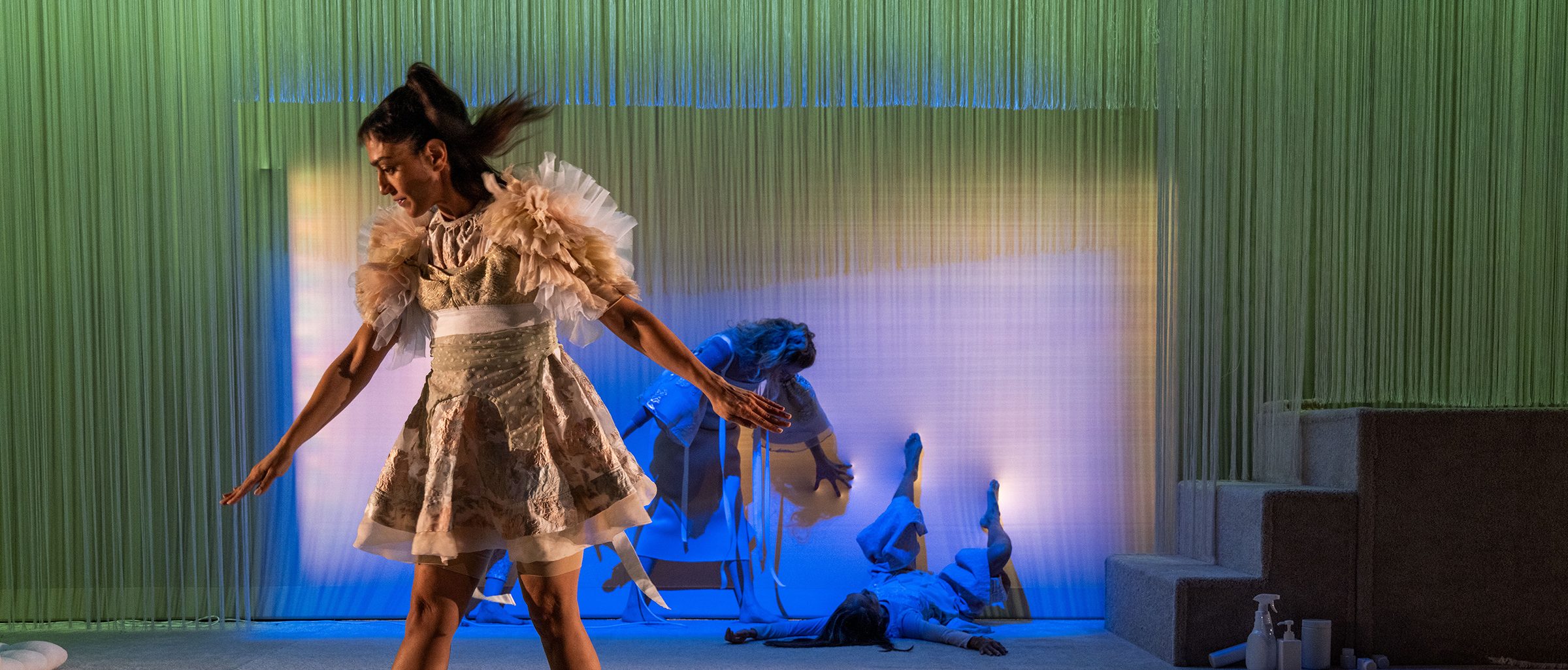
The Walker’s Performing Arts program presents contemporary dance, experimental theater, new music, and interdisciplinary art forms that defy categorization.
The Walker’s Performing Arts department is home to one of the most active and influential contemporary performing arts programs in the United States. As a major Midwest outpost, it serves as an incubator for talent at home and around the world.
Since 1960, Performing Arts has presented forward-thinking work that defies categorization. From improvisational dance to speculative theater, experimental jazz to interdisciplinary performance art, the program reflects the dynamic contemporary art landscape of today. As artists continue to redraw the boundaries of their practices, so too does the Performing Arts department.
Bridging artists and audiences, the Performing Arts team develops new community engagement opportunities every year. Often in collaboration with community partners, programming runs the gamut from open rehearsals to artist talks and workshops. The department also nurtures artistic creativity by way of commissions and residencies, in addition to tour advocacy and curatorial assistance. Past artistic partners have included established visionaries such as Ralph Lemon and experimental theater troupe the Wooster Group, alongside emerging artists like musician/composer Mali Obomsawin and performance artist Nile Harris.
When the Walker Art Center opened in 1940, the goal was to create an art center for all the arts, including dance, music, and theater. While there were some presentations in music and dance in the 1940s, performing arts gained momentum in the 1950s with the founding of the Center Arts Council (CAC), the volunteer arm of the Walker. Under the CAC, a dedicated group of Minneapolitans donated their time and resources to present dance, music, theater, poetry, and film. The Council organized poetry readings by John Berryman, Isabel Gardiner, and James Wright and music events with the Juilliard String Quartet, Doc Evans, and the Randolph Singers, among others.
In 1963 Tyrone Guthrie, after touring North America looking for a city to establish his Shakespearean theater, opened the Guthrie Theater adjacent to the Walker Art Center. At the same time, the Walker hired John Ludwig to coordinate a growing performance calendar organized by the CAC, and to program Walker events in the Guthrie. Among the most successful programs sponsored by the CAC was the Center Opera Company, which presented avant-garde, experimental opera productions, such as Dominic Argento’s Masque of Angels (1963), commissioned by the Walker Art Center, Virgil Thomson and Gertrude Stein’s The Mother of Us All (1967), and others in the Guthrie. Associated with the Walker Art Center until 1969, the Center Opera became the Minnesota Opera in 1972. Ludwig became the first manager of the Minnesota Opera; in his place, Suzanne Weil, formerly of the CAC, became the coordinator for performing arts. Weil presented and nurtured performers, often housing artists while in Minneapolis. Artists like John Cage and Twyla Tharp formed strong connections to the Walker and to Weil.
In 1971 the Walker expanded the coordinator position to a full Performing Arts department, complete with an auditorium for productions once the brick Barnes building opened.
Events in the Auditorium included contemporary avant-garde artists such as Patti Smith, Laurie Anderson, Philip Glass, and Julius Eastman. Performances also took place in spaces around the Twin Cities, including Trisha Brown Dance Company’s performance in Loring Park, 1974, and Bill T. Jones’s at Nicollet Island Pavillion in 1981. The Walker’s Performing Arts department has a long history with other venues, such as the Northrop Auditorium. Among the many coproductions with Northrop is the longstanding Discover Series, which started in 1987 with artist Sankai Juku. Another longstanding series is the annual Out There festival, which began in January 1989 with David Cale at the Southern Theater.
The Performing Arts department has presented numerous experimental artists who push the boundaries of performance. And like the Visual Arts department, the Performing Arts program creates connections with contemporary artists early in their careers through presentations, commissions, and residencies. Artists of depth in Walker’s history include Merce Cunningham, Trisha Brown, and Ralph Lemon.
In 2005, the McGuire Theater, a 385-seat European-styled box theater, opened, creating an intimate experience for contemporary performances. The McGuire includes backstage facilities that allow for complex productions, such as the Walker-commissioned work Borborgymus by Rabih Mroue and collaborators Lina Majdalanie and Mazen Kerbaj in 2019.
From its beginnings in the 1940s, the Walker’s Performing Arts program has grown to become a world-class presenter of innovative, contemporary performance in music, dance, theater, spoken word, and interdisciplinary arts.
What are Performing Arts?
Performing arts are art in motion. They unfold live—on stage, in the street, or anywhere people gather—to share stories, emotions, and ideas. Spanning contemporary dance, experimental theater, new music, jazz, improvisation, and hybrid forms that defy labels, the performing arts bring time, space, and presence into creative harmony.
Read more

Upcoming performances


